
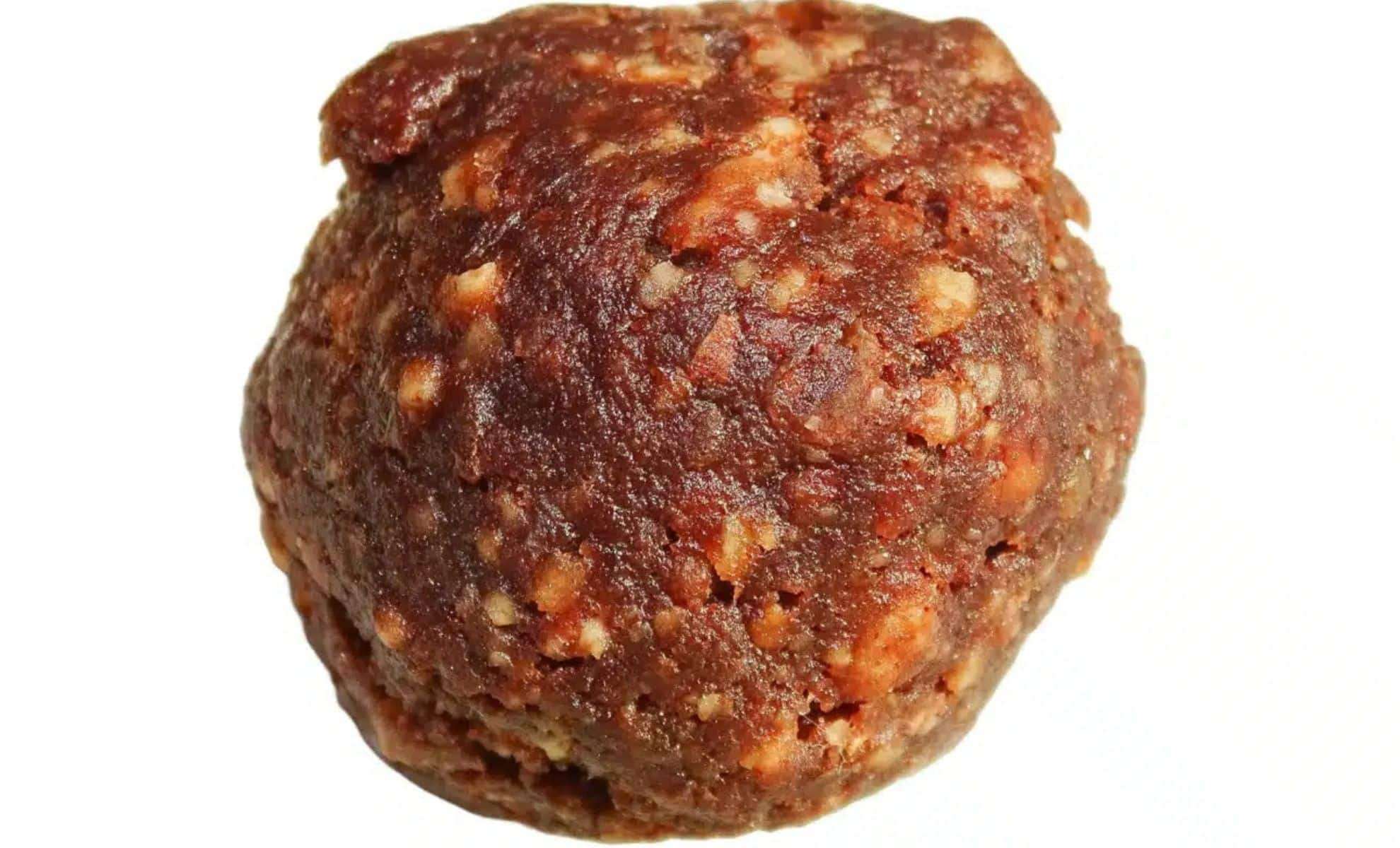
Imagine compressing every person on the planet into a single, solid ball. Although it sounds like a scenario from science fiction, a mathematician recently used this idea to perform a calculation shared on Reddit. The results reveal an unexpectedly small volume, offering a striking perspective on human mass.
Reducing Billions into One Sphere
Starting with key estimates — the average human weighs about 62 kilograms, and the body's density is roughly 985 kilograms per cubic meter — this translates to roughly sixteen people fitting in a single cubic meter when compressed. With the world population at approximately 8.2 billion, this sums up to around 516 million cubic meters of total human volume.
From these numbers, the mathematician deduced that compressing all humans into a solid ball would create a sphere just under one kilometer in diameter. To put that into perspective, its height would be comparable to stacking three Eiffel Towers. This sphere would comfortably fit within the bounds of Central Park in New York City, which spans roughly 3.41 square kilometers.

[Self] If you blended all 7.88 billion people on Earth into a fine goo (density of a human = 985 kg/m3, average human body mass = 62 kg), you would end up with a sphere of human goo just under 1 km wide. I made a visualization of how that would look like in the middle of Central Park in NYC.
byu/kiwi2703 intheydidthemath
Growth of the Sphere With Increasing Population
Considering population growth, the mathematician factored in the current annual increase rate of around 1.05%. With this, he predicted the sphere’s radius would expand by roughly 1.74 meters per year.
He clarified, “Since the radius scales with the cube root of the volume, it grows by about 1.0035 each year.” This means the sphere’s size would only increase slowly over time, demonstrating not only humanity’s magnitude but the compactness reflected when visualized as a single volume.
The Legacy of Picturing Humanity's Mass
The idea of representing all people as a physical mass isn’t new. In 2014, Michael Stevens, creator of the educational YouTube channel Vsauce, illustrated how the approximately 7.2 billion people then alive would partially fill the Grand Canyon if represented as a compressed form. This visualization made it clear that even such a massive geological feature wouldn’t be entirely occupied by human mass.
These striking images help bridge abstract numbers and physical reality, offering a tangible sense of humanity’s scale that raw data alone cannot provide.
Brice, a science journalist with a focus on space and paleontology, has contributed to Sciencepost for nearly ten years. He brings this intriguing mathematical visualization to readers, encouraging a fresh look at human scale through an unusual but thought-provoking lens.




0 comments
Sign in to Comment