

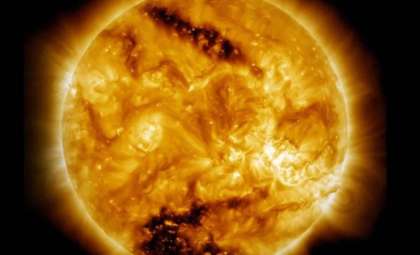
For billions of years, Earth has thrived under the steady energy of the Sun, which has nurtured life with its light and warmth. Yet, like all stars, our Sun is gradually evolving, transitioning through phases as it consumes its hydrogen fuel and changes in brightness and size.
The Sun’s evolution follows a series of stages:
- Main sequence (its current stable phase)
- Expansion into a red giant
- Shedding outer layers to form a planetary nebula
- Becoming a dense white dwarf
Although the Sun is expected to reach its dramatic red giant stage in about 5 billion years, new scientific evidence suggests that life on Earth will encounter devastating changes much sooner. The steady rise in the Sun’s energy output over the next billion years will trigger a series of environmental catastrophes, making our planet progressively less hospitable.

Approaching the end of Earth’s habitability
Recent research from NASA teams and scientists at the University of Warwick has provided fresh insights into how long Earth can sustain life. Their analysis points to a shrinking window for habitability, faster than earlier estimates indicated.
The main contributor behind this accelerated timeline is the escalation of solar brightness and heat. Over the next billion years, these shifts will drastically transform Earth’s climate and ecosystems. Key stages in this process include:
- Increasing global temperatures
- Slow evaporation of oceanic water
- Declining atmospheric moisture
- Widespread extinction of flora and fauna
This gradual deterioration means that complex life on our planet will likely perish well before the Sun enters its red giant phase. Recognizing this reality highlights the importance of studying these changes and exploring ways to address the consequences.
Looking ahead: Potential human survival paths
Faced with this daunting future, scientists are exploring ways to secure humanity’s survival beyond Earth. An exciting possibility lies in colonizing other planets within our solar system.
Mars, our closest planetary neighbor, stands out as a fascinating option for future human habitation. Despite its harsh conditions, the Red Planet offers several compelling features:
The once fictional concept of transforming Mars into a livable world is garnering serious attention from researchers and space agencies. Though the obstacles remain significant, advances in space technology and deepening knowledge of planetary science offer promising prospects for such endeavors.
Humanity’s urgent race against cosmic change
Discovering that Earth’s ecosystem may only remain viable for hundreds of millions of years, rather than billions, confronts us with an extraordinary challenge. This insight emphasizes the delicate nature of our planet and the need for strategic, long-term planning in science and exploration.
While addressing more immediate environmental issues is crucial, this impending deadline urges us to look beyond Earth. Establishing sustainable life on other planets is becoming an essential goal for the survival of humanity.
Though the timelines seem immense on a human scale, in cosmic terms, time is limited. The scientific progress we achieve now in planetary studies, propulsion engineering, and life-support innovation could be vital for ensuring humanity’s place among the stars.
Standing at the edge of an uncertain future, one fact remains clear: our fate depends on our capacity to adapt, invent, and surpass the constraints of our native world. While Earth’s habitability may ultimately fade, human civilization’s journey can continue onward.
- Categories:
- Science








0 comments
Sign in to Comment