
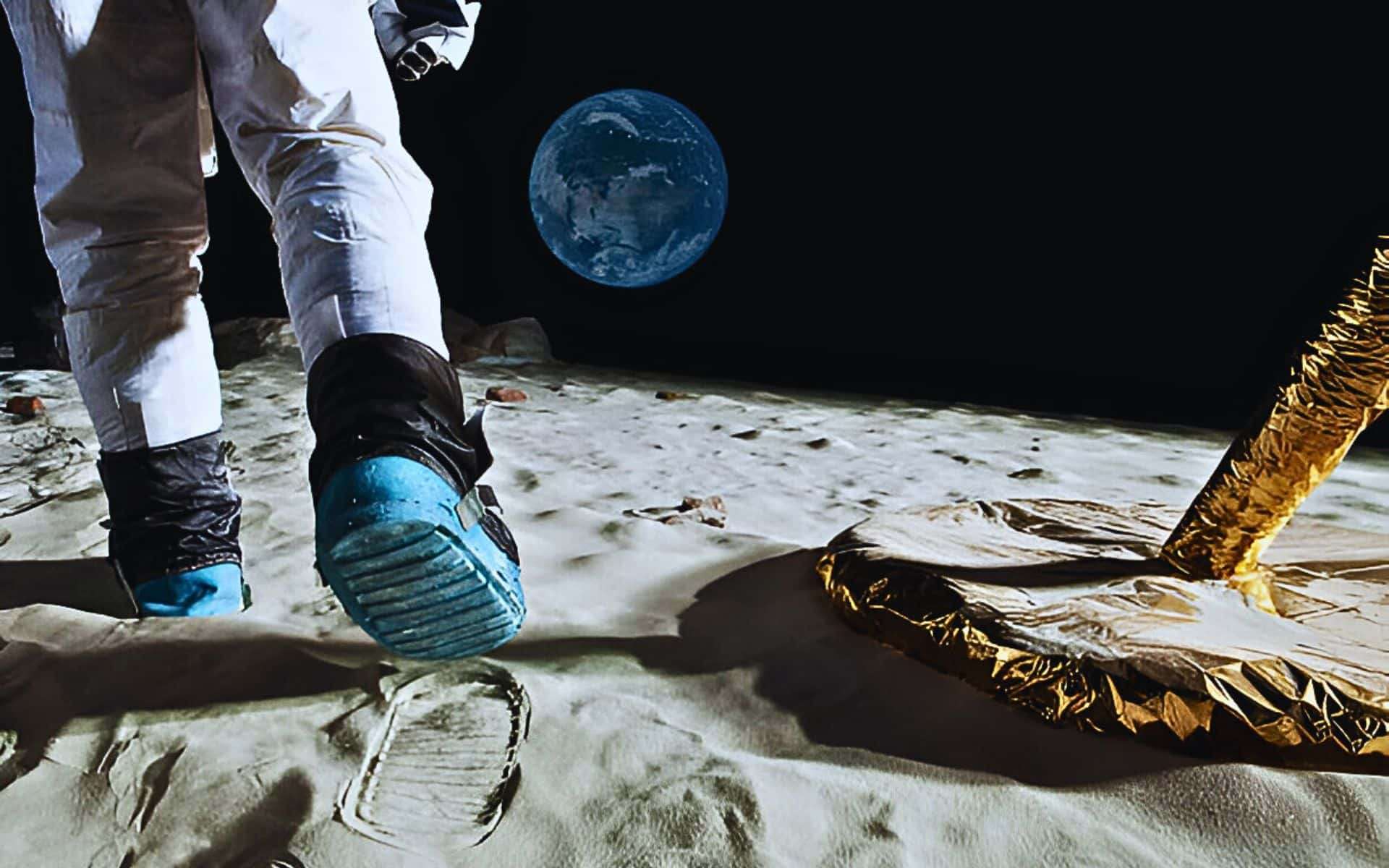
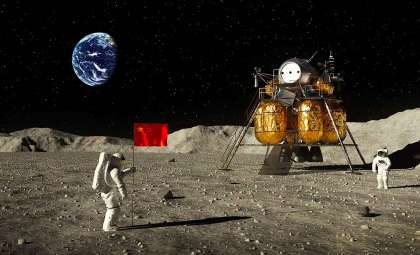
The Moon has become a focal point for increasing worldwide attention. Recently, China’s flag was planted on the lunar surface after their fourth successful moon landing mission. This expedition, notably their first to collect samples from the Moon's far side, represents a significant leap forward in their space exploration efforts.
Simultaneously, India and Japan have marked important lunar milestones in the past year, establishing themselves as emerging leaders in space exploration. In February, the U.S. company Intuitive Machines achieved a landmark by becoming the first commercial organization to reach the Moon, with further private missions expected soon.
Who Owns a Shared Lunar Frontier?
NASA is gearing up to return astronauts to the Moon via the Artemis program, aiming for a 2026 launch. Likewise, China aims to send humans to the Moon by 2030. This wave of exploration aims beyond short visits, focusing on establishing long-term lunar habitats, suggesting a sustained human presence.

Concerns are rising that terrestrial geopolitical tensions might extend into space. “Our Moon relationship is about to change dramatically”, cautions Justin Holcomb, a geologist at the University of Kansas, highlighting that space exploration progress is “moving faster than our laws.”
The 1967 Outer Space Treaty, crafted during the Cold War, designates the Moon as a global commons and prohibits sovereign claims. It was intended mainly to halt the spread of weapons in space. Over 100 nations have endorsed it, yet today's competitive environment is vastly different.
With private enterprises entering the arena, legal complexities increase. Government dominance over space activities is no longer absolute. Early 2024 saw plans for Peregrine, a commercial lunar mission carrying human ashes, DNA, and branded goods. Although delayed by a fuel leak, it raised crucial questions about how such activities align with the treaty’s mandate to serve humanity’s interests.
Private Initiatives and Government Roles
Despite the surge of private missions, state authorities remain key players. Sa’id Mosteshar, head of the London Institute of Space Policy and Law, remarks that companies still must operate with state authorization, ensuring adherence to international regulations.
Lunar landings continue to confer prestige, as evidenced by India and Japan’s recent successes. Additionally, a growing lunar economy offers benefits including technological innovation and job creation. Yet, the most coveted treasure is the Moon’s wealth of resources. It harbors minerals like rare earth elements, iron, titanium, and helium-3, potentially valued in the billions or more.
The Moon’s Hidden Riches
Water ice, discovered frozen in polar craters, is among the Moon’s most valuable resources. Once believed completely dry, Apollo samples revealed trace amounts of water roughly a decade ago. This water is vital for future missions, as it could sustain astronauts, supply oxygen, and be converted into rocket fuel for missions deeper into space.
However, extracting lunar resources raises legal and ethical issues. The 1979 Moon Agreement sought to regulate resource use, but only 17 countries signed, none conducting lunar operations. In contrast, the U.S. passed legislation in 2015 allowing citizens to claim and profit from space resources, a move that sparked international debate. Other countries, including Luxembourg, UAE, Japan, and India, have introduced similar laws.
Although vast, some parts of the Moon—especially areas near ice deposits—are highly desirable. Conflicts could arise if nations target the same zones. Jill Stuart, a specialist in space policy, likens this to Antarctica where multiple countries share research stations. However, she points out that “first-mover advantage” may give early settlers control over key areas, though not ownership.
With China and the U.S. leading the race to establish initial lunar bases, they may define the guidelines for how future colonies operate. The pioneering nation could influence lunar governance, setting precedents for space diplomacy. Experts suggest future rules will evolve from agreements and behavioral norms instead of sweeping treaties.
Confronting Moral Responsibilities
The Moon’s significance extends beyond its scenic beauty—it influences Earth’s tides and stabilizes our planet’s rotation. As we advance in its exploration and exploitation, important ethical questions arise. How do we protect its environment and ensure fair management? Who will govern this new frontier?
International cooperation is essential. While rivalry can drive innovation, fair access and sustainability demand global partnerships. Rather than repeating Earth’s conflicts, the Moon should serve as a domain that benefits all humankind.
- Categories:
- Space








0 comments
Sign in to Comment