

The European Space Agency's Hera mission, designed to analyze the effects of NASA’s DART collision with the asteroid moon Dimorphos, is progressing toward its planned launch despite recent issues with the SpaceX Falcon 9 rocket. Set to lift off on October 7, 2024, Hera’s timeline hinges on resolving a technical fault that grounded Falcon 9’s upper stage following an irregularity detected during a recent flight.
Hera’s Role in Planetary Protection
ESA’s Hera mission plays a vital role in advancing strategies to shield Earth from asteroid threats. Building upon NASA's pioneering Double Asteroid Redirection Test (DART) impact on Dimorphos, the smaller companion to asteroid Didymos, conducted in 2022, Hera aims to deliver critical insights into asteroid deflection techniques. DART marked humanity’s first attempt to alter a celestial body's path via kinetic impact, a concept vital for future planetary defense.
Upon arrival at the Didymos-Dimorphos pair in late 2026, Hera will spend six months surveying the crater left by the DART impact. Its instruments will measure crater dimensions, analyze ejecta quantities, and study structural changes in Dimorphos, delivering essential data to assess the kinetic impactor method's effectiveness against asteroid threats.

Ian Carnelli, Hera’s project lead, highlights the mission’s goal to quantify “how efficient the impact was.” Hera will calculate the momentum transfer from DART to Dimorphos by measuring its mass and gauging orbital changes. Michael Kueppers, project scientist, notes the mission will significantly deepen understanding of asteroid impact dynamics, knowledge vital for future planetary defense operations.
Launch Preparations Amid Falcon 9 Suspension
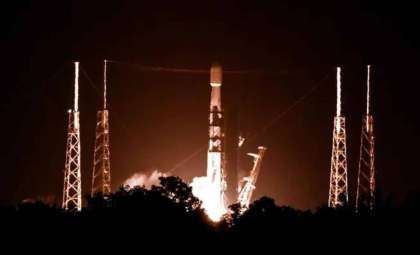
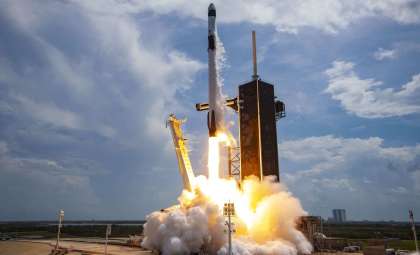
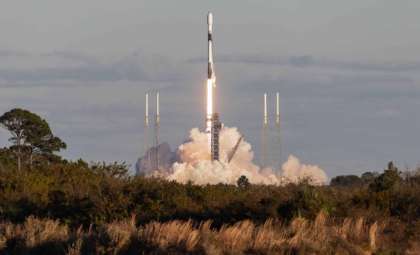
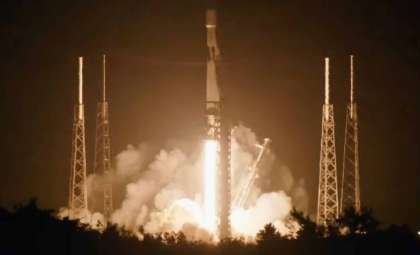
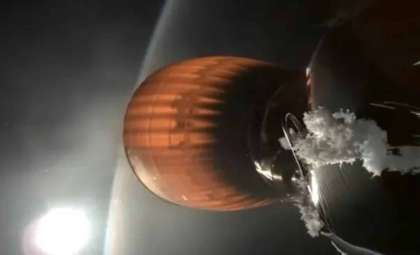
Hera’s launch preparation encounters challenges stemming from the suspension of Falcon 9 flights after an “off-nominal deorbit burn” incident in late September 2024. This anomaly caused the rocket’s upper stage to reenter Earth’s atmosphere outside the planned area in the South Pacific. SpaceX paused Falcon 9 missions to investigate, with the Federal Aviation Administration (FAA) requiring a formal investigation report before resuming operations.
ESA remains optimistic about maintaining Hera's launch timeline. Carnelli, maintaining close contact with SpaceX, praised the progress of their investigation and reaffirmed commitment to the October 7 launch. The spacecraft was successfully enclosed in its payload fairing on October 3, keeping the schedule on track pending FAA clearance.
ESA is prepared for Hera to become Falcon 9’s return-to-flight mission, deviating from SpaceX’s usual pattern of resuming with simpler payloads like Starlink satellites. The launch window extends to October 27, providing flexibility in case of further delays. Coordination will also consider NASA’s Europa Clipper mission launch on October 10 using a Falcon Heavy, with a mandatory 48-hour buffer between launches.
CubeSats Enhancing Mission Science
Hera will release two compact CubeSats, named Juventas and Milani, to amplify the mission’s scientific capabilities. These miniaturized satellites, designed for cost-effective deep space operations, are ESA’s first CubeSat ventures beyond Earth orbit, tasked with conducting detailed studies of the Didymos-Dimorphos system.
Juventas will investigate Dimorphos’ internal makeup and geophysical properties, aiding insights into how the asteroid’s structure responds to kinetic impacts. Meanwhile, Milani will focus on dust particle detection and capture high-resolution imagery of both Didymos and Dimorphos, monitoring the debris cloud produced by DART for particle spread and density analysis.
Developing European-made CubeSat systems posed a notable challenge due to ESA’s insistence on using domestically sourced components. Carnelli explained, “We had to develop European radio, deep space radios. We had to develop specific propulsion systems in Europe.” These advancements ensure reliable communication and propulsion performance for the CubeSats throughout their mission.
Advancing Asteroid Defense Capabilities
With an investment totaling 363 million euros (around $401 million), Hera represents a major leap forward in planetary defense and space science. The mission’s findings will deepen our comprehension of asteroid behaviors and help refine methods to protect Earth from hazardous space objects. Hera’s asset to future planetary defense strategies should prove invaluable.
The mission’s results will complement NASA’s pioneering DART achievements, collectively offering a detailed view of the Didymos-Dimorphos system and the efficacy of kinetic impactor techniques. By scrutinizing DART’s crater and Dimorphos' altered orbit, Hera will enhance asteroid deflection models and inform future mitigation missions.
ESA’s ongoing collaboration with NASA and global partners places Hera at the forefront of developing planetary defense measures. Carnelli praised the cooperative success, stating, “It really was an amazing project and I can only be extremely proud of what we have achieved together.” As Hera nears its launch, ESA makes strides to safeguard Earth from cosmic threats.
- Categories:
- Astronomy ,
- News ,
- Space ,
- Nasa




0 comments
Sign in to Comment