
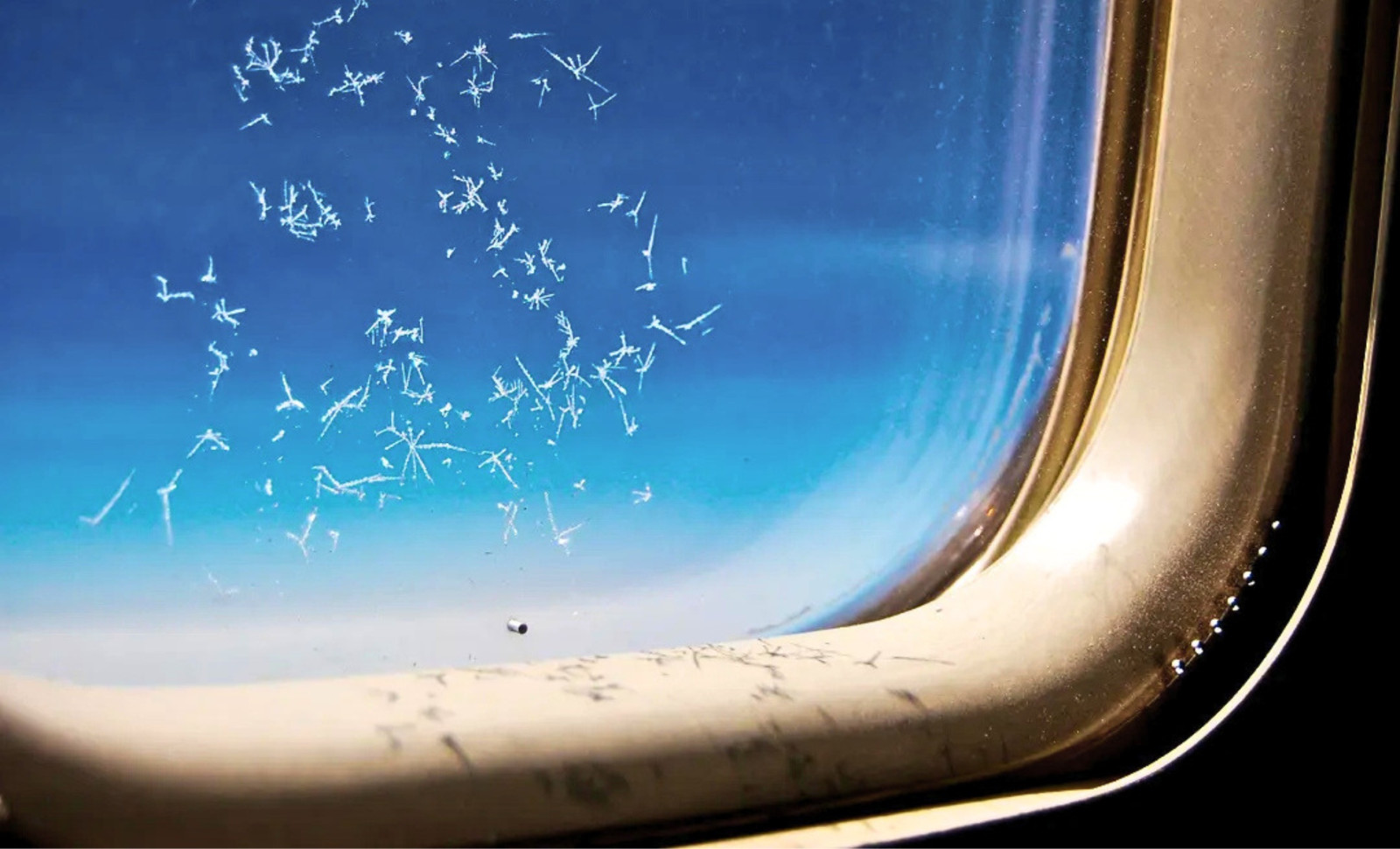
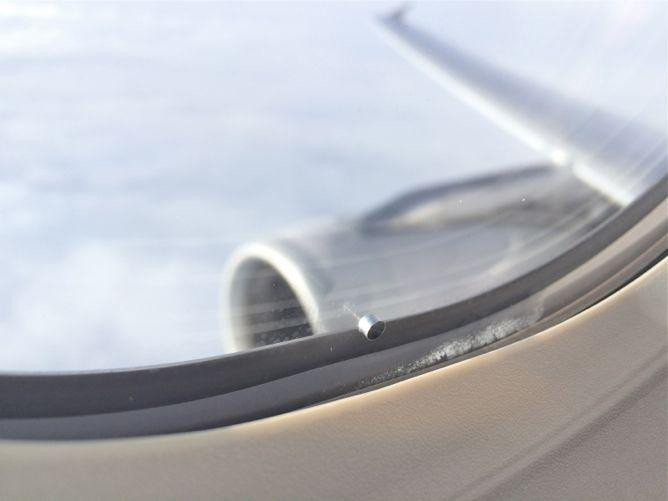
Have you ever noticed a tiny pinhole at the base of an airplane window? On long flights, you might spot a small ring of frost forming around it. You could wonder if it’s a manufacturing defect—but it’s not. This small aperture, known as a breather hole or bleed hole, performs two crucial tasks during your flight without drawing any attention.
This is deliberately crafted into every airplane window, not an oversight. Aviation expert and author Mark Vanhoenacker revealed the full explanation in his Slate article, sharing insights from engineers at GKN Aerospace and Boeing Commercial Airplanes. Their design handles immense pressure forces through a hole smaller than a pencil’s tip, quietly ensuring your safety.
Airplane Windows Consist of Three Distinct Layers
Upon closer inspection, an airplane window isn’t a single piece of material. The pane facing you is called the scratch pane, designed to protect the layers behind it from everyday contact—smudges, fingerprints, or coffee spills. This outermost layer doesn’t endure any pressure.

Behind this protective pane lie two more layers responsible for withstanding the pressure difference between the pressurized cabin and the outside atmosphere. Made from durable acrylic, each pane is strong enough to resist the full pressure differential independently, but only one carries that stress during a flight. The breather hole ensures that the correct pane absorbs the load.
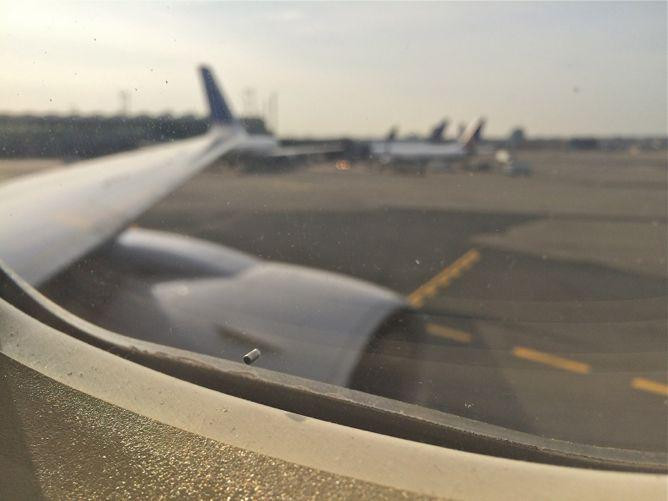
As the aircraft ascends, external air pressure decreases sharply while the cabin retains a steady, breathable pressure level. This pressure gap—higher inside and lower outside—is managed by the breather hole, which is drilled through the middle pane. It connects the cabin interior to the narrow space between the middle and outer panes, equalizing pressure on both sides of the middle layer. Consequently, the outward force is transferred entirely onto the outer pane.
Marlowe Moncur, technology director at GKN Aerospace, explained to Vanhoenacker that this bleed hole helps pressure equalize so that only the outer pane bears the cabin's pressurization load during flight. The middle pane remains free of stress, acting as a backup that’s rarely needed.
In the unlikely event the outer pane fails, the middle one takes on the pressure immediately. A slight air leak through the breather hole would occur, but according to Boeing aerospace engineer Bret Jensen, the aircraft’s pressurization system is built to manage such leaks without issues. The entire system is designed with this fail-safe in mind.
Maintaining Clear Views by Preventing Fog and Frost
The breather hole also serves a more visible purpose. Moisture can accumulate in the gap between the middle and outer window panes. Without ventilation, this trapped humidity would cause the windows to fog or frost, obscuring your view completely. The tiny hole allows this trapped moisture to escape, effectively keeping the view clear.
Boeing's Jensen confirmed that by venting moisture from the space between panes, the breather hole prevents fog and ice from forming. Thus, this minuscule feature not only contributes to airplane window safety but also preserves the scenic views you enjoy during your flight.
Regarding the frost rings sometimes seen at this hole: at cruising altitudes, temperatures outside can plunge to as low as -70 degrees Fahrenheit. The window surface becomes extremely cold. When warm, humid cabin air contacts that frigid window near the breather hole, moisture freezes into delicate snowflake-like patterns.
Moncur mentioned to Slate that this circular frost pattern depends on various factors—window temperature, cabin humidity, and airflow through the hole. He called it an intriguing physical phenomenon but emphasized that the frost isn't a cause for concern. It simply signals that the safety system is operating as intended.
So next time you snag the window seat, take a moment to appreciate that tiny hole. It’s a marvel of aerospace engineering—carefully balancing cabin pressure, providing a backup safety measure, and keeping your view crystal clear. The frost formation around it is simply proof that this crucial system is working flawlessly, flight after flight.
- Categories:
- News













0 comments
Sign in to Comment