
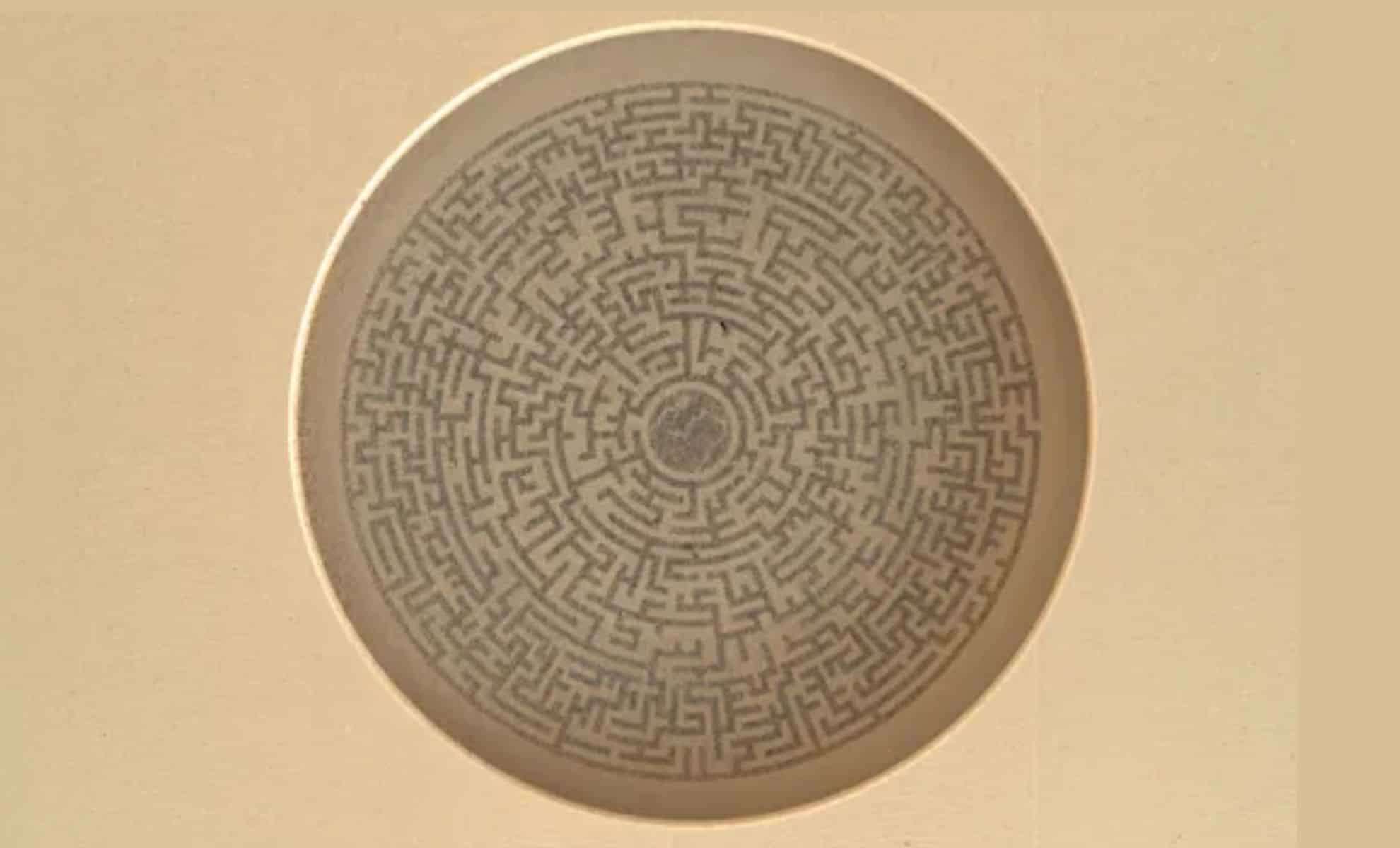
NASA’s Perseverance rover has delivered countless images of Mars, yet one small, intricate maze engraved on a metallic surface has become a frequent focus of its cameras. This captivating detail has sparked curiosity among space fans everywhere. According to a thorough article by Space.com, the maze’s purpose is not just decorative but serves a significant scientific function. It is embedded in the SHERLOC Calibration Target, a vital component of the rover’s scientific instruments used to detect traces of ancient life.
SHERLOC’s Role in Uncovering Life’s Past
The key to this mystery is SHERLOC, an acronym for Scanning Habitable Environments with Raman & Luminescence for Organics and Chemicals. This sophisticated instrument employs laser spectroscopy to analyze Martian rocks for organic compounds and minerals that could suggest past microbial presence. To maintain SHERLOC’s accuracy, NASA installed a small calibration panel on the rover’s robotic arm featuring reference samples and the miniature maze.
“Calibration targets fulfill several functions, primarily refining SHERLOC’s wavelength settings, adjusting its laser scanner mirror, and monitoring the laser’s focus and condition,” stated Kyle Uckert, SHERLOC’s deputy principal investigator at NASA’s Jet Propulsion Laboratory, during a discussion with Space.com.

Among these targets are advanced materials such as aluminum gallium nitride, a Martian meteorite, and a UV-scattering chemical called Diffusil, all critical for keeping SHERLOC’s measurements precise under Martian conditions.
The Significance of the Maze
Embedded amidst these calibration materials is a remarkable microscopic maze, crafted from chrome lines about 200 microns wide—roughly double the diameter of a human hair—on a background of silica glass. Though visually appealing, its function is pragmatic.
“The maze is more than decoration; it’s a test pattern,” Uckert explained. “Since SHERLOC’s mission is to decode Martian puzzles, the maze fits perfectly.” This pattern enables the instrument to verify the precision and alignment of its laser and to assess the sharpness of its focus by comparing the reflective chrome against the glass substrate. The difference in spectral signatures allows for exact calibration.
At the maze’s core lies a tiny, delicate silhouette of Sherlock Holmes, measuring just 50 microns thick. SHERLOC’s spectral mapping can resolve this minuscule image, demonstrating the instrument’s incredible sensitivity. This detail combines NASA’s dedication to scientific excellence with a touch of creative flair.
Assessing Materials for Future Space Exploration
The lower section of the SHERLOC Calibration Target contains samples of spacesuit fabrics used in current designs, such as Teflon, Kevlar, and Gore-Tex. These materials are being tested directly on Mars to observe how exposure to radiation, dust, and extreme temperatures affects their durability over time.
“While they primarily assist in fine-tuning SHERLOC’s performance, these fabric samples also provide critical data for protecting astronauts in future missions,” Uckert commented.
Beyond its technical functions, the calibration plate carries playful elements meant to engage the public. It includes a geocache icon and cleverly hidden references to Sherlock Holmes, underscoring NASA’s enthusiasm for storytelling. Additionally, SHERLOC works alongside a color camera named WATSON, a nod to Holmes’s trusted companion.
- Categories:
- News












0 comments
Sign in to Comment