
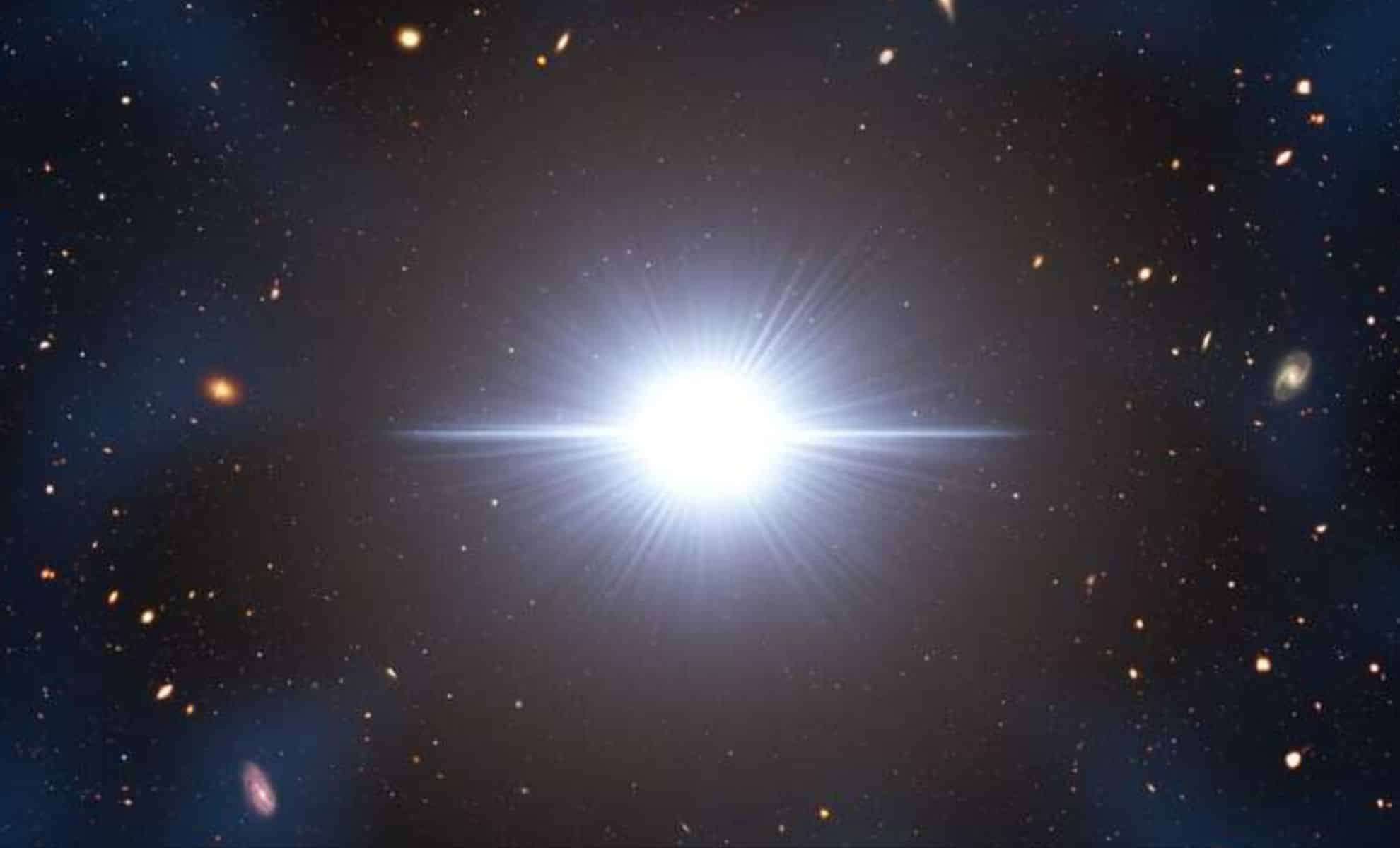
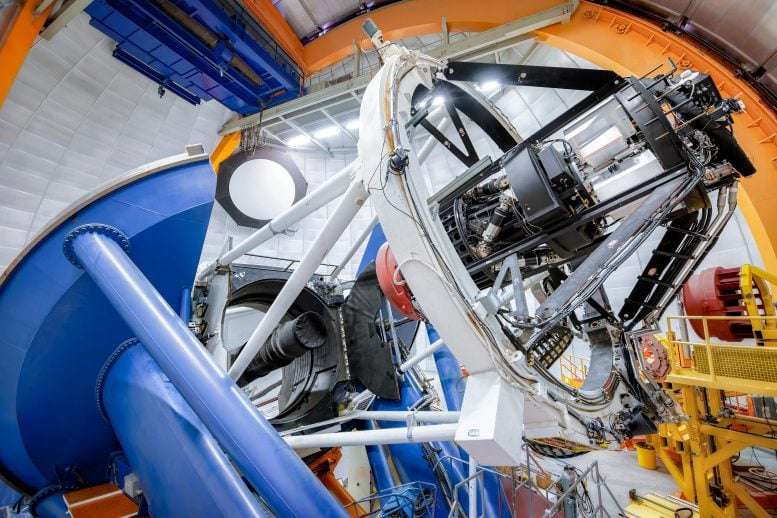
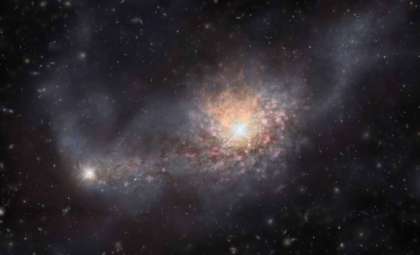
Utilizing the powerful Dark Energy Camera (DECam), scientists have gained new perspectives on the surroundings of quasars in the universe’s infancy. Observations made with the Víctor M. Blanco 4-meter Telescope at Chile's Cerro Tololo Inter-American Observatory uncovered that these extraordinarily luminous objects, quasars, are encircled by numerous smaller galaxies. Interestingly, the research also identified an unexpected emptiness immediately near the quasars, prompting fresh considerations regarding their influence on star formation suppression.
Quasar Atmospheres: Crowded Yet Strangely Deserted
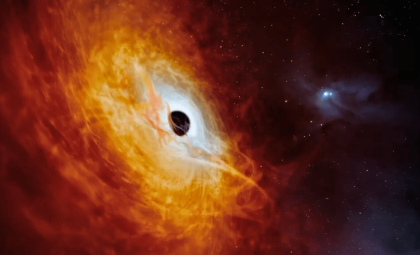
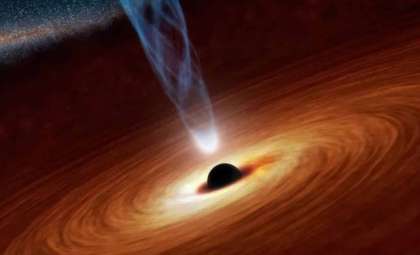
Quasars originate from supermassive black holes voraciously consuming gas, resulting in their extreme brightness. These black holes develop only in regions abundant with gas, leading scientists to anticipate that quasars should inhabit the universe's densest galactic zones. Nevertheless, earlier studies of quasar locales have yielded conflicting conclusions: some detected numerous neighboring galaxies, while others noted sparse galactic surroundings. This inconsistency has long been a scientific mystery.
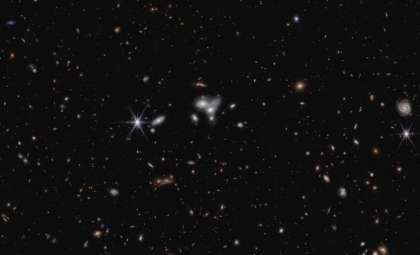
In this groundbreaking investigation led by Trystan Lambert, researchers capitalized on the DECam’s expansive field of view combined with specialized optical filters. Concentrating on quasar VIK J2348-3054, with its distance accurately known from prior ALMA measurements, the team examined an extraordinarily broad sky area. Lambert described this as a “perfect storm” of observational conditions, with a well-characterized quasar and the Blanco telescope’s optimal instrumentation. They identified 38 companion galaxies stretching out to 60 million light-years, confirming these quasars do indeed inhabit densely populated cosmic neighborhoods.

Unexpectedly, the team uncovered a complete absence of galaxies within 15 million light-years of the quasar itself. This galaxy-free zone suggests the quasar’s intense radiation may suppress star formation in nearby galaxies by heating the gas and preventing it from collapsing into new stars. Lambert noted, “Quasars are far from silent neighbors; their radiation can warm surrounding gas so much that it halts star development.” This phenomenon had not been definitively observed before.
Clarifying the Puzzle of Quasar Surroundings
This research clarifies the longstanding confusion about quasar environs and reconciles earlier contradictory findings. Past surveys with limited coverage may have been misled by focusing solely on the immediate quasar vicinity, which appears galaxy-poor, missing the denser clusters farther away. Lambert emphasized that DECam’s huge field of view was pivotal in detecting these more distant galaxies: “Expanding our observational area was key to understanding quasar neighborhoods properly.”
Mapping out to 60 million light-years revealed a comprehensive picture: while quasars are encircled by abundant companion galaxies, a noticeable emptiness directly surrounding them is common. This gap likely explains why earlier, smaller-scale studies reported conflicting observations. By overlooking the extended environment, those studies could not capture the full complexity of quasar habitats.
Furthermore, these findings offer new insights into quasar feedback, where the quasar’s radiation interferes with star formation in nearby galaxies. As Lambert explained, “Stars form when gas cools and contracts under gravity. Bright quasars can illuminate and heat this gas, preventing star creation.” This discovery underscores quasars’ critical role in influencing galaxy formation and cluster evolution in the early cosmos.
Upcoming Studies and Impacts on Cosmic Evolution Research
Going forward, the research group aims to deepen investigations into how quasars affect their galactic neighbors. Additional spectroscopic observations are planned to validate whether quasar radiation truly inhibits star formation and to expand their study to more quasars in similar settings. These efforts will help determine if the observed suppression is a unique effect or a widespread cosmic characteristic.
Enhancements in observational technology, especially with the forthcoming NSF–DOE Vera C. Rubin Observatory, promise to revolutionize studies of quasars and their environments. The observatory’s advanced instruments will allow astronomers to probe quasar surroundings with unprecedented detail. Chris Davis, director at NSF NOIRLab, highlighted the synergy of federal science agencies in enabling this research and expressed optimism about future discoveries.
This study marks a pivotal advancement in understanding quasar-environment interactions. Combining DECam’s broad imaging capabilities and ALMA’s accurate distance data has opened new avenues to explore the early universe. By revealing both dense galactic clusters and surprising voids near quasars, the research offers a refined perspective on cosmic formation processes. Continued observations will further illuminate how supermassive black holes, quasars, and growing galaxy clusters co-shaped the universe’s formative epochs.
- Categories:
- Astronomy ,
- News ,
- Space




0 comments
Sign in to Comment