
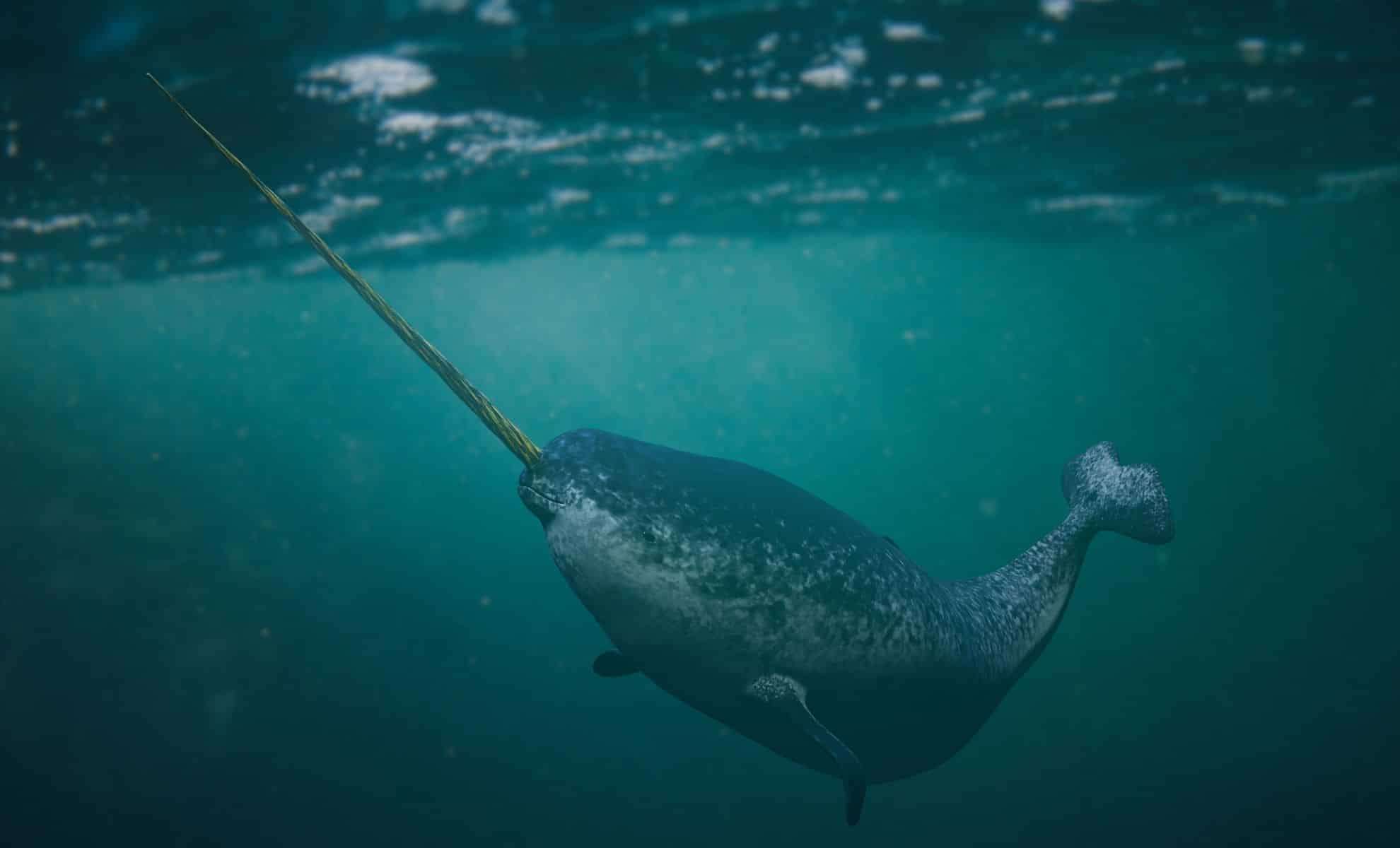
Often dubbed the “sea’s unicorns,” narwhals captivate with their distinctive long, spiral tusks and elusive nature. Despite their mythical allure, these animals are almost never housed in aquariums. The reasons for this are rooted deeply in their unique needs and unfortunate past experiences.
A Heartbreaking Start
The inaugural attempt to keep a narwhal in an aquarium occurred in 1969 at New York Aquarium on Coney Island. The narwhal calf, Umiak, was taken by Inuit hunters after its mother was killed. The calf reportedly followed them back to camp and was later placed with a female beluga whale as a surrogate. Despite diligent care involving copious amounts of milk blended with clam pieces, Umiak could not survive, succumbing to pneumonia within less than a year.
This early sorrow didn’t discourage others. In 1970, the Vancouver Aquarium pursued a similar endeavor, acquiring a narwhal called Keela Luguk to raise awareness and support conservation efforts. Unfortunately, things did not go as planned.

The Vancouver Aquarium’s Ill-Fated Project
The Vancouver Aquarium’s initiative commenced with hopes of drawing focus to narwhal preservation. After two unsuccessful capture attempts, director Murray Newman procured a young male narwhal, Keela Luguk, from an Inuit group in Canada. Alongside him, two females and three calves were introduced to his tank soon after arrival. However, tragedy quickly unfolded.
Within weeks, all three calves died, followed by the female narwhals by November. The public reacted strongly, with Vancouver’s mayor demanding Keela Luguk be released back into the wild. Newman declined, but sadly, Keela Luguk passed away on December 26 of the same year.
Why Narwhals Cannot Thrive in Captivity
The enigmatic and distressing demise of narwhals in controlled environments puzzled many, especially since their close relative, the beluga, fares well in captivity for many years. Narwhals are particularly sensitive and reactive to human-created noise pollution. Even the simple sound of a nearby ship can significantly disrupt their natural behaviors.
This acute sensitivity likely explains their extreme difficulty in adjusting to aquarium life. Unlike other porpoise species that manage confined conditions, narwhals are highly susceptible to the loss of their natural surroundings. This understanding of their vulnerability has led aquariums to cede efforts to keep narwhals captive, letting them remain the rare and enigmatic creatures of the wild.
- Categories:
- News













0 comments
Sign in to Comment