
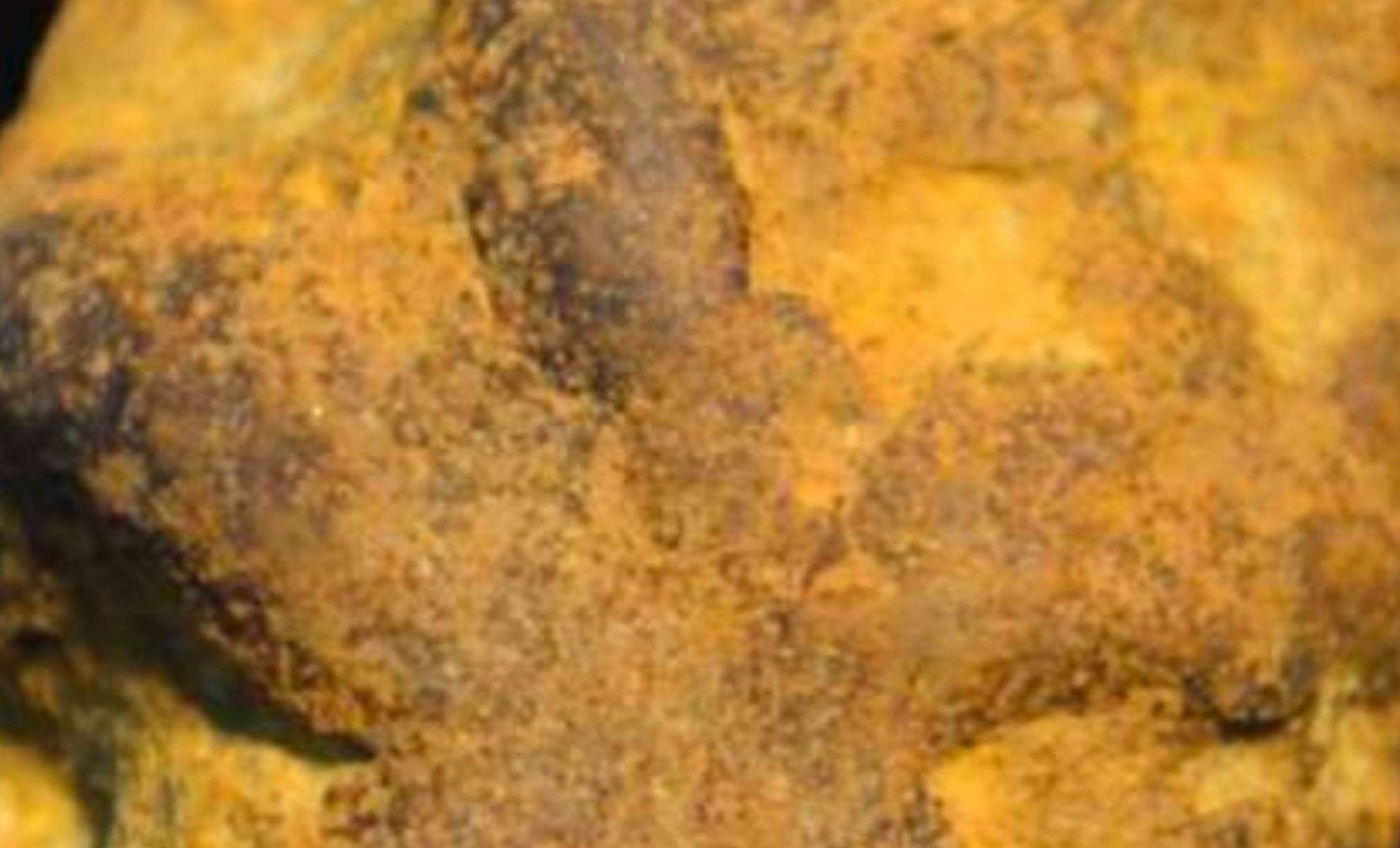
The enigmatic Cambrian specimen known as Brooksella, examined for over a century, might not be a fossil after all. Recent findings propose it could be an extraordinary mineral formation born from natural geological activity.
Originally identified in 1896 by paleontologist Charles Doolittle Walcott, Brooksella has long sparked debate, with suggestions ranging from jellyfish and sponges to traces left by worms, or even fossilized gas bubbles. Mostly found within Cambrian shale deposits of the southeastern U.S., its radial segments give it an appearance reminiscent of a delicately shaped pastry. However, a new study published in PeerJ indicates the object's organic semblance might be misleading.
Evidence Against the Sponge Hypothesis
Utilizing microCT scanning and chemical investigations, researchers delved deeper into Brooksella’s structure and chemistry. Their results showed no evidence of opaline spicules, microscopic features characteristic of glass sponges, nor did any growth patterns match those expected from a living creature.

Additionally, what was once considered a mouth-like opening was revealed to face downward, embedded in sediment—an arrangement inconsistent with sponge feeding mechanisms, which involve filtering water effectively.
“We found that Brooksella lacked characteristics of glass sponges,” the authors wrote, noting it also didn’t appear to grow like one.
With each closer inspection, the specimen's resemblance to biological life faded. What began as an attempt to clarify outdated classification gradually led scientists to rethink its very nature.
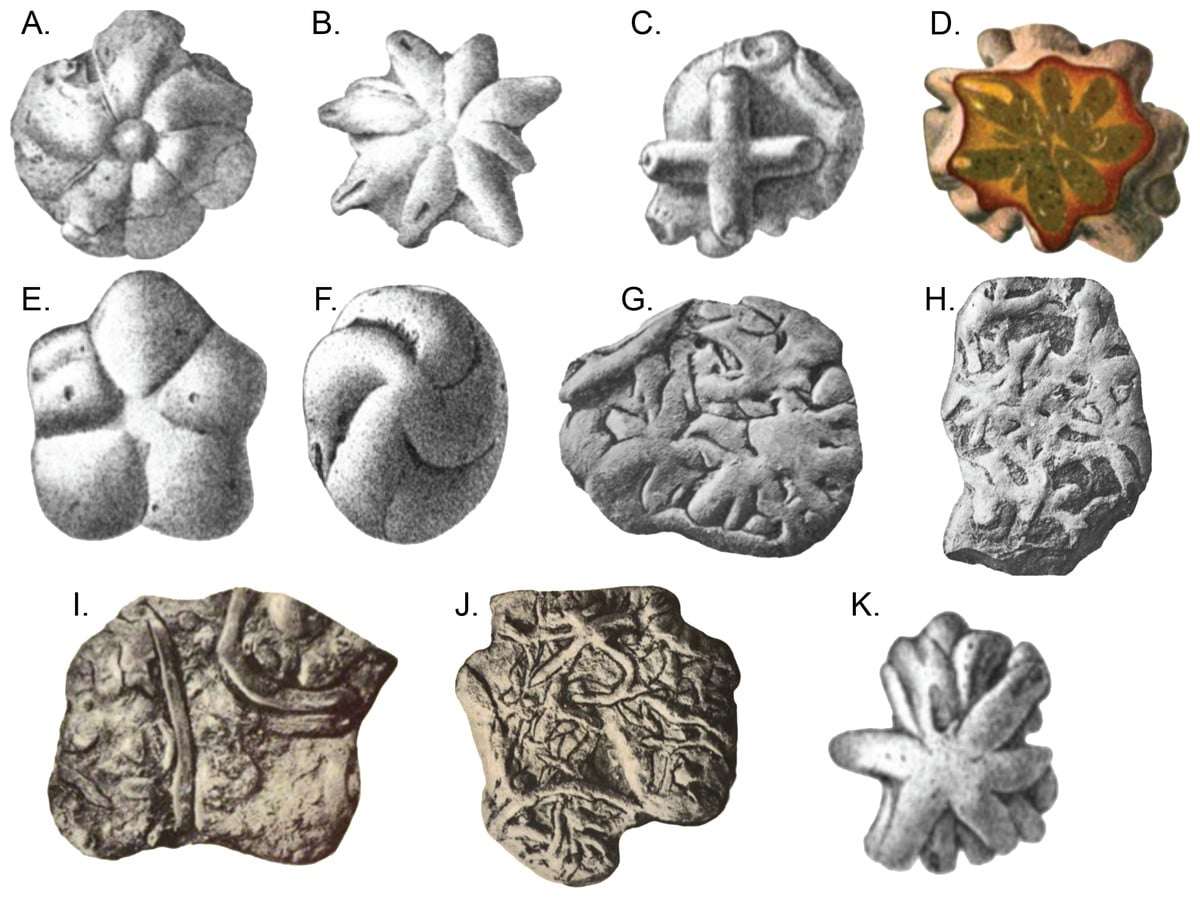
Not a Living Organism, Just an Unusual Rock Formation
If not a sponge, jellyfish, or worm, what exactly is Brooksella? According to the team, it more closely aligns with silica concretions, which are mineral accumulations formed by geochemical processes under specific temperature and pressure scenarios.
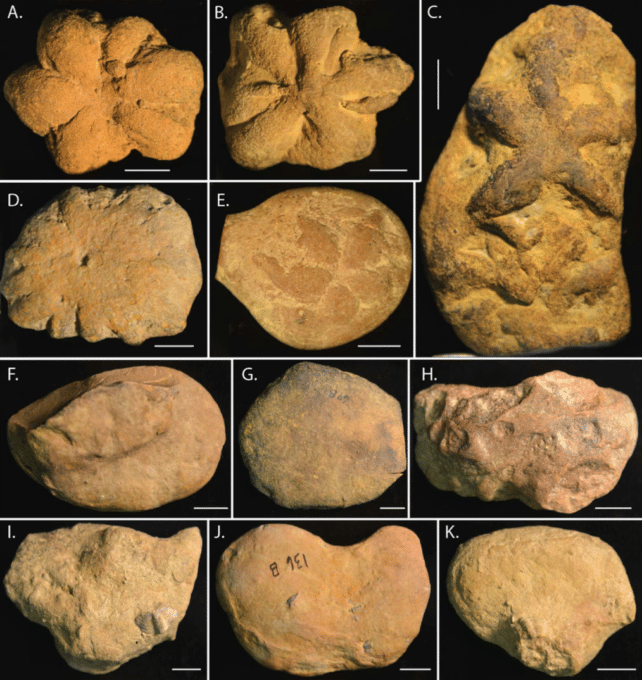
Interestingly, these concretions are capable of developing complex, nearly life-like shapes. When comparing Brooksella to similar silica concretions from the Cambrian formations, no significant distinctions arose beyond Brooksella's unique lobed structure.
“We did not find any difference between Brooksella and the concretions,” the study noted, “other than Brooksella had lobes and the concretions did not.”
This small morphological difference challenges the long-held view of Brooksella as an ancient creature; instead, it may represent a rare mineral shape formed by ancient environmental chemistry.
Such formations are not unprecedented. For example, petal-patterned silica rocks have been discovered on Mars, and on Earth, lightning strikes produce fulgurites—branching sand tubes resembling alien artifacts rather than common geology.
Nature Redefines Our Understanding
The enigma persists. Researchers uncovered that various Brooksella samples exhibit dramatically different internal compositions: some dense and solid, others hollow or disorganized. Such diversity complicates arguments for a biological origin, as organisms usually exhibit some consistency in their internal design. Paleontologist Sally Walker from the University of Georgia highlights another inconsistency.
“A sponge usually gets flattened like roadkill during the fossilization process,” she said. “Especially a fossil more than 500 million years old.”
Contrarily, Brooksella remains three-dimensional and inflated, resembling more a pastry than a sea animal. Even James Schiffbauer, a geologist at the University of Missouri, recognizes how much exploration remains.
“This project is an excellent example of the types of fossil mysteries we can solve with applications of microCT,” he said, adding that this technology is just beginning to change how we look at the fossil record.
The team concludes that Brooksella probably resulted from a rare mix of geochemical forces, although the reason for the prevalence of similarly shaped formations in the same region remains unsolved. A puzzle endures—just not the one paleontologists anticipated solving.
- Categories:
- Science







0 comments
Sign in to Comment