
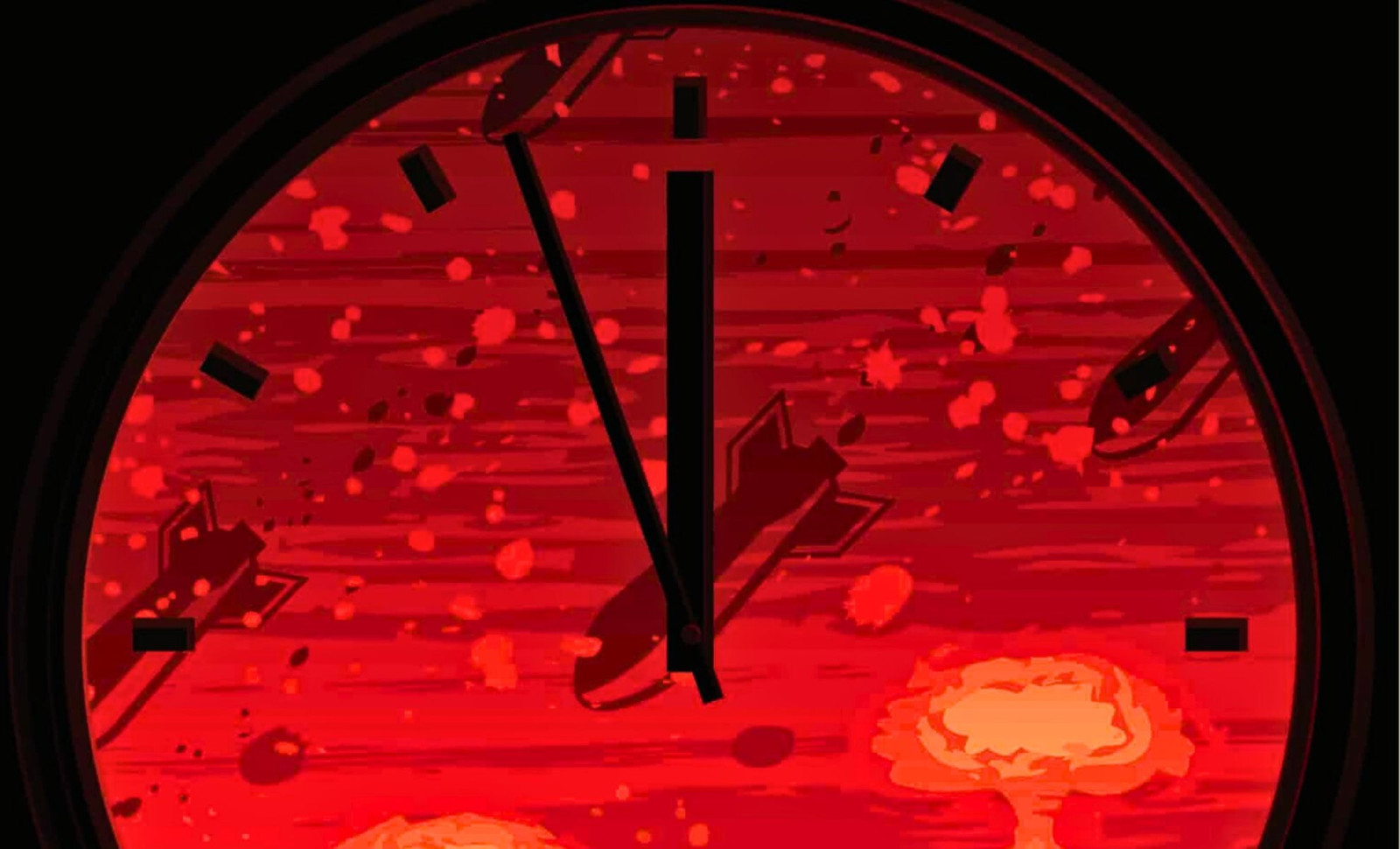
In January 2026, an adjustment of the iconic Doomsday Clock surprised scientists and policymakers worldwide. For nearly eighty years, this symbolic instrument has gauged how close humanity is to catastrophic disaster. Its recent setting reveals the greatest peril ever recorded.
This shift was not triggered by any single crisis. Instead, it highlights a broader collapse of safeguards that have traditionally moderated existential risks. The update comes amid a backdrop of renewed nuclear build-up, fast-paced technological advances, climate emergencies, and deteriorating international cooperation.
Warnings from experts went largely unheeded. In many cases, governments appear to have exacerbated the dangers.

Doomsday Clock Advances to 85 Seconds, Spotlighting Interlinked Global Dangers
On January 23, 2026, the Bulletin of the Atomic Scientists moved the Doomsday Clock to 85 seconds before midnight, the closest proximity to worldwide disaster since its inception. The official statement attributed this to the combined threats of escalating nuclear tensions, stalled climate efforts, emerging biotechnologies without adequate regulation, and the rapid integration of artificial intelligence in military applications.
The Bulletin emphasized the unraveling of international cooperation as a critical factor. Arms control initiatives have hit dead ends, and significant treaties have collapsed. As outlined in the Bulletin’s report, the United States, Russia, and China have entered an era of intensified military and technological competition, replacing previous channels of dialogue with assertive unilateral actions.

In 2025, three regional confrontations underscored this tense climate. The conflict in Ukraine persisted with veiled nuclear threats from Russia. Armed clashes between India and Pakistan in May escalated to missile and drone combat. In June, Israeli and U.S. strikes targeted Iranian nuclear sites suspected of weapons development, though the long-term ramifications remain uncertain.
Amid escalating pressure, nuclear modernization advanced rapidly. China expanded its stockpile, Russia tested new weaponry, and the United States pursued its space-based missile defense initiative, Golden Dome, designed to neutralize long-range threats using orbital systems. This program, detailed in the Bulletin’s report, raises fears that a space arms race is impending.
With the imminent expiration of the New START treaty, no active pact currently limits strategic weapons among the paramount nuclear powers.
Climate Crisis Deepens Without Adequate Global Action
Despite new climate records in 2025, international responses faltered. Average global temperatures remained close to the previous year’s high, while atmospheric CO₂ levels climbed to 150 percent above pre-industrial baselines, according to data referenced by the Bulletin.
Environmental upheaval was widespread and severe. Europe endured its third extreme summer heatwave in four years, resulting in more than 60,000 heat-related fatalities. Extended droughts afflicted the Amazon, southern Africa, and Peru. Floods in the Congo Basin and southeastern Brazil displaced over 850,000 people, further straining humanitarian infrastructures.
The Bulletin’s official statement sharply criticized the global reaction as "profoundly destructive," noting that three consecutive UN climate summits failed to enforce fossil fuel phase-outs or establish reliable carbon emission monitoring. In the U.S., the previous administration dismantled several federal clean energy initiatives, undermining efforts to meet national emissions targets.
Although technical progress in renewable energy persists, the political frameworks required for meaningful implementation are eroding.
Emerging Technologies in AI and Synthetic Biology Raise New Concerns
Artificial intelligence and synthetic biology were identified in the Bulletin’s 2026 report as critical emerging sources of instability on the world stage.
At the end of 2025, scientists from nine nations issued warnings about the creation of “mirror life” — synthetic organisms composed of molecular structures with reversed chirality compared to natural Earth-based life. These mirror microbes could evade existing biosafety controls and propagate unpredictably. Despite calls for an international ban, no regulatory system currently governs their research or deployment.

AI brings analogous risks. The Bulletin warned that AI technologies are increasingly integrated into the military doctrines of the United States, China, and Russia, potentially influencing critical functions like early-warning alerts and nuclear command decisions.
In 2025, U.S. authorities rescinded a previous executive order concerning AI oversight and safety audits, signaling a shift toward more laissez-faire regulation. The Bulletin viewed this as evidence of growing disregard for AI hazards, especially related to misinformation, cybersecurity threats, and bioengineering.
The complex mixture of secretive algorithms, military applications, and loosening political controls culminates in what the report calls a "supercharged" global threat landscape.
Diplomatic Breakdown Amplifies Risks Across Multiple Fronts
The 2026 adjustment of the Doomsday Clock not only reflects mounting dangers but also the erosion of mechanisms designed to manage them. As traditional diplomatic channels weaken, nuclear and technological powers increasingly pursue zero-sum approaches, abandoning compromise for unilateral advantage.
This dynamic has hindered collective crisis responses. International scientific partnerships have stalled, arms reduction talks remain stalled, and essential discussions on biotechnology and AI governance have yet to materialize.
The Bulletin highlighted that global accountability efforts—such as verification, transparency, and shared governance—have been sidelined by nationalist agendas. This has created a perilous lack of oversight on critical issues.
Despite growing risks, no new international agreements have been established addressing space weaponry, synthetic biology regulation, or limits on AI in strategic command roles.
- Categories:
- News












0 comments
Sign in to Comment