
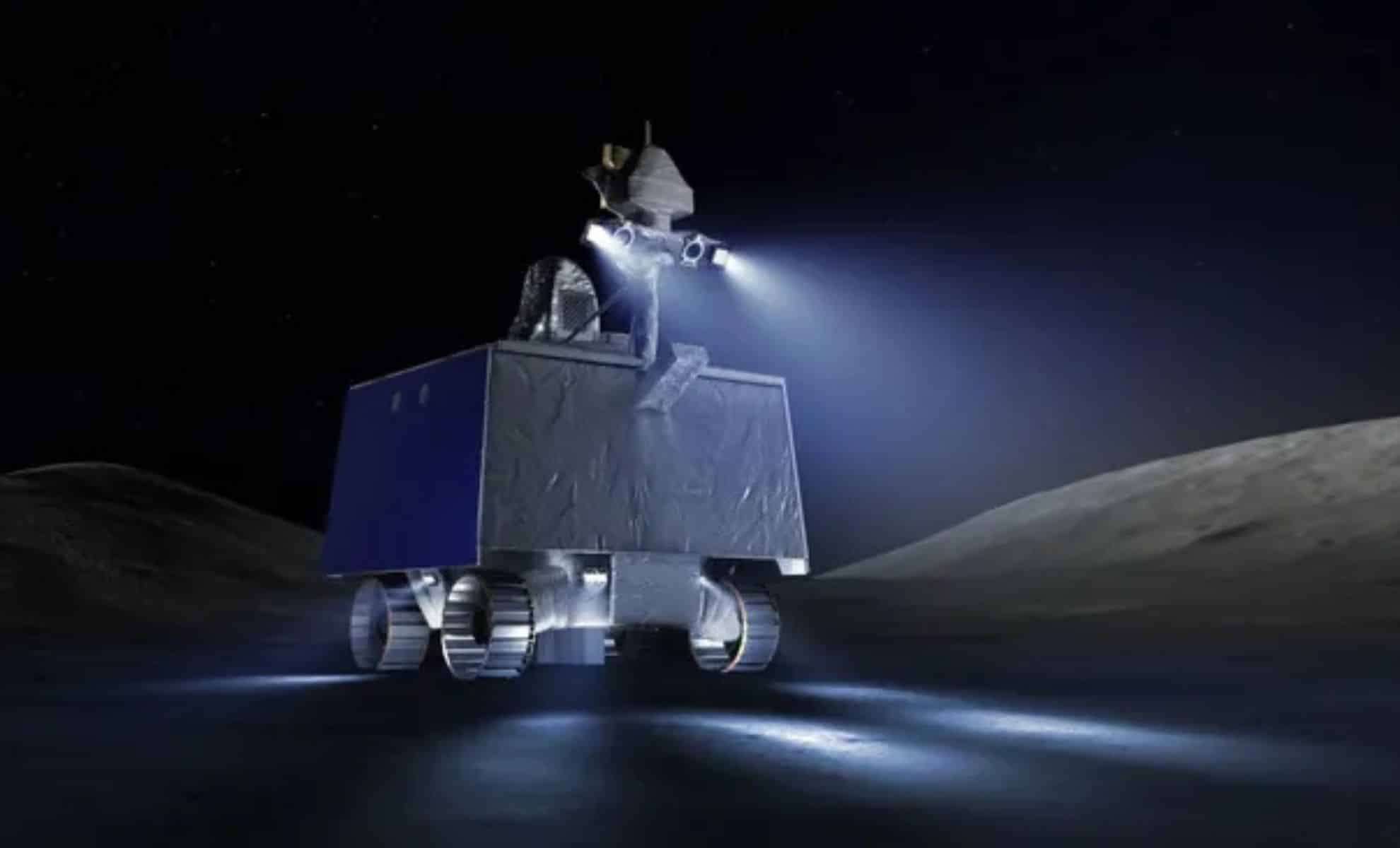
Remote-controlled robotic technology is becoming indispensable in advancing lunar and Martian exploration by revolutionizing how resources and infrastructure are managed beyond Earth.
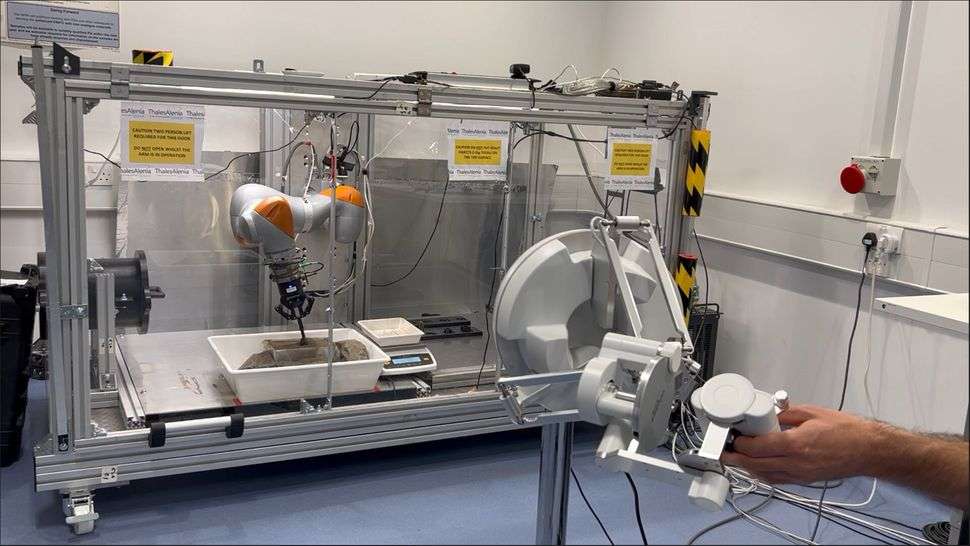
Recent studies from the University of Bristol highlight the promising capabilities of remotely operated robots in simulating essential tasks such as manipulating lunar soil, a critical element for constructing habitats on the moon.
Scientists at Bristol’s School of Engineering Mathematics and Technology carried out groundbreaking experiments at the European Space Agency’s (ESA) European Centre for Space Applications and Telecommunications (ESCAT).

Overcoming Lunar Dust Obstacles with Teleoperated Robotics
Managing lunar regolith, or moon dust, is one of the most formidable challenges in future lunar expeditions due to its abrasive texture and electrostatic properties. The University of Bristol team demonstrated the use of teleoperated robotic arms to efficiently collect, transport, and manipulate this material within a controlled simulation, aiding preparations for projects like NASA’s Artemis missions and ESA’s Moon Village.
The use of a haptic feedback interface enabled operators to experience a realistic sense of touch, replicating the moon's low gravitational pull and the feel of interacting with the lunar surface. According to lead researcher Joe Louca, “The system can adjust gravity levels in the simulation and deliver touch feedback, giving astronauts an accurate impression of how lunar dust behaves under moon-like conditions.”
This tactile feedback allowed operators to intuitively gauge the force needed for scooping and compacting the regolith simulant. Louca stated, “Our model consistently predicted scooping outcomes with complete reliability, making it a dependable tool for lunar mission planning.”
Advancing Lunar Mission Preparedness
These teleoperation studies contribute to a larger initiative employing robotic technology to assist human and autonomous operations on the moon. The simulation platform developed at Bristol offers a cost-efficient alternative to traditional lunar soil testing, which usually demands costly physical samples and specialized facilities. This virtual setup facilitates preliminary evaluations without requiring actual lunar materials.
Louca emphasized that the simulations could double as training modules for astronauts, delivering immersive preparatory experiences before venturing lunar-side. “This platform promises to be an essential support mechanism for mission training and operational development,” he explained. Its impact extends beyond training to enhancing robotic systems designed for extracting lunar resources.
Utilizing Lunar Resources for Upcoming Space Endeavors
The capability to remotely operate robots is expected to be a cornerstone in In-Situ Resource Utilization (ISRU) efforts, which leverage local lunar materials to sustain human activity on the moon. Components in lunar soil such as oxygen and water can be extracted to support life and fuel missions, with teleoperated machines mitigating risks by handling hazardous operations.
As agencies like NASA with its Artemis Program and China’s Chang’e missions gear up for manned lunar flights over the next decade, robotic teleoperations and simulation innovations from the University of Bristol will be pivotal in delivering safer, efficient, and budget-conscious missions. These advances in remote operational technology are foundational to constructing permanent lunar bases, which could sustain ongoing human presence and scientific research.
With teleoperated robotic systems demonstrating high performance in regolith management and resource processing, upcoming missions will be better prepared to build infrastructure and thrive on the lunar surface. As Louca summarized, “The next ten years will see numerous manned and unmanned moon expeditions, and this simulation technology will play a crucial role in their success.”
- Categories:
- Astronomy ,
- News ,
- Science ,
- Nasa






0 comments
Sign in to Comment