

During the early 1960s, a young researcher ventured into a remote cave in the French Alps to examine glacier structures. However, the journey evolved into a groundbreaking scientific event that attracted global interest for reasons far beyond geology.
More than two months later, he resurfaced wearing protective eyewear and appeared disoriented, completely unaware of the actual passage of time. This experience marked a profound shift—not only in his perception but also in scientific understanding of the human relationship with time.
Back then, the scientific community had scarcely explored how a lack of natural light and social interaction might influence the body's internal cycles. The concept that the human body could operate on a self-sustaining timekeeping mechanism was still largely unconfirmed and primarily investigated in controlled animal experiments.

Discovering the Body's Biological Clock
In July 1962, Michel Siffre, a 23-year-old French geologist, entered the Scarasson cave, situated approximately 130 meters beneath the surface near the Italian border. Completely devoid of clocks, calendars, or sunlight, Siffre used only a telephone connection to log his eating, sleeping, and waking times to a surface team.
The cave maintained temperatures just above freezing and nearly 100 percent humidity. Gradually, Siffre’s sense of time began to blur. Reflecting in an interview with Scientific American, he stated, “I lost all sense of time. I knew if it was morning or evening, but little else. I believed I had been inside for 35 days, though it had actually been 63.”
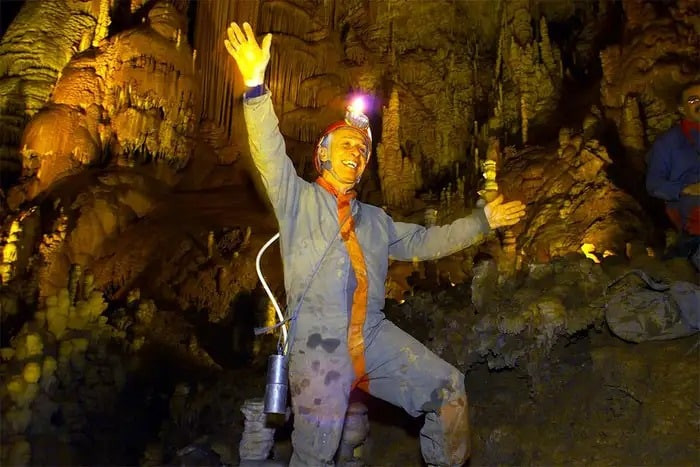
His sleep-wake rhythms extended beyond the typical 24-hour cycle. In a subsequent experiment in 1972 conducted in Texas in collaboration with NASA, Siffre’s internal day lengthened to as much as 48 hours. These experiments provided rare human data on circadian rhythms absent external time cues, as detailed in this chronobiology feature exploring Siffre’s pioneering contributions.
Further studies by organizations such as the Max Planck Institute for Biological Cybernetics and Harvard Medical School verified that the brain’s suprachiasmatic nucleus serves as the central regulator of circadian rhythms, coordinating daily physiological processes even without external light input.
Applications in Space and Isolated Environments
Although initially self-funded and informal, Siffre’s experiment quickly influenced fields examining sensory deprivation, solitude, and human performance in extreme settings.
The 1972 study, developed with NASA, aimed to mimic conditions astronauts face on prolonged space missions. Issues of disorientation with time had already emerged among Apollo crews, raising concerns over psychological effects of prolonged confinement. Siffre’s findings helped inform strategies for managing biological cycles during space travel.
A 2022 publication by the European Space Agency highlighted Siffre's work as foundational in Earth-based analog astronaut research, where time isolation is simulated to study cognitive and behavioral impacts on crews.
The military also took interest, particularly for submarine teams spending extended periods in sealed environments. Siffre remarked in an interview with Cabinet, “During the Cold War, France was launching its nuclear submarine program but lacked knowledge on regulating submariners’ sleep patterns.”
NASA later applied mathematical models to analyze Siffre’s biometric data further, enhancing understanding of adaptation processes to isolation and altered light exposure.
Mental Effects of Time Isolation
While maintaining physical health, Siffre experienced serious mental difficulties such as forgetfulness, emotional dullness, and speech impairments—disturbances now frequently linked to sensory deprivation and isolation.
A 2020 review in Nature Reviews Neuroscience discusses how disruptions to circadian rhythms correlate with brain disorders including mood swings, cognitive degradation, and sleep problems, with severity increasing alongside duration of isolation or environmental disruption.
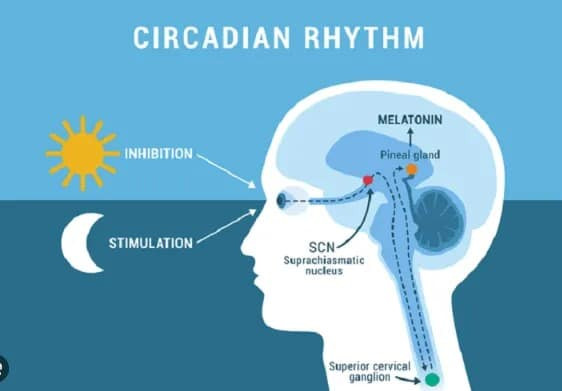
Others who took part in similar isolation studies overseen by Siffre showed comparable irregularities in biological rhythms. In one instance, a participant slept uninterrupted for over 30 hours, alarming surface observers. These outcomes illustrate the brain's adaptability yet susceptibility when disconnected from environmental day-night cycles.
Although research protocols from that era would not meet modern clinical standards, the repeated and consistent findings helped establish Siffre’s work as an invaluable resource in real-world circadian rhythm disruption studies.
Growing Interest in Biological Timekeeping
Since Siffre’s pioneering studies, fascination with circadian biology has surged. Current medical investigations explore how synchronizing treatment times with internal clocks can enhance therapies for cancer, hormone disorders, and psychiatric conditions.
Chronobiological insights are now applied to analyze fatigue, alertness, and judgment in shift workers, emergency responders, and drivers. Sleep experts identify irregular light exposure, travel, and screen use as factors causing chronic circadian misalignment in today’s society.
Meanwhile, space agencies continue examining human endurance in environments lacking conventional time markers. Mars mission simulations, polar research stations, and underwater labs implement regulated lighting and sleep schedules to optimize psychological health and operational effectiveness.
Now in his eighties and residing in Nice, France, Siffre treasures a tube of electrode paste, presented by NASA astronauts, symbolizing the enduring link between his initial cave sojourns and ongoing exploration of human time perception in challenging habitats.
- Categories:
- Science






0 comments
Sign in to Comment