
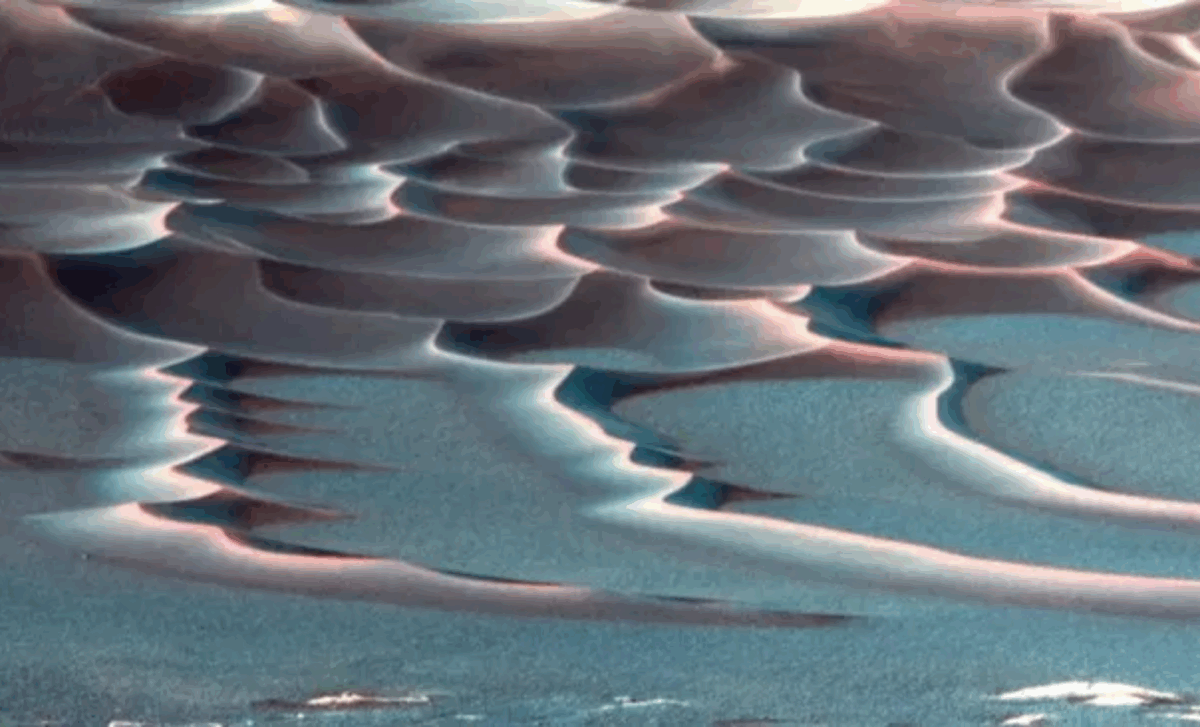
A recent publication in Geophysical Research Letters sheds new light on how Martian winds influence the formation of its characteristic dunes. By focusing on sand and other granular materials, scientists have developed an innovative technique to decode wind behavior through detailed image analysis. This research bridges advanced simulation with actual observations, unlocking insights into both Mars’ geological past and what lies ahead for its landscape.
Decoding Wind Activity on the Red Planet
Nicknamed the “Red Planet,” Mars continues to fascinate researchers, particularly regarding its atmospheric conditions and surface transformations. Although the Martian winds are less intense than those on Earth, they possess enough force to sculpt impressive dune patterns seen across the planet. The challenge has been accurately estimating these winds’ strength and their influence on the terrain’s evolution.
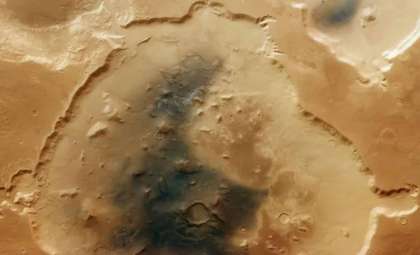
To address this, the team examined granular materials like sand and dust present on Mars. These seemingly simple particles encode vital clues about the planet’s environmental shifts. Scientists from the State University of Campinas in Brazil demonstrated that by studying high-resolution images of Martian dunes, it is possible to reconstruct past wind conditions.

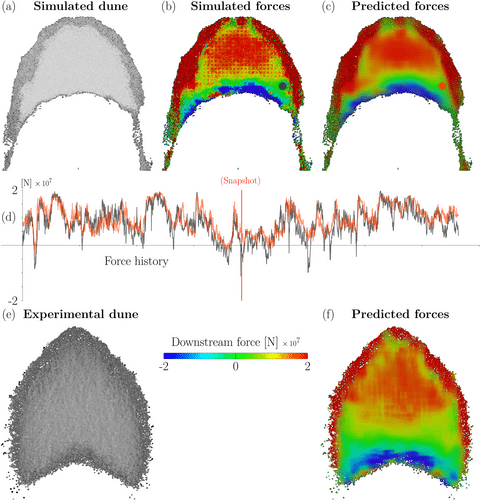
Direct wind measurements on Mars are difficult because placing instruments such as accelerometers on every grain is currently unfeasible. As explained by the research team, this challenge was overcome by combining simulations with image analytics to infer wind strength from grain motion patterns.
Granular Physics Unlocks Mars Surface Secrets
Materials like sand and dust react in intricate ways when exposed to wind forces. Unraveling these movements helps scientists interpret how the Martian surface has been shaped over time. Yet, the unpredictable nature of grain displacement complicates such analyses.
Thanks to recent progress in simulation capabilities, researchers now better predict and visualize granular behavior under variable wind influences.
“Any granular system that can be seen in an image — whether ice, salt or synthetic particles — can be analyzed as long as there’s a simulation capable of accurately reproducing the behavior of the material,” Renato Miotto, a postdoctoral researcher and lead author of the study, explained in the statement.
Applying these advanced methods to Martian landscapes enabled the team to simulate historical wind events and anticipate dune transformations, offering more than theoretical insight—this work reveals how Mars’ surface has evolved and is expected to change.
Projecting the Future of Martian Dunes
A major breakthrough from this research is the ability to forecast how Martian sand dunes will change over time. Utilizing high-definition images and granular dynamic simulations, scientists can now model dune migration and reshaping in response to shifting wind patterns, revealing the planet’s broader environmental forces.
These developments are invaluable for better comprehending Mars’ surface conditions, shedding light on the climate history that shaped its current terrain.
“In the case of Mars, it’s possible to infer, from widely available images, the intensity of winds in the past and the evolution of dunes in the future,” said Erick Franklin, professor and co-author of the study.
As Mars missions deliver increasing amounts of imagery, these insights serve as a key resource for refining predictive models and understanding landscape evolution more precisely.
Implications for Upcoming Mars Exploration
Beyond scientific interest, this study holds practical value for future Mars missions. Enhanced knowledge of wind-driven sand and dust movement can guide rover navigation and site selection for exploration or colonization, safeguarding mission success.
Furthermore, this approach could be applied to other celestial bodies with similar terrain properties, such as the Moon or Venus. Employing granular physics combined with image analysis presents a non-invasive way to examine surface dynamics without the need for physical sensors.
The full study, published in Geophysical Research Letters, marks a major step forward in decoding Mars’ geological past and preparing for the challenges of future extraterrestrial exploration.
- Categories:
- News






0 comments
Sign in to Comment