
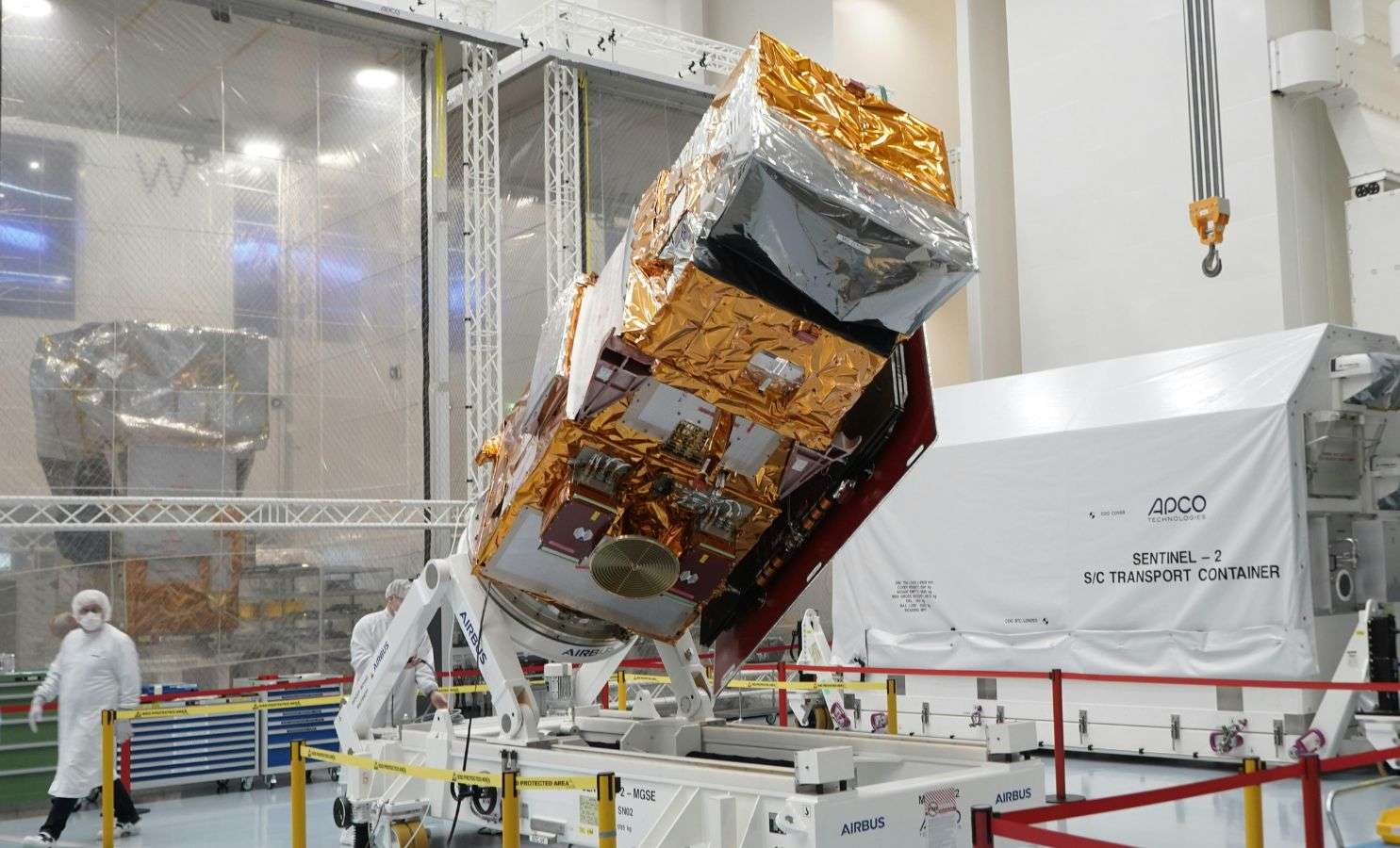
Europe’s Copernicus initiative receives a major boost as the Sentinel-2C satellite is transported to the spaceport in French Guiana.
Manufactured by Airbus, this satellite is scheduled for deployment on the concluding mission of the original Vega launcher, marking a pivotal moment for European space exploration.
Transporting to the Launch Facility
On July 2, 2024, the Sentinel-2C satellite commenced its transfer via road from Airbus’s Friedrichshafen plant to Bremen. There, it was carefully secured aboard Canopée, a sustainable sail-assisted cargo vessel specially crafted to ferry components of the Ariane 6 rocket.

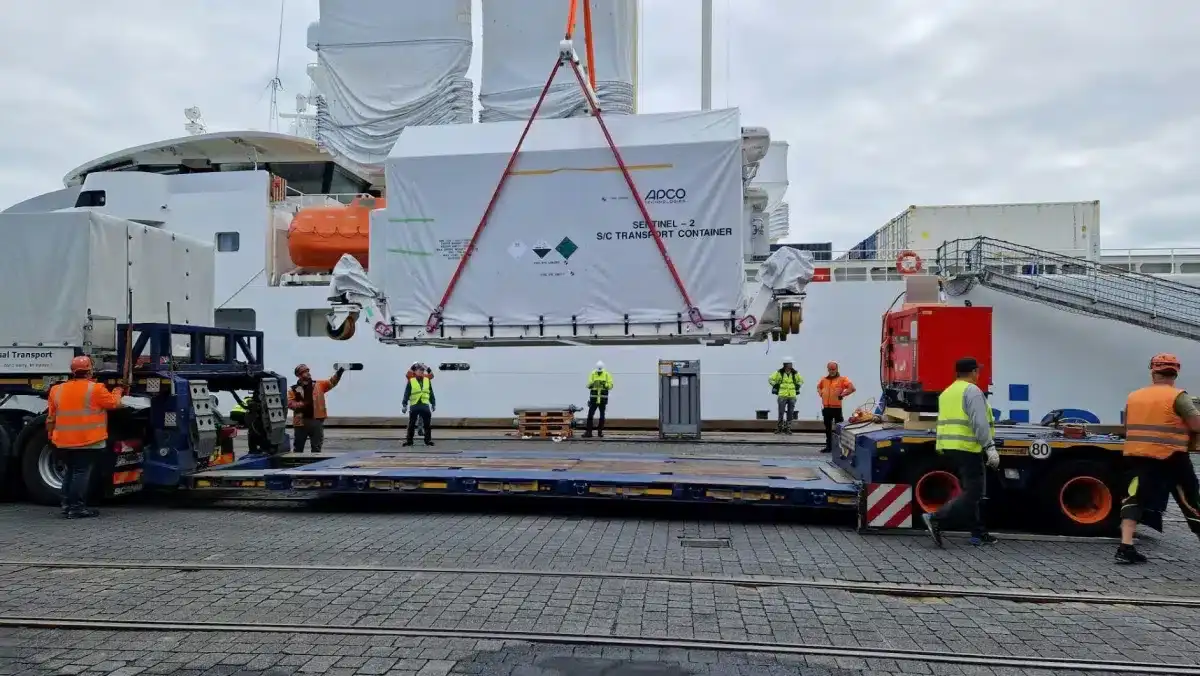
Canopée will voyage across the Atlantic Ocean, delivering Sentinel-2C to the Guiana Space Center in Kourou, French Guiana, over approximately two weeks. This method reflects a commitment to innovative and environmentally friendly transport solutions crucial for the future of spacecraft logistics.
An Overview of the Sentinel-2 Constellation
Sentinel-2C is the latest addition to the Sentinel-2 satellite family, which includes Sentinel-2A and Sentinel-2B, launched in 2015 and 2017, accordingly. Together, they orbit Earth every 100 minutes, enabling comprehensive coverage of terrestrial landscapes, large islands, and coastal zones every five days.
These satellites generate essential optical data across visible to shortwave infrared wavelengths. Each satellite processes approximately 1.5 terabytes of data daily after onboard compression, supporting diverse applications such as land usage analysis, environmental observation, and disaster management efforts.
Significance of the Sentinel-2 Series
Data acquired by the Sentinel-2 satellites plays a vital role in tracking climate change impacts, overseeing agriculture and forest resources, and managing natural disasters including floods, wildfires, and volcanic activity. Sentinel-2C will succeed Sentinel-2A, ensuring uninterrupted service of these essential functions.
Moreover, the planned deployment of the Sentinel-2D satellite will replace Sentinel-2B, extending mission continuity well past 2035. Airbus highlighted, “Each Sentinel-2 satellite collects 1.5 terabytes of data per day following onboard compression, supporting applications ranging from tracking land use to environmental monitoring.”
Technical Features and Mission Hurdles
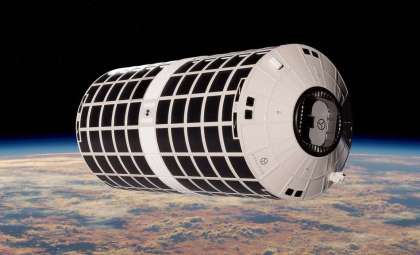
The Sentinel-2C spacecraft is engineered to deliver continuous observations across 13 spectral bands from an orbit approximately 786 kilometers above Earth. Its imaging coverage spans a swath width of 290 kilometers, producing high-resolution images at 10, 20, or 60 meters, essential for precise environmental monitoring.
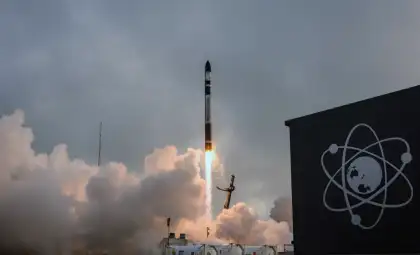
The launch vehicle, the Vega rocket, has experienced setbacks. Its successor, the Vega C rocket, had a promising inaugural flight in July 2022 but encountered a failure during its second mission, resulting in the loss of two Airbus Pléiades Neo satellites.
Currently, the European Space Agency is actively working to restore Vega C functionality by late 2024. The final flight of the original Vega rocket has been delayed due to complexities with its upper stage, illustrating the challenges of space missions.
Sentinel-2C’s Role Within the Copernicus Framework
The Sentinel-2 initiative forms an integral part of the Copernicus program, the EU’s premier Earth observation framework. It utilizes cutting-edge technologies to deliver vital data that supports climate monitoring, environmental safeguarding, and natural disaster response.
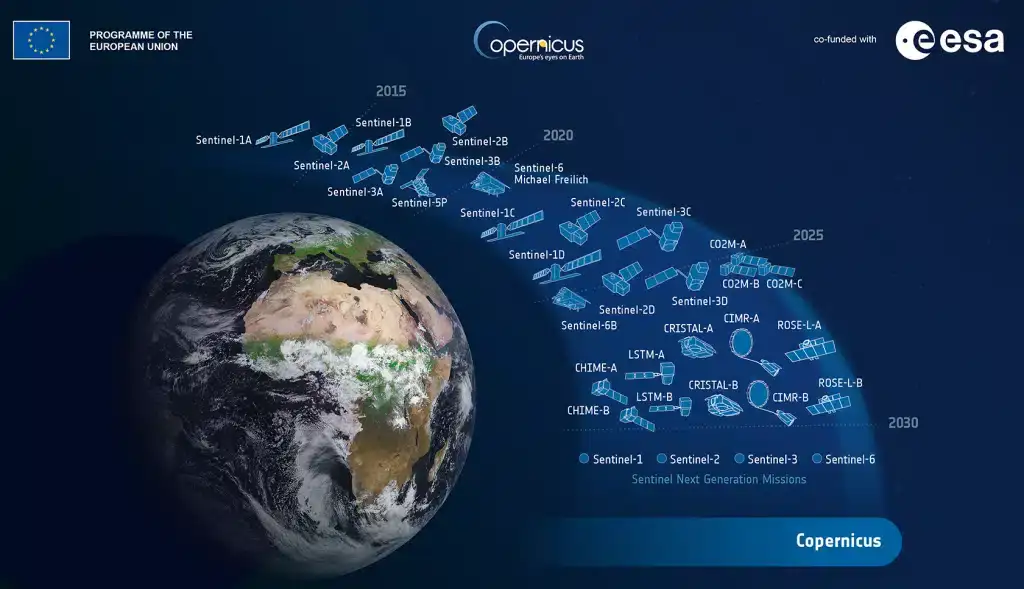
Marc Steckling, Head of Earth Observation, Science, and Exploration at Airbus, noted, “Satellites provide nearly half of the data essential for assessing and monitoring climate change impacts worldwide.”
He further stated, “Since 2015, the Copernicus Sentinel-2 satellites have furnished crucial climate insights, with Sentinel-2C ensuring this legacy continues. These satellites have even enabled space-based tracking of marine litter, a notable milestone for a pressing environmental challenge.”
The Sentinel-2 satellites are invaluable for observing diverse environmental variables, from monitoring pollution in freshwater and coastal ecosystems to tracking glaciers, ice masses, and snow cover. Their data supports scientific inquiry, informs policy development, and aids humanitarian actions.
The upcoming Sentinel-2C launch underscores a sustained commitment to enhancing Earth observation capabilities for tackling global environmental challenges.
- Categories:
- News ,
- Science ,
- Climate change ,
- Aircraft



0 comments
Sign in to Comment