
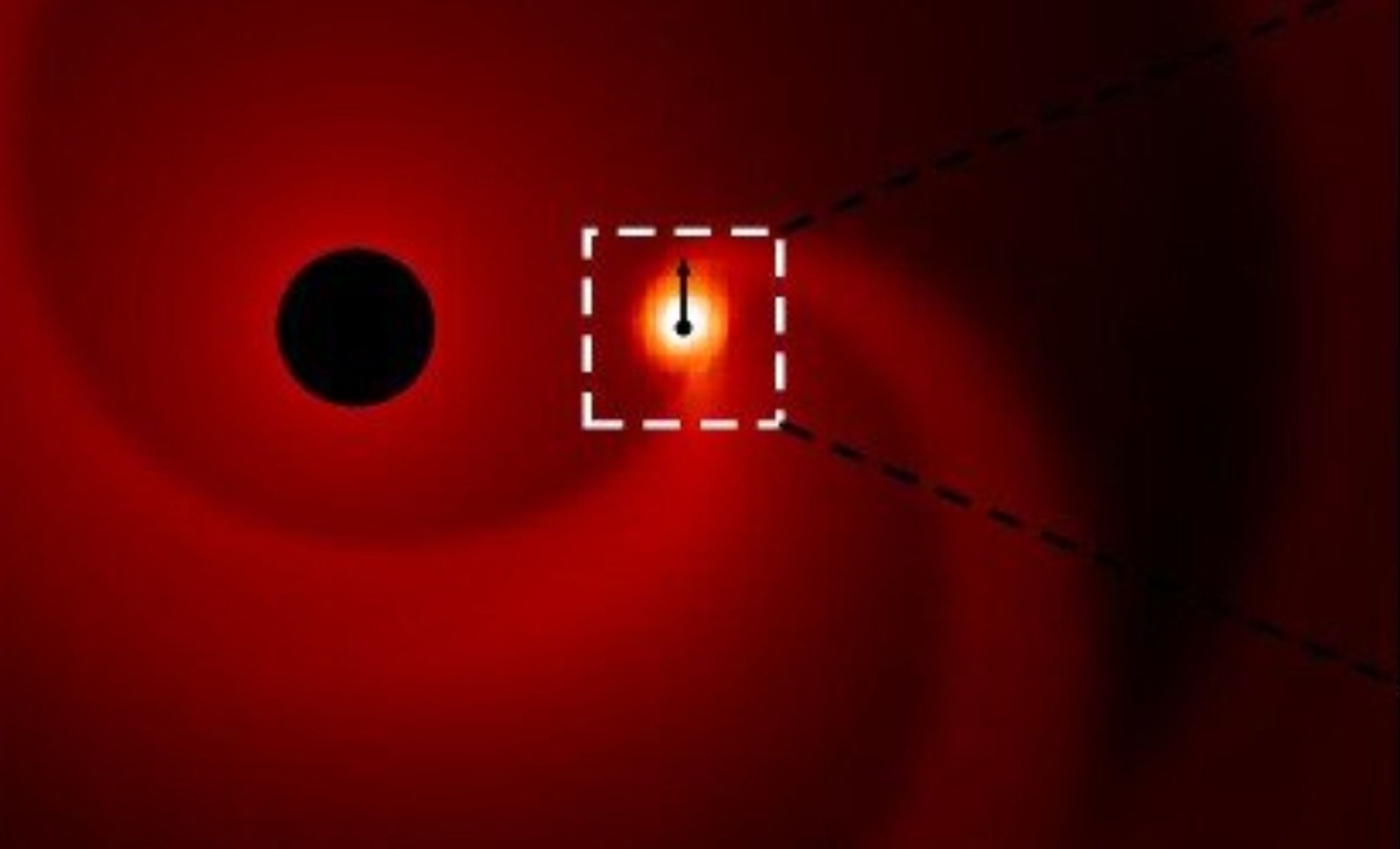
For the first time, scientists have obtained direct proof of a concealed companion orbiting an old, large red giant star. Utilizing the Atacama Large Millimeter/submillimeter Array (ALMA), this breakthrough offers fresh insights into interactions between dying stars and their environments, revealing surprising complexities in the final phases of stellar evolution.
The focus of this discovery is π1 Gruis, situated roughly 530 light-years away from Earth. This star is classified as an asymptotic giant branch (AGB) star—an evolved star initially similar to our sun that has since ballooned to a size over 400 times larger. Its luminosity is immense, outshining our sun by thousands of times, which has until now prevented detailed observations of its immediate vicinity. This makes the recent find, featured in Nature Astronomy, exceptionally noteworthy.
An Unexpectedly Symmetrical Orbit
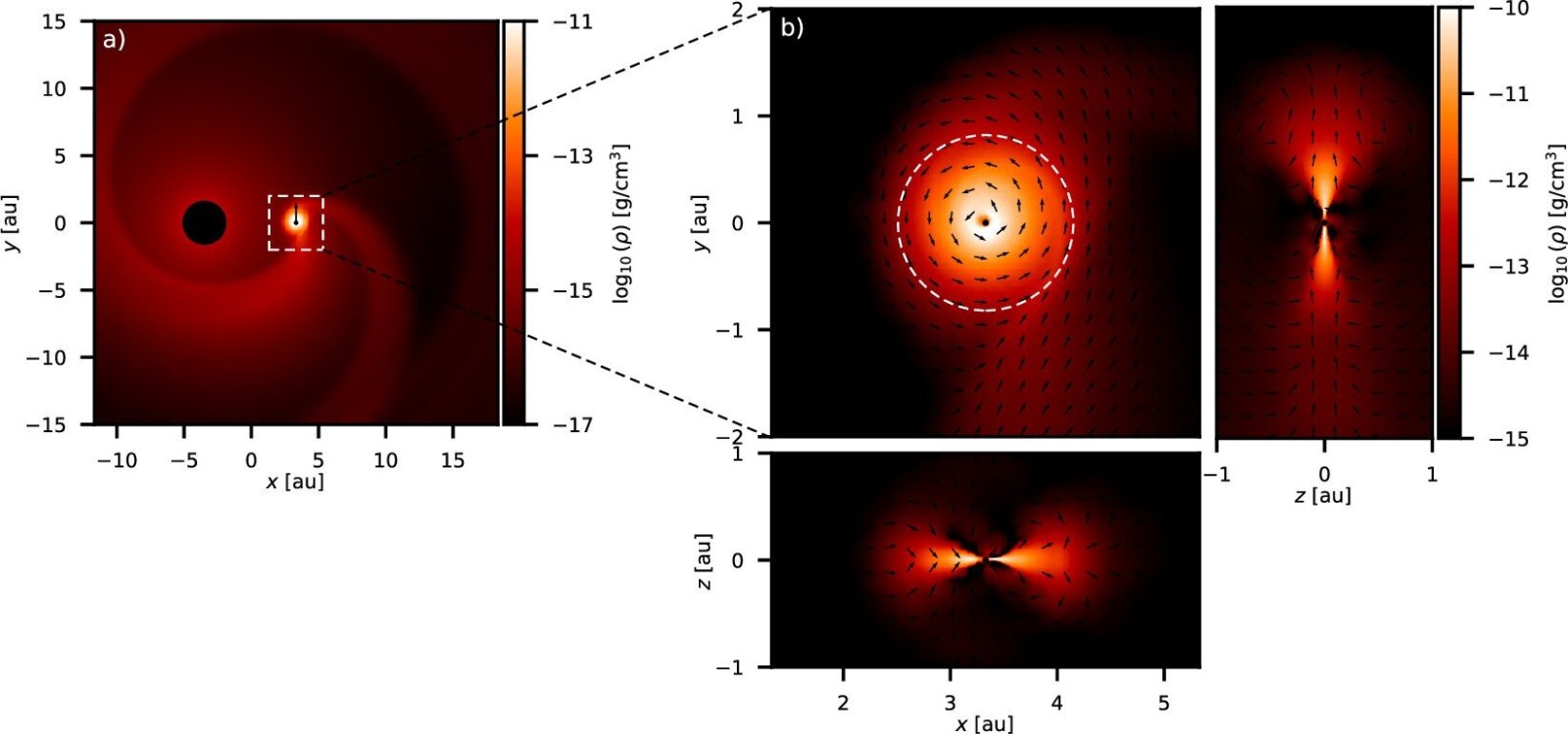
Among the surprising revelations in the research published in Nature Astronomy, the shape of the companion’s orbit was most striking. Previous expectations predicted a more elliptical path, given the tumultuous and energetic environment typical of an AGB star. Instead, observations revealed an orbit that is remarkably circular.

This circularity implies that tidal forces—gravitational effects that generally circularize orbits over time—may be acting more rapidly or effectively than previously recognized. Consequently, this finding could necessitate updating many current models depicting how stars and their companions evolve together.
Such detailed observations were made possible by ALMA’s unparalleled resolving power. Consisting of 66 radio antennas located in Chile’s Atacama Desert, the array managed to directly detect the companion’s orbit despite the intense brightness of π1 Gruis. As reported by Phys.org, this marks the first-ever direct detection of such an orbit surrounding an AGB-type red giant star.
Determining Masses to Understand the Orbit
Accurately interpreting the data required first establishing the mass of π1 Gruis, a difficult challenge considering the star’s vast, pulsating nature. Researchers at Monash University, including doctoral candidate Yoshiya Mori, employed stellar evolution models to study the star’s luminosity and pulsation characteristics.
“A key part of understanding the orbit of the companion is knowing the mass of the AGB star,” Mori said. Without that parameter, aligning the observed motion with theoretical models would have been impossible.
They compared their simulations with prior theoretical frameworks focused on the late evolutionary stages of red giants. Mori also pointed out that the presence of a companion in an already unstable environment “could possibly wreak further havoc on the already complicated processes surrounding these stars.”
Implications for Stellar Evolutionary Theory
Conventional models suggest that orbital circularization takes anywhere from thousands to millions of years. However, in the case of π1 Gruis, the companion already shows a circular orbit. According to Mats Esseldeurs, the lead scientist on the project from KU Leuven, these results may require a broad reassessment of the role tidal forces play in shaping binary star system evolution over time.
“Understanding how close companions behave under these conditions helps us better predict what will happen to the planets around the sun, and how the companion influences the evolution of the giant star itself.”
The broader consequences extend well beyond this single system. Should similar companions be frequently found orbiting other dying stars, many existing astrophysical models will likely require significant revision.
- Categories:
- Space



0 comments
Sign in to Comment