
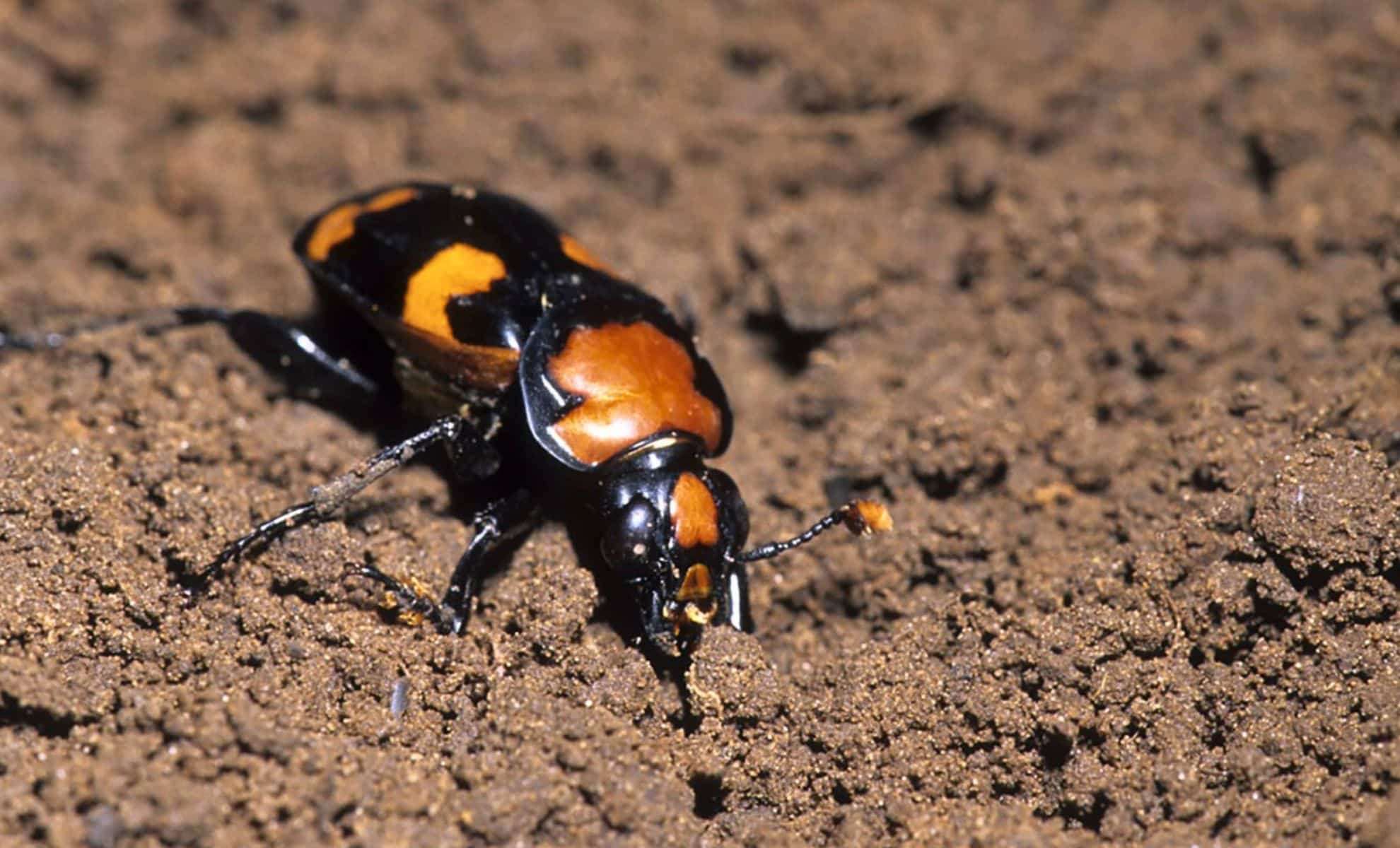
Once feared to be nearly extinct, the American burying beetle (Nicrophorus americanus) is exhibiting signs of revival in the Loess Canyons of southwestern Nebraska. A recent study published in Biological Conservation reveals a population upswing, the first notable improvement since the beetle was officially protected under the Endangered Species Act in 1989.
An Indicator of Prairie Ecosystem Vitality
The American burying beetle, which can grow up to five centimeters long, stands as North America’s largest carrion beetle. It plays an essential ecological role by consuming vertebrate carcasses, helping recycle nutrients within its environment. However, habitat loss and declining populations of small to medium-sized animals—its main food supply—have posed serious challenges to its survival.
Previously distributed across 35 U.S. states and three provinces in Canada, the beetle's range has shrunk considerably to patches in 10 states, including Oklahoma, Arkansas, and Nebraska. The Loess Canyons, a vast 130,000-hectare area renowned for rugged terrain and mixed-grass prairie, has unexpectedly emerged as a refuge for the species.

American Burying Beetle at a Glance
- Size: Up to 5 cm long
- Food: Carrion of vertebrates weighing between 100 and 200 grams
- Preferred Habitat: Moist, open grasslands without trees
- Major Threats: Loss of habitat, invasive plants, and reduced prey availability
Combating Invasive Trees and Revitalizing Habitats
A key threat to the beetle is the spread of eastern red cedar (Juniperus virginiana), which has overtaken native grasslands across the Great Plains. Without natural fires to keep them in check, these trees advance rapidly, outcompeting grasses and diminishing critical habitats for many species.
Ecologist Caleb Roberts from the U.S. Geological Survey found that the beetles perform best in grasslands with sparse tree coverage, preferably fewer than 10 trees per hectare. Even slight increases in tree density or farmland can drastically reduce beetle numbers.
In response, more than 100 private landowners teamed up with agencies such as the Nebraska Game and Parks Commission, Pheasants Forever, and the U.S. Department of Agriculture’s Natural Resources Conservation Service to restore these prairies. Since 2002, controlled burns have been implemented to remove invasive red cedars, actively reinstating the historical grassland landscape.
Restoration Progress in the Loess Canyons
Significance of Beetle Recovery to Ecosystem Health
As grassland diversity increases, the beetles benefit from improved soil conditions for burrowing and greater access to appropriately sized carrion, including birds such as bobwhites and small mammals. Thomas Walker, a wildlife expert with Nebraska Game and Parks, credits the landowners' commitment for the positive outcomes. “Ultimately, they’re the ones that are leading the success on all of this,” he remarks.
This collaborative restoration effort highlights how focused conservation can halt and reverse declines not only in a single species but across entire ecosystems. The resurgence of the American burying beetle points to broader gains in prairie biodiversity and offers an effective conservation model for other species in the Great Plains region.
The findings were documented in Biological Conservation.
















0 comments
Sign in to Comment