
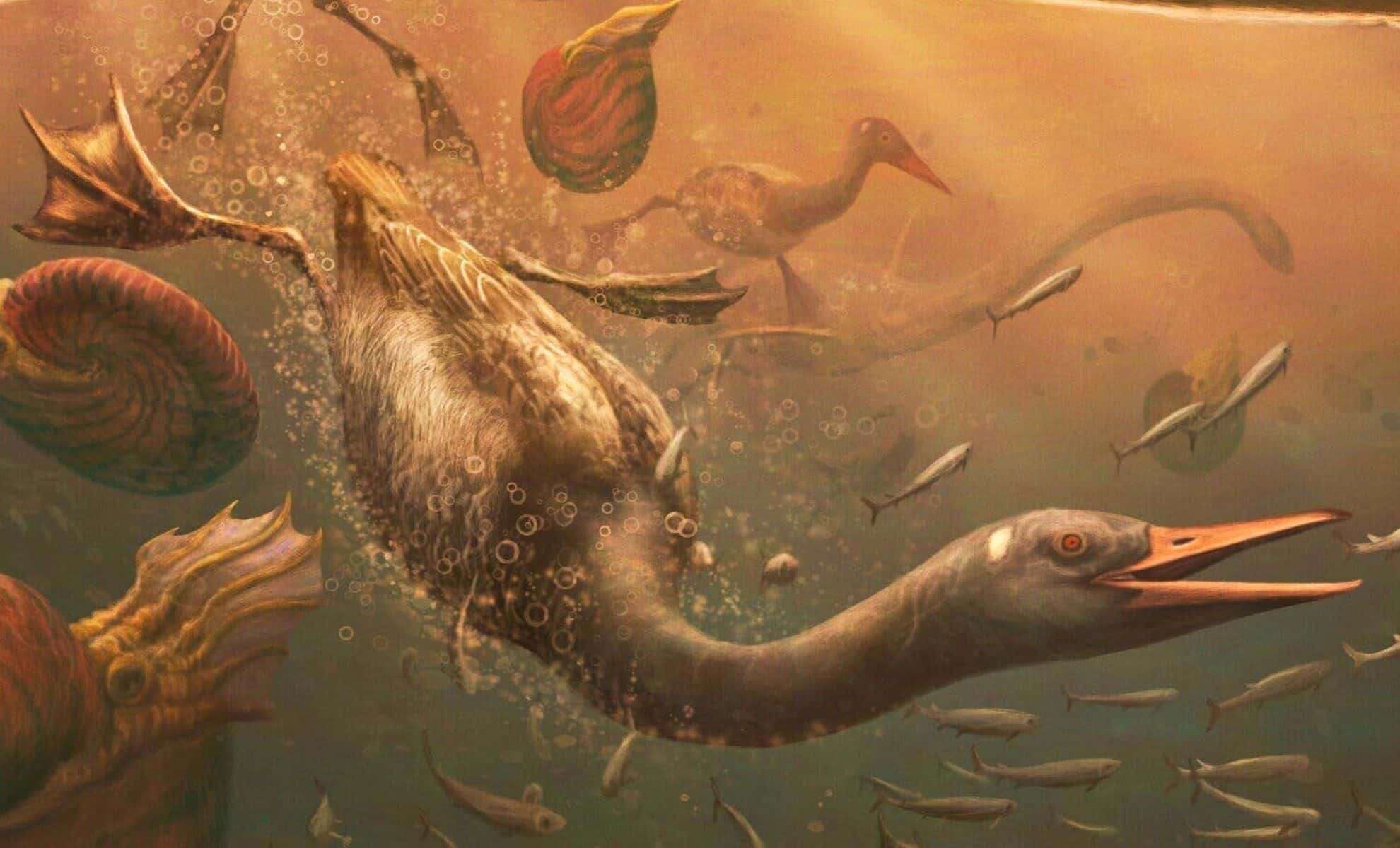
A remarkable 69-million-year-old fossil has emerged as a game-changer in the ongoing scientific discussion about the origins of modern birds. The discovery of a nearly intact skull belonging to the extinct species Vegavis iaai indicates that the ancestors of contemporary birds lived alongside dinosaurs prior to the devastating Chicxulub asteroid impact that caused mass extinction 66 million years ago. This finding opens up new questions about whether Vegavis represents an early form of waterfowl or a completely distinct avian lineage.
Resolving a Long-Standing Evolutionary Puzzle
Scientists have long debated whether today's birds evolved before the asteroid event that marked the end of the Cretaceous Period or after it. Central to this debate is whether any modern birds directly descended from species that coexisted with the T. rex.
Since 2005, when Vegavis iaai was first described from a fossil discovered in Antarctica, dated to about 68 million years ago, the incomplete skull made it challenging to conclusively link it to modern birds or merely a close relative.

However, a recently uncovered specimen found in 2011 and detailed in a new paper published in Nature reveals a well-preserved skull exhibiting classic avian features, such as a long, toothless beak and an expanded forebrain, which are characteristic of modern birds.
“This fossil is key to settling many debates,” explains Christopher Torres, lead researcher and paleontologist at the University of the Pacific. “The main question now is pinpointing Vegavis’ exact position on the bird evolutionary tree.”
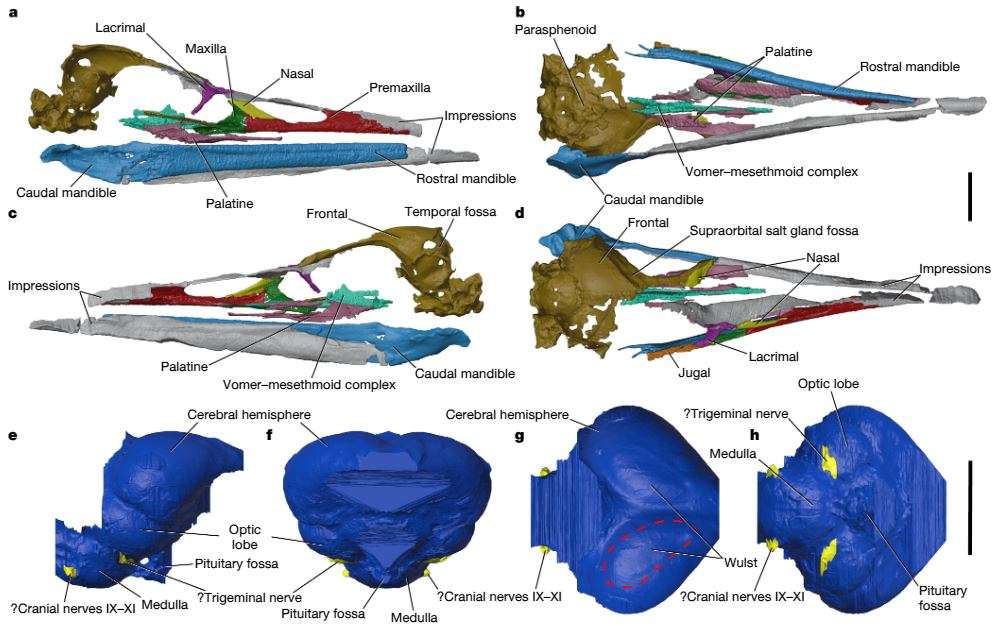
Was Vegavis a Diving Bird or a Different Avian Form?
Despite this breakthrough, experts remain divided about the exact nature of Vegavis. While initial interpretations linked it to the ancestors of ducks and geese, the new skull analysis points towards a distinctive lifestyle.
“Our evidence shows that this species was a foot-powered underwater hunter,” Torres states. “Its leg structure propelled it under water, and its jaw muscles appear adapted for quickly snapping its bill shut while chasing fish.”
Such traits resemble those of contemporary diving birds like loons and grebes more than typical waterfowl, leading some scientists to question the traditional classification of Vegavis as a duck progenitor.
“Though intriguing,” comments Chase Brownstein, an evolutionary biologist at Yale University, “I remain cautious about assigning Vegavis as a direct ancestor of modern ducks.”
Antarctica’s Role as a Bird Sanctuary in the Cretaceous
The presence of Vegavis hints at a vastly different Antarctica during the late Cretaceous. Unlike today’s icy landscape, this region was once a warm, forested environment rich in life.
Some scientists propose that Antarctica might have acted as a safe haven for early bird species, helping them endure the catastrophic asteroid event that extinguished many dinosaur species.
“Antarctica remains largely unexplored in terms of dinosaur-era life,” says Matthew Lamanna, paleontologist at the Carnegie Museum of Natural History. “There’s much to discover under its ice that could illuminate how birds survived while their reptilian cousins vanished.”
This article has been republished from the following materials. Note: material may have been edited for length and content. For further information, please contact the cited source.
- Categories:
- Science









0 comments
Sign in to Comment