
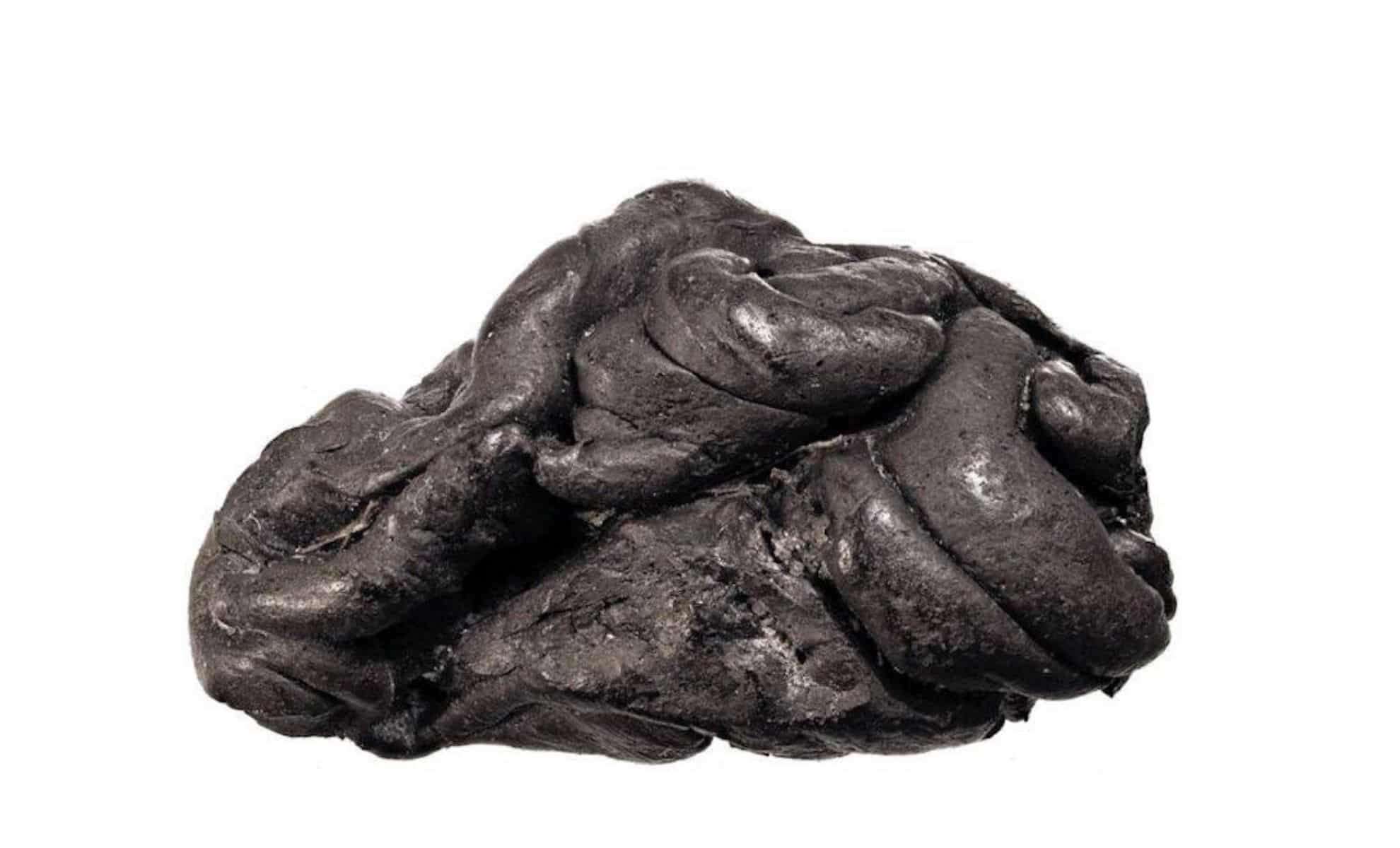
Researchers have achieved a remarkable feat by sequencing the entire genome of a Stone Age woman from a 5,700-year-old lump of birch pitch—an ancient chewing substance—unearthed at Syltholm, an archaeological site on the Danish island of Lolland. This groundbreaking study by scientists at the University of Copenhagen appeared in the journal Nature Communications.
The resinous material, bearing clear tooth impressions, was so exquisitely preserved that it allowed detailed reconstruction of the woman’s genetic traits, background, health status, and even diet.
Birch Pitch: A Natural Time Capsule
Birch pitch, a sticky black resin derived by heating birch bark, served multiple purposes in prehistoric Europe, especially as a versatile adhesive for attaching stone tools.

Scientists believe ancient people chewed the pitch to soften it before use, potentially for pain relief, hunger suppression, or simply as an early form of chewing gum. Its antimicrobial and water-repellent characteristics made it an excellent medium for DNA preservation over thousands of years.
The Syltholm site provided exceptional conditions, being submerged in mud, which allowed organic material to remain intact. “Syltholm offers a uniquely preserved context,” noted Theis Jensen of the Globe Institute at the University of Copenhagen, a researcher involved in the project. “The survival of organic artifacts here is extraordinary.”
Revealing a Dark-Skinned Woman with Blue Eyes
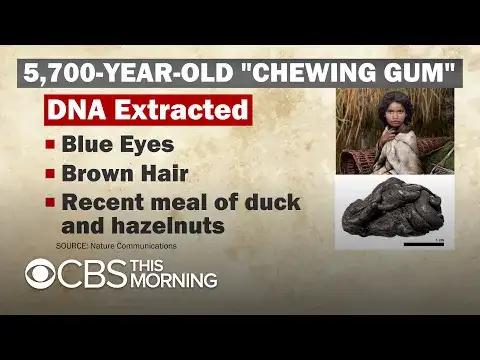
DNA analysis revealed that the pitch-chewing individual was female, lovingly labeled Lola, who lived in southern Denmark during a time when agriculture was gradually emerging in Scandinavia. Strikingly, her genome showed no genetic links to Neolithic farmers, implying she belonged to a hunter-gatherer group from western Europe that had yet to intermix with farming communities.
Her genetics connected her more to hunter-gatherers from places like Spain and Belgium than to people in central Scandinavia at that period. Study co-author Hannes Schroeder highlighted that this suggests two distinct population migrations into Scandinavia after the last Ice Age.
Based on genetic markers, Lola likely had dark skin, dark hair, and blue eyes—a rare combination today but descriptive of some Mesolithic populations.
Tracing Ancient Mouth Microbes and Diet
The birch pitch preserved not only human DNA but also a variety of oral bacteria and pathogens. Scientists detected Streptococcus pneumoniae, a bacterium that can cause pneumonia, along with remnants of Epstein-Barr virus, associated with mononucleosis. Additionally, DNA from hazelnuts and duck was found, indicating these foods were part of her diet.
Schroeder commented, “This birch pitch gum preserves DNA exceptionally well—comparable to the petrous part of the temporal bone, which is often considered the best source for ancient DNA.”
The broad array of microbial DNA offers new insights into ancient bacterial evolution. As Schroeder explained, “Our ancestors lived with different environments, lifestyles, and diets, which shaped their microbiomes distinctly.”
Expanding Horizons in Ancient DNA Analysis
This landmark discovery represents the first occasion a complete ancient human genome has been recovered from a source other than skeletal remains. Given the scarcity and fragility of ancient bones, birch pitch chewing gum opens promising new pathways for genetic research, especially at sites lacking well-preserved skeletons.
For molecular archaeologist Anders Götherström from Stockholm University, this finding signals a transformative advancement. He suggests that ancient chewing gum could surpass bones and teeth as a resource for retrieving DNA and pathogens, greatly enhancing our grasp of human history and evolution.
- Categories:
- News













0 comments
Sign in to Comment