

In today’s uncertain global food market, one small South American country stands apart by producing enough food to fully sustain its population. Guyana, home to less than 800,000 people, uniquely meets all its nutritional demands across seven critical food categories without depending on imports.
A recent analysis featured in Nature Food highlights Guyana’s extraordinary agricultural productivity. Researchers from the University of Göttingen and the University of Edinburgh surveyed food production data from 186 nations, revealing that Guyana stands alone in fully satisfying its population’s needs for grains, fruits, vegetables, dairy, meat, staples, and fish through domestic production alone.
What Makes Guyana’s Agriculture Exceptional?
While countries such as China and Vietnam have come close to self-reliance in food production, Guyana remains the sole country that consistently produces everything its people require. Lead author Jonas Stehl, an economist specializing in development from the University of Göttingen, notes, “Global food trade is vital for sustainable diets, yet Guyana’s capacity to fulfill all its food needs internally remains unparalleled.”

Guyana’s success is largely due to its advantageous climatic conditions and nutrient-rich soils, supporting a wide variety of crops and livestock year-round. This combination enables the country to maintain comprehensive food security—a rarity even among nations with expansive farming sectors.
Global Reliance on Food Imports
Though Guyana stands alone in full self-sufficiency, agricultural powerhouses like China and Vietnam nearly meet all their nutritional needs, securing six of the seven essential food groups domestically. Their shortfall in one category underscores the difficulty of achieving complete food independence.
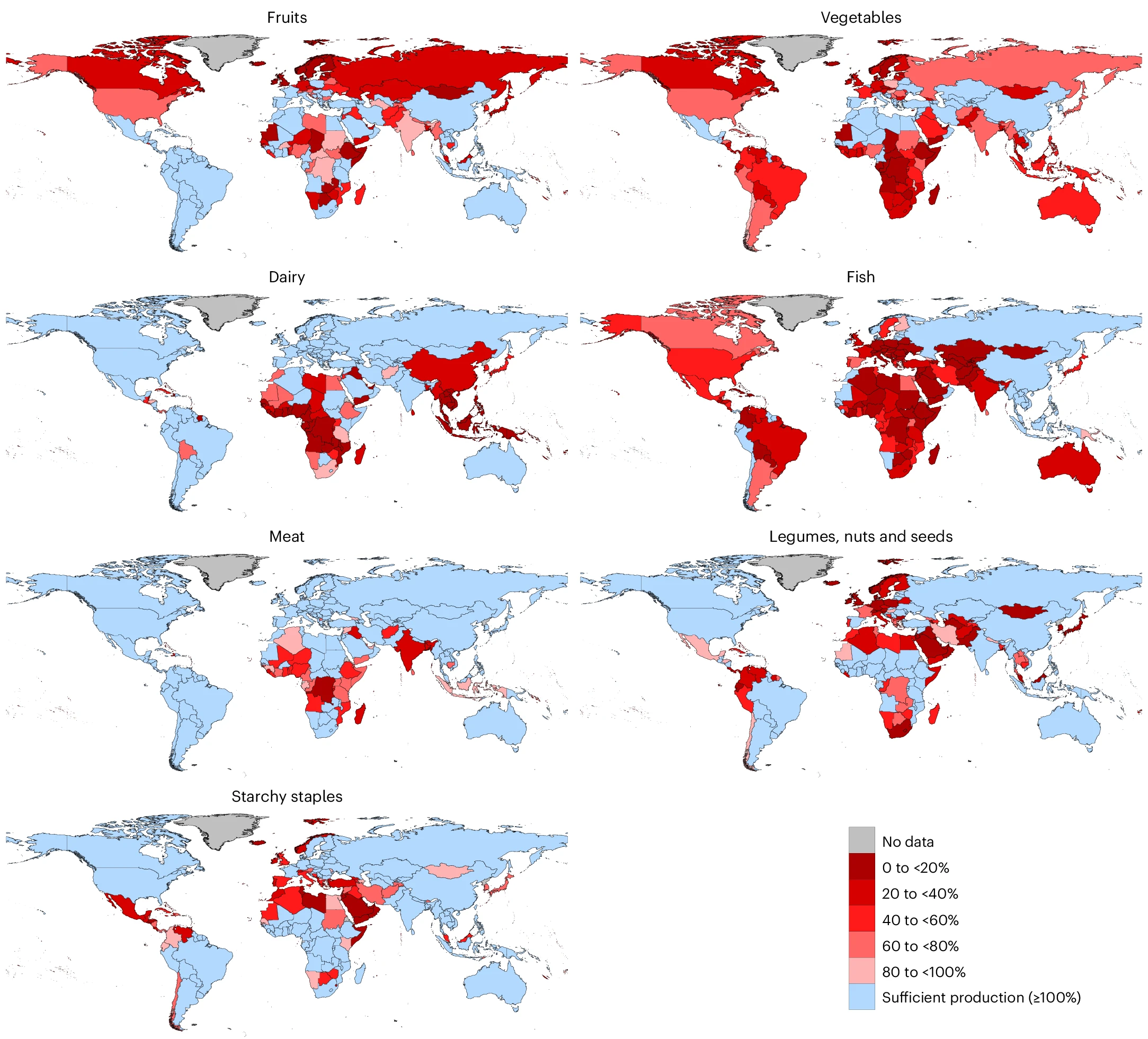
Beyond these nations, the outlook is more concerning. Over one-third of the surveyed countries manage to supply only two or fewer food groups internally. Countries like Afghanistan, the United Arab Emirates, and Qatar face significant challenges, producing insufficient amounts to satisfy any of the seven key food categories outlined in the study.
The Vulnerability of International Food Systems
The research highlights the fragile nature of the global food supply chain. Many nations depend heavily on imports to satisfy their food requirements, making them susceptible to disruptions caused by economic turmoil, political conflicts, or environmental events. Experts stress the urgency for countries with limited agricultural capacity to bolster their supply networks and enhance resilience.
For example, the Gulf Cooperation Council achieves self-sufficiency only in the meat sector, relying extensively on imports for its other dietary needs. Similarly, regional trade unions in West Africa and the Caribbean can supply just two food groups internally, exposing them to potential shortages during crises.
The study advocates diversifying and reinforcing global trade relations. With recent political trends favoring protectionism—such as policies introduced by former U.S. President Donald Trump—creating resilient, well-distributed food systems is paramount. Relying heavily on a single trade partner or region increases vulnerability to supply shocks and threatens food security worldwide.
- Categories:
- News











0 comments
Sign in to Comment