

The discovery of controlled fire stands as one of humanity’s greatest breakthroughs, yet its initial purpose remains debated. Although many have traditionally viewed early fire use as centered on cooking, recent research suggests its earliest function was quite different.
Preserving Meat Through Fire Instead of Cooking
A team from Tel Aviv University recently unveiled research in The Royal Society proposing that early humans might have first applied fire mainly to dry and smoke meat for preservation. This approach would have safeguarded their food supplies from microbial decay and animal scavengers, effectively creating substantial meat storage reserves for extended consumption.
Ran Barkai, one of the study’s co-authors, explained, “The origins of fire use is a ‘burning’ topic among prehistory researchers around the world. It is generally agreed that by 400,000 years ago, fire use was common in domestic contexts—most likely for roasting meat, and perhaps also for lighting and heating”, highlighting that fire’s initial role likely preceded cooking.

Defending Meat Stores from Spoilage and Scavengers
The investigators examined nine ancient sites dating from 1.8 million to 800,000 years ago. These locations contained remains of colossal animals like elephants, hippos, and rhinos, which were crucial food sources for early humans.
According to co-author Miki Ben-Dor, these megafauna offered vast caloric supplies, with a single elephant capable of sustaining a community of 20 to 30 individuals for a month or longer. However, preserving this meat was vital to prevent decay and keep it safe from predators.
“A successfully hunted elephant or hippopotamus was a kind of meat and fat ‘bank’ that needed to be protected and preserved for many days,” Ben-Dor added, underscoring fire’s importance for maintaining these essential reserves.
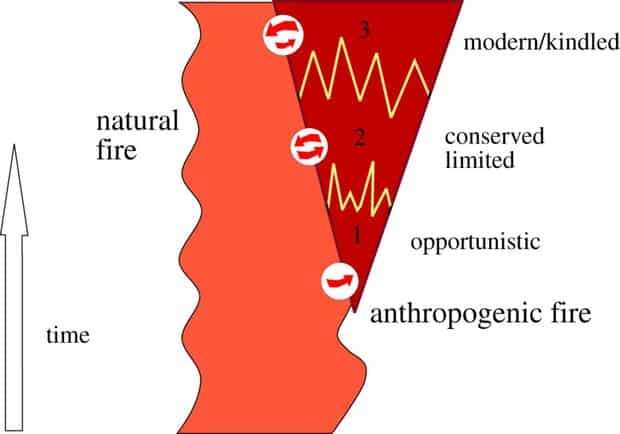
Fire as a Critical Survival Tool
Igniting and managing a fire demanded significant effort, so early humans would have required a strong survival justification. The study reveals that protecting and preserving large quantities of meat through fire provided a meaningful energetic benefit, justifying the labor invested.
This finding fits broader theories suggesting that early human dietary patterns heavily influenced cultural and technological evolution. As populations of large animals like mammoths and rhinoceroses declined, hunting shifted toward smaller prey, which may have prompted new ways of utilizing fire—including its later adoption for cooking.
- Categories:
- News













0 comments
Sign in to Comment