
Utilizing the James Webb Space Telescope (JWST), astronomers have identified a remarkable ancient galaxy that reinforces key predictions about our universe’s origins. As described in a recent paper submitted to Nature, this galaxy, named AMORE6, exemplifies a rare celestial object known as a zero-metallicity galaxy. Positioned at a redshift of z = 5.725, AMORE6 shows no evidence of elements heavier than hydrogen and helium—materials produced shortly after the Big Bang. This finding offers significant support for the Big Bang framework, demonstrating that the earliest galaxies and stars adhered to theoretical expectations.
The research, released via arXiv in July 2025 under the title “Pristine Massive Star Formation Caught at the Break of Cosmic Dawn”, was spearheaded by Takahiro Morishita from the California Institute of Technology’s IPAC (Infrared Processing and Analysis Center). Here, we explore the significance of AMORE6 within cosmological models and what this means for our grasp of the early cosmos.
Hunting for the First-Generation Galaxies
Population III stars, theorized as the universe’s inaugural stars, formed soon after the Big Bang and consist almost entirely of hydrogen, helium, and trace lithium—lacking heavier elements produced later by stellar processes. These stars are believed to have forged all heavier elements afterward, and the galaxies hosting them—called Population III galaxies—should exhibit an absence of metals (elements besides hydrogen and helium).

“Detecting galaxies devoid of elements like oxygen—created only after Big Bang nucleosynthesis—is a fundamental prediction in cosmology,” the scientists note. “To date, no genuinely pristine ‘zero-metallicity’ Population III galaxies have been observed.” This missing piece has long challenged our understanding of early galaxy formation.
Because the primordial universe was dominated by hydrogen and helium, pinpointing galaxies formed under such pristine conditions has proven difficult. AMORE6, exhibiting near-zero metallicity, may unlock confirmation of these elusive Population III galaxies and enhance validation of the Big Bang scenario.
The AMORE6 Breakthrough
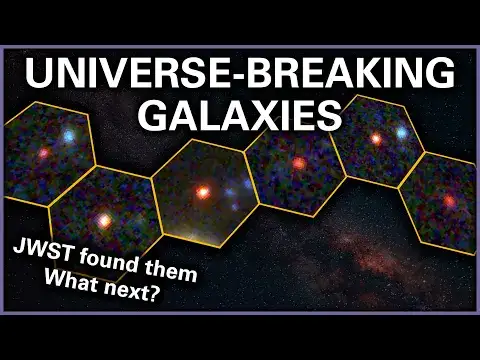
AMORE6 was spotted thanks to gravitational lensing, which magnified the faint light from this remote galaxy, enabling detailed study. Its redshift at z = 5.725 means the light now reaching us departed when the universe was only about 900 million to 1 billion years old, an epoch believed to be critical for the earliest star birth.
Spectral analysis revealed definitive signs suggesting AMORE6’s pristine nature. Crucially, the lack of oxygen emission lines, especially the [O III] line typically used to measure metallicity, signals a star-forming region nearly devoid of heavy elements. “The absence of [O iii] emissions clearly indicates AMORE6 contains a near-pristine, ultra-low-metallicity interstellar medium,” the authors state. This oxygen scarcity is a hallmark trait of zero-metallicity galaxies, confirming AMORE6 aligns with early star formation models.
Interestingly, AMORE6 also displays unexpected traits. Its small size and relatively low stellar mass imply it may represent a distinct evolutionary track compared to the more developed galaxies JWST has uncovered. While younger than some mature systems, its metal-deficient composition places it among the rarest galaxy types studied in early-universe research.
Reinforcing the Big Bang Paradigm
The identification of AMORE6 not only advances the quest for Population III galaxies but also provides compelling evidence for the Big Bang cosmological model. For decades, theorists have posited that the universe’s earliest galaxies formed in metal-poor environments, distinct from the enriched conditions observed today. Discovering a galaxy like AMORE6, with its fundamentally primitive chemical makeup, strongly supports these theoretical predictions from Big Bang nucleosynthesis.
“Finding such a candidate even at this later cosmic era is unexpected,” the scientists remark. “Still, locating a potentially pristine galaxy confirms the core Big Bang model.” This breakthrough fulfills a critical gap in the timeline of galaxy evolution and bolsters the scientific understanding of how the cosmos evolved from a simple hydrogen-helium composition to the metal-rich, complex structures astronomers see in the present universe.
- Categories:
- News





0 comments
Sign in to Comment