
Scientists at the Gray Fossil Site and Museum in northeastern Tennessee have recently identified the remains of a giant flying squirrel dating back 4.9 million years (Miopetaurista webbi).
This site, known for its remarkable diversity of prehistoric species such as red pandas, rhinoceroses, and the largest known collection of tapir fossils, continues to provide valuable insights into ancient ecosystems.
Tracing a Prehistoric Squirrel Across Continents
Although the genus is well-established in Eurasia, the discovery of this specimen in North America caught researchers off guard. Previously, only ambiguous reports suggested the presence of flying squirrels in Florida, but no definitive evidence existed.

This fossil firmly establishes that these giant flying squirrels, which weighed around 1.4 kg—approximately three times the weight of modern gray squirrels—inhabited North America in the distant past.
This finding is important because it supports the idea that these creatures crossed the Bering Land Bridge, which connected Asia with North America, about 5 million years ago.
Dr. Isaac Casanovas-Vilar of the Institut Català de Paleontologia in Spain remarked, "The Gray Fossil Site specimen provided new evidence confirming that giant flying squirrels traveled across the Bering Land Bridge alongside other mammals roughly 5 million years ago."
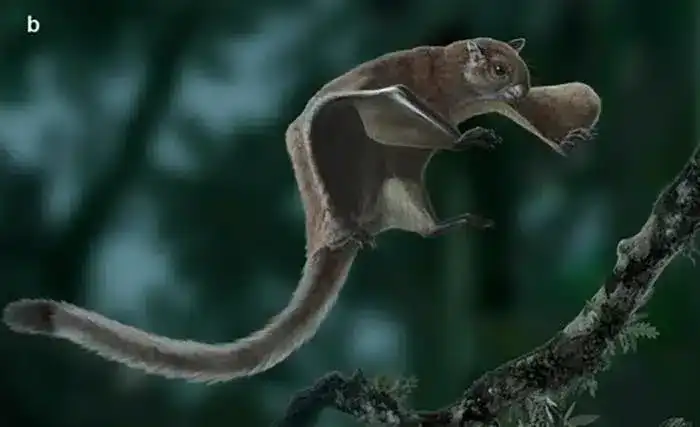
An Expert Glider of the Ancient Forests
These prehistoric gliding mammals, while resembling the smaller squirrels known today, possessed distinct adaptations for life among the treetops. Their large gliding membranes enabled them to cover impressive distances through the air, helping them avoid predators and efficiently navigate the dense, humid forests of their era.
The Miopetaurista webbi thrived in the warm Pliocene climate, a period significantly warmer than current times, which provided ideal conditions for these giant squirrels’ ancestors to expand their range into North America.
Extinction Driven by Ice Age Climate Shifts
As the Ice Ages introduced cooler climates and considerable environmental changes, species distributions were reshaped.
Montserrat Grau-Camats, also from the Institut Català de Paleontologia, explained, "The gradual cooling led to isolated populations of these giant flying squirrels in warmer refuges like Florida, ultimately contributing to their extinction."
The last surviving Miopetaurista species in North America persisted long after the genus vanished from Eurasia, thus becoming "living fossils." This underlines the profound impact of climatic transformations on species survival and the vulnerability even of well-adapted organisms to rapid environmental shifts.
Gray Fossil Site’s Crucial Role in Revealing the Past
Operated by East Tennessee State University’s Don Sundquist Center of Excellence in Paleontology, the Gray Fossil Site remains a key location for uncovering Appalachia’s prehistoric fauna and flora.
Alongside the giant flying squirrel, discoveries at the site include fossils of bone-crushing dogs, ancient plants, and numerous other animals.
Dr. Joshua Samuels, a paleontologist at East Tennessee State University, expressed enthusiasm about these findings: "It’s incredible to envision these giant flying squirrels soaring over rhinos and mastodons in the Tennessee forests 5 million years ago," he said.
- Categories:
- Science









0 comments
Sign in to Comment