
Near the shores of the Black Sea lies a fenced-off industrial zone in Varna, Bulgaria, where an overgrown parcel conceals the vestiges of a remarkably advanced ancient society. Although now a community garden, beneath the surface rests one of Europe's most extraordinary archaeological discoveries.
In the early 1970s, routine excavation work led a local operator to stumble upon a collection of unusual metal objects initially mistaken for brass or alloy. Subsequent analysis confirmed their true nature: gold. This finding initiated broader investigations that uncovered a vast Copper Age burial ground with hundreds of interments.
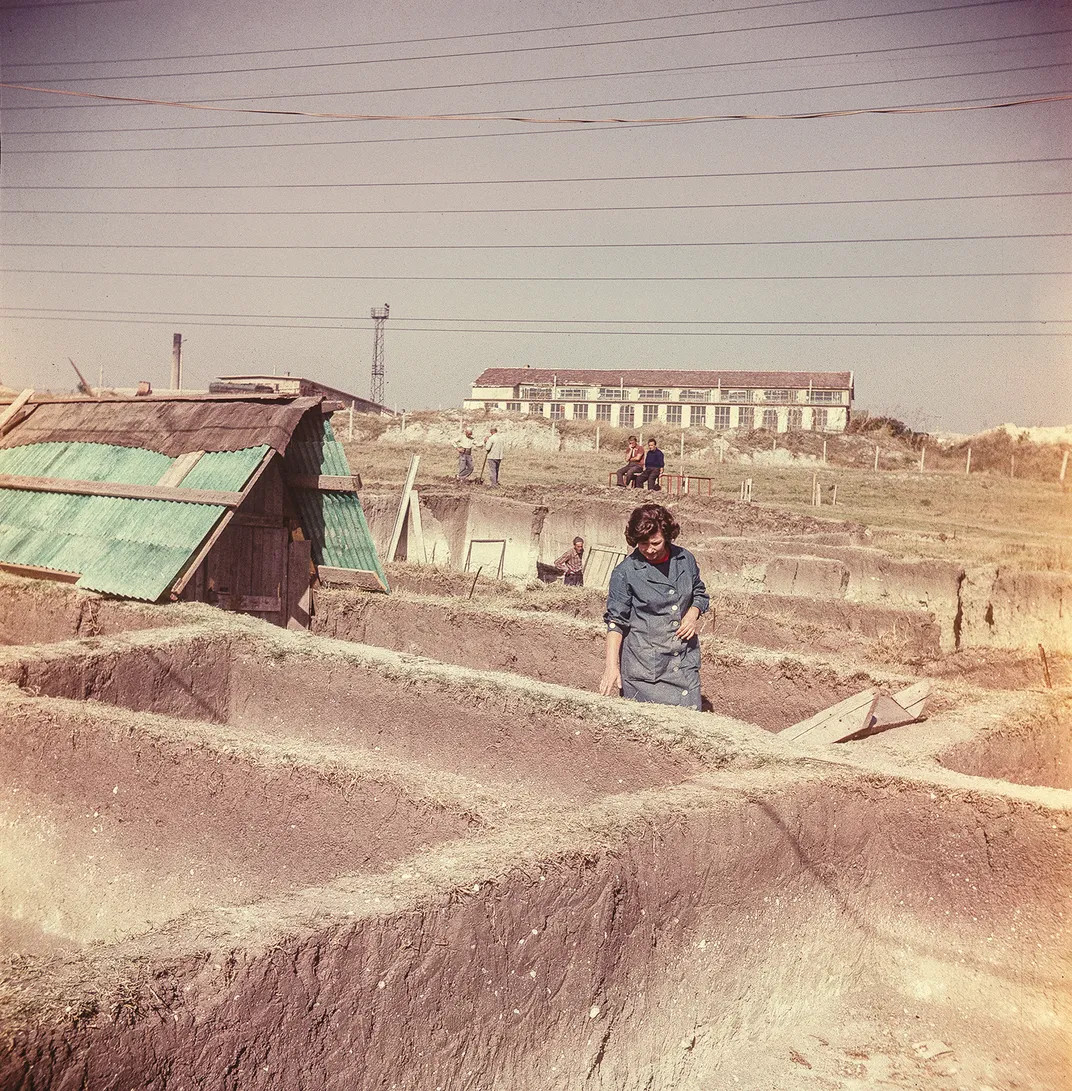
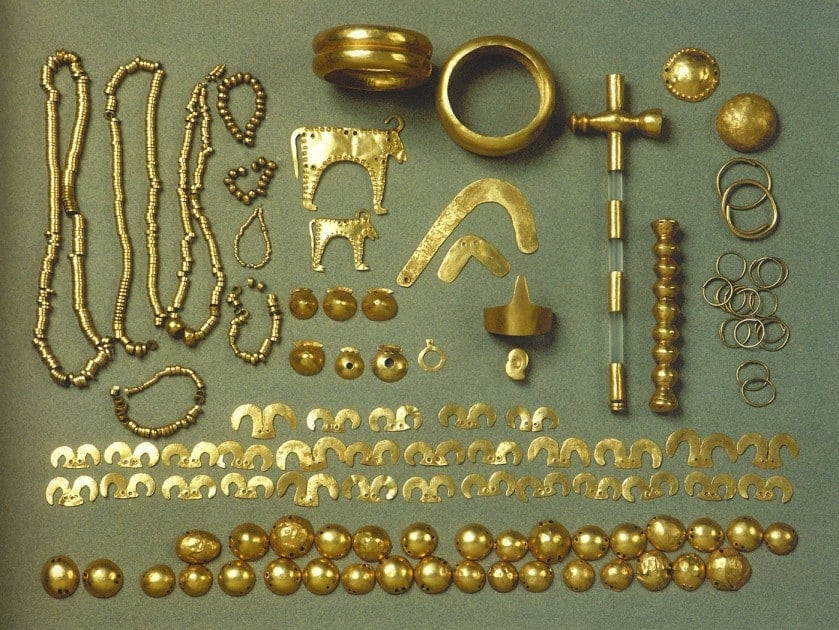
The complex burial site, referred to as the Varna Chalcolithic Necropolis, challenged existing notions about the emergence of social wealth and power structures in prehistoric Europe. Dating back to the late fifth millennium BCE, it contains the oldest known examples of worked gold worldwide.

Unequal Graves Reveal Early Social Stratification
Over nearly two decades of excavation from 1972 to 1991, archaeologists uncovered 294 burials near Varna Bay. Grave goods varied widely—from simple flint tools and bone jewelry to lavish arrays of gold artifacts, fine ceramics, and copper implements.
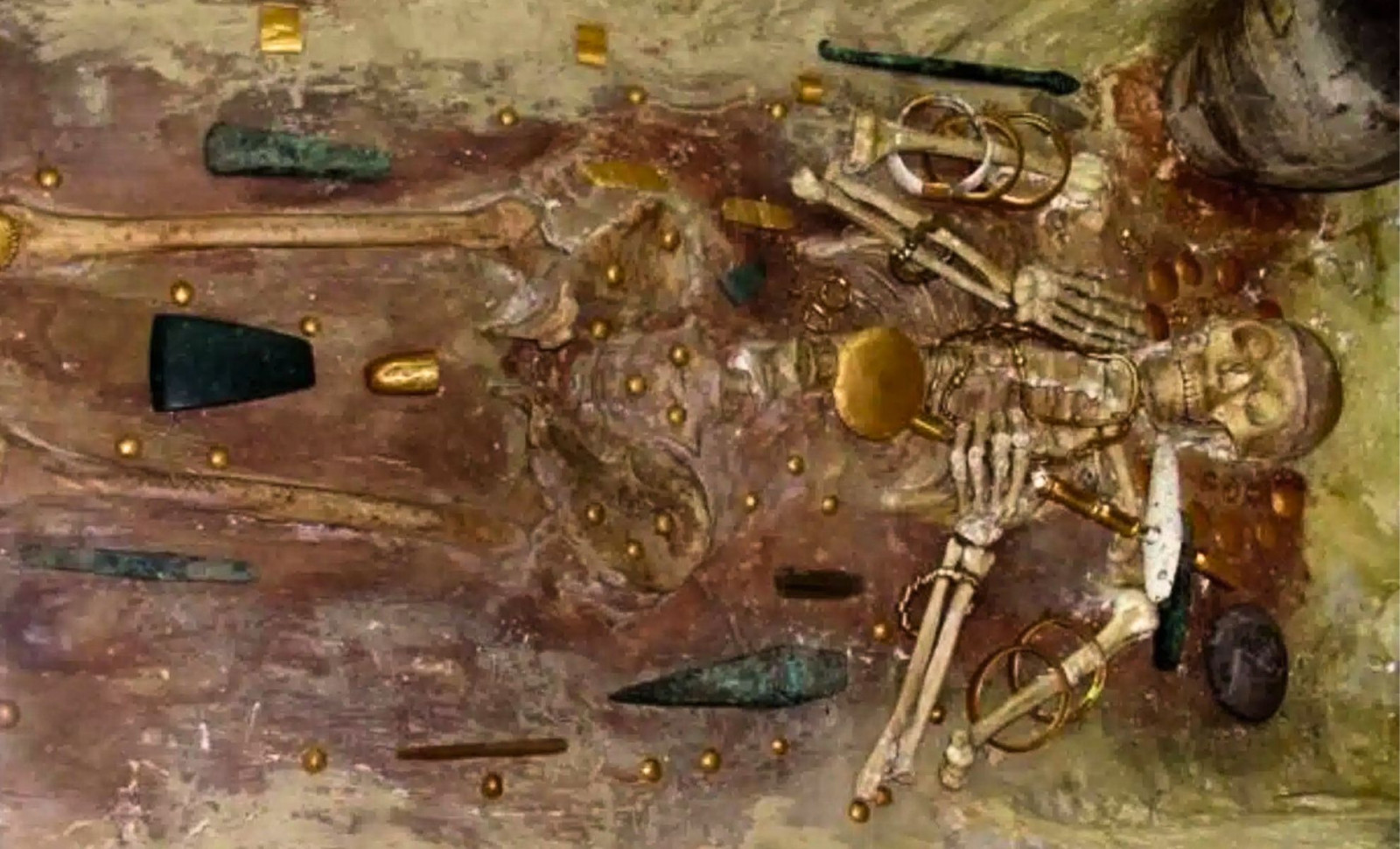
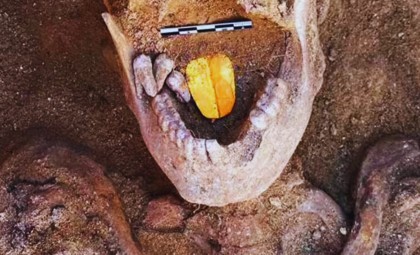
Grave 43 stands out for its opulence, containing the remains of a man adorned with more than 1.5 kilograms of gold. His burial included golden bangles, a gold-covered axe handle, a flint blade over 40 centimeters long, and a solid gold penis sheath.
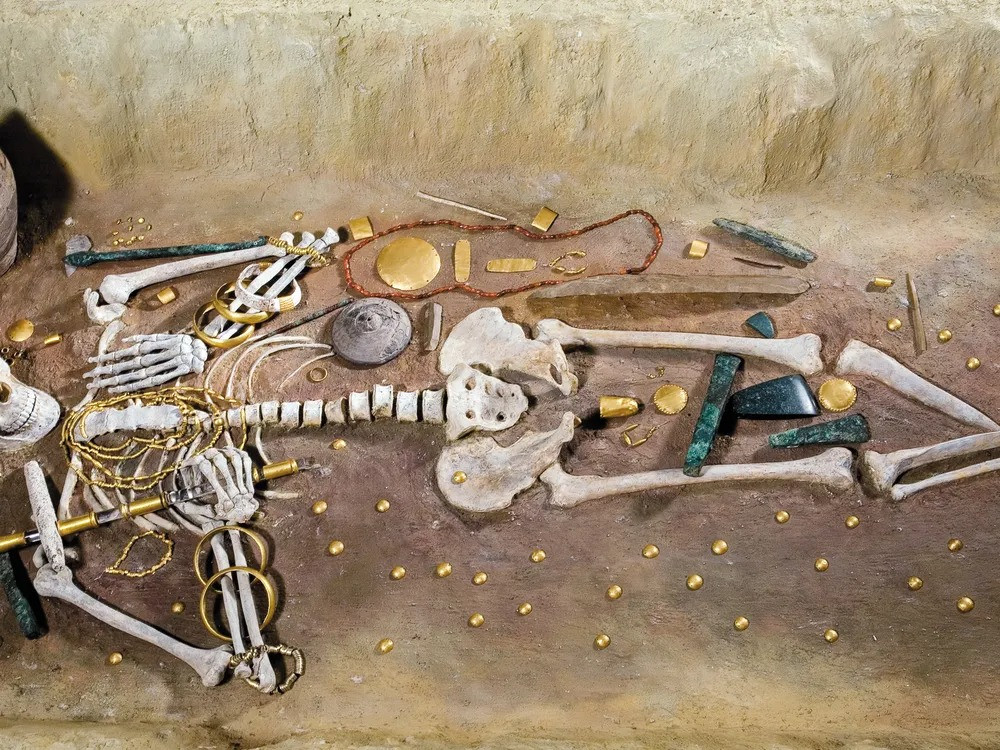
The artifacts’ placement and nature led researchers to conclude the individual occupied a high-ranking position within his society. In fact, the grave goods demonstrate a system of social ranking not yet documented in Europe’s Neolithic or early Copper Age contexts. This pattern was consistent, with precious objects concentrated in only a few graves.
At present, Grave 43 is housed at the Varna Museum of Archaeology, with its artifacts displayed exactly as found, making it a critical reference point for studying early inequality in Europe.
Early Metalwork and Expanding Trade Networks
The access to and crafting of high-value materials by the Varna people reflect advanced metallurgical skills alongside emerging economic structures. Gold items originated from local ore deposits, presumably in Bulgaria’s Sredna Gora region, while copper tools illustrate a nuanced command of metalworking techniques.
Trade extended well beyond Varna’s immediate region. Archaeologists discovered Spondylus shells—native to the Mediterranean—in several graves, suggesting they functioned as prestige items or early currency. Alongside these were obsidian blades, rare beads, and ceramics adorned with gold pigment.
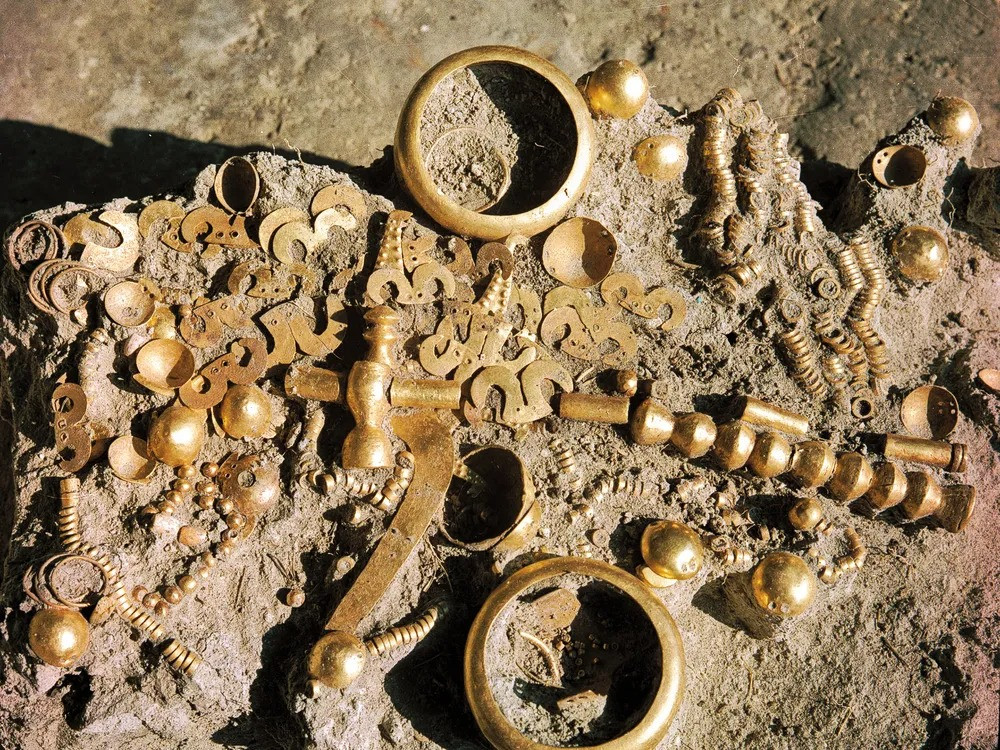
The distribution of these valuables suggests specialized social roles within the community, with metalworking conferring high social standing. The elite graves’ contents imply mastery over material resources and craft knowledge.
Interestingly, some richly furnished graves were purely symbolic, lacking human bodies entirely. These included clay masks where heads would have been, emphasizing the ceremonial or ritualistic importance attached to such burials.
The Culture’s Abrupt End and Disruption of Traditions
Despite its sophistication, the Varna settlement system appears to have been abruptly abandoned around 4000 BCE. Archaeological surveys indicate that Copper Age communities along the lower Danube and Black Sea coastal areas were similarly deserted during this time, with the region showing little evidence of continuous habitation for several centuries.
No signs point to warfare or forced removal. Instead, many scholars argue that environmental changes—such as rising sea levels transforming fertile farmland into wetlands—may have rendered coastal agriculture unsustainable. Today, parts of the Varna coastline and related archaeological sites lie submerged underwater.
The reasons behind the society’s collapse remain uncertain. However, the lack of evidence for violent conflict alongside natural environmental disturbances supports the idea that climate shifts played a decisive role in its decline.
Excavation activities ceased at the necropolis in 1991, leaving about one-third of the burial site untouched, now covered by debris from earlier digs. Presently, the area remains off-limits to visitors, hemmed in by industrial developments and informal gardening plots.
- Categories:
- News








0 comments
Sign in to Comment