
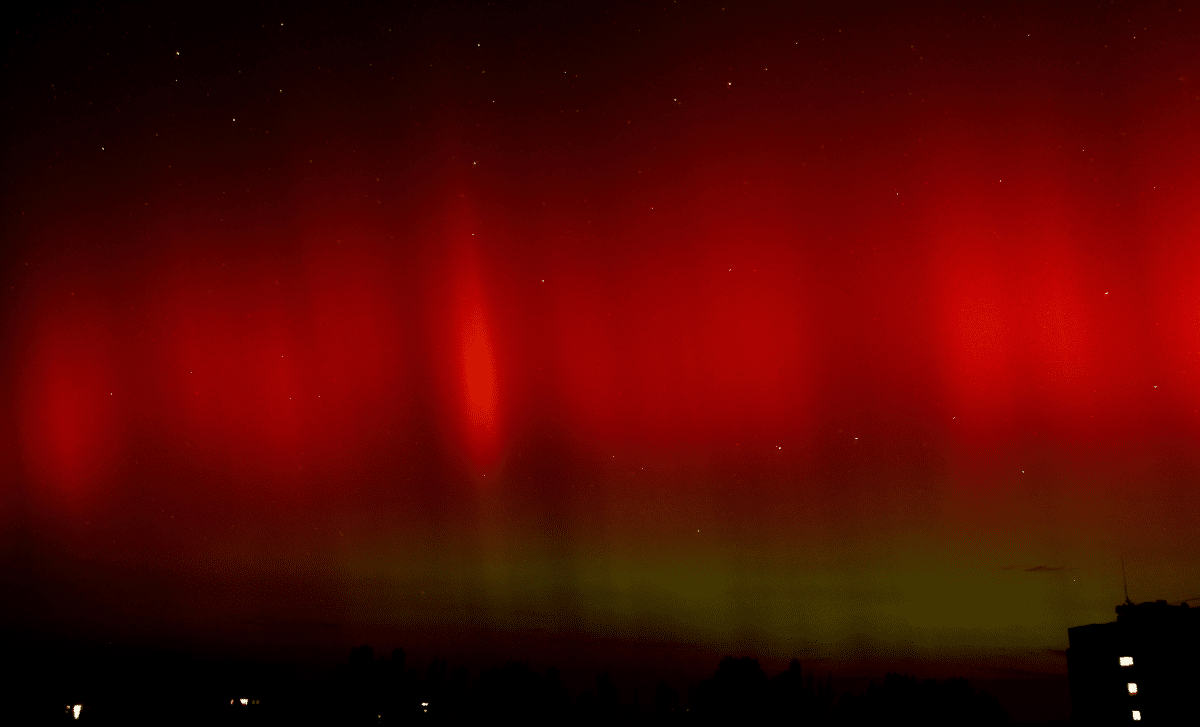
Over eight centuries ago, a medieval Japanese poet documented unusual “red lights glowing in the northern sky,” which were widely believed to signify auroras triggered by intense solar activity. Recent scientific advancements have now verified that this historic phenomenon was indeed a major solar storm. A groundbreaking study published on April 10, 2026, in the Proceedings of the Japan Academy, Series B by researchers at the Okinawa Institute of Science and Technology (OIST) has unveiled new insights into this ancient solar event, deepening our understanding of the Sun's past behavior and its implications for present-day technology.
Exploring Historical Solar Storm Phenomena
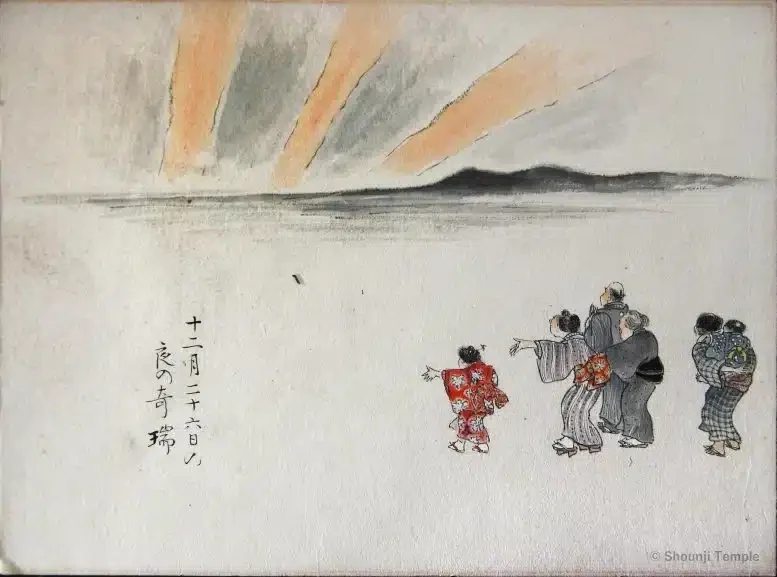
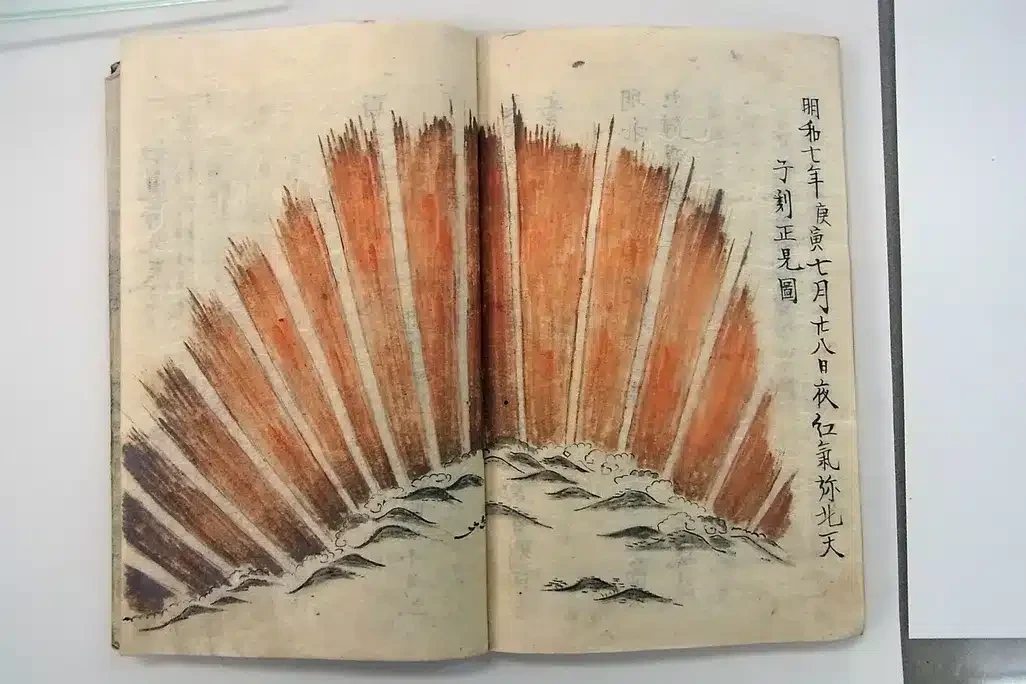
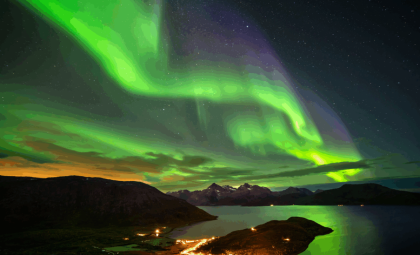
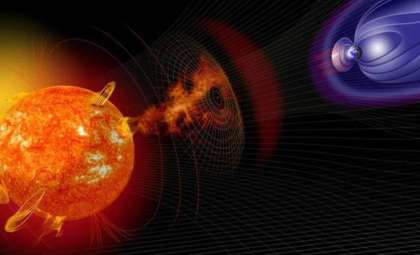
For many years, ancient manuscripts have hinted at episodes of solar activity strong enough to visibly affect Earth's skies. A notable record from 1204 CE, authored by the poet Fujiwara no Teika, describes striking “red lights in the northern sky” above Kyoto—likely an observation of auroras caused by a solar storm. Recent research now correlates this account with a confirmed solar proton event (SPE) from that era.
The team at Okinawa Institute of Science and Technology (OIST) applied a novel approach, combining historical documentation with dendrochronology (tree-ring analysis) to reconstruct solar activity from that medieval epoch. Their findings indicate that the solar storm witnessed by Teika was part of an unusually active solar cycle in the late 12th century.

Innovations in Identifying Solar Storms
In their recent publication in Proceedings of the Japan Academy, Series B, the OIST research group led by Professor Hiroko Miyahara advanced solar storm detection by focusing not only on rare, extreme solar proton events but also on "sub-extreme" SPEs. These are less intense but more frequent storms with the potential to disrupt technology. Miyahara explained,
“Previous studies on historical SPEs have focused on rare, extremely powerful events. Our paper provides a basis for detecting sub-extreme SPEs—events that occur more frequently and are around 10-30% of the size of the most extreme cases, but still hazardous.”
This advancement enhances our understanding of the historical incidence and impact of solar storms, vital for evaluating threats to modern satellites and space operations.
“Sub-extreme SPEs are more challenging to detect, but our method now allows us to efficiently identify them and better understand the conditions under which they are more likely to occur,” Miyahara added.
Insights Into Medieval Solar Cycles
Beyond identifying ancient solar storms, the researchers’ technique helped uncover the nature of solar cycles during that time. By analyzing carbon-14 levels in ancient tree samples, they established that medieval solar cycles were shorter—lasting seven to eight years instead of the current average of eleven years.
“The high-precision data not only allowed us to accurately date sub-extreme solar proton events, but it also lets us clearly reconstruct the solar cycles of the period,” said Miyahara.
This discovery suggests an era of heightened solar activity, potentially increasing the frequency of solar storms and auroras. The intense solar storm described coincided with the peak phase of this abbreviated cycle.
Bridging Historical Records and Modern Science
This research underscores the value of integrating historical observations with state-of-the-art scientific methods to reconstruct the Sun’s long-term behavior. Miyahara emphasized,
“Historical literature provides a candidate time window, and dendroclimatology enables direct intercomparison between detected SPE and reports of sunspots and auroras recorded in literature. Integrated approaches like these are necessary to accurately reconstruct past solar activity, helping us better understand the characteristics of extreme space weather.”
Looking forward, the team aims to deepen investigations into unusual solar phenomena such as extended low-latitude auroras coinciding with solar cycle minimums. Miyahara remarked, “This is unexpected, and we’re eager to explore the solar conditions that might trigger these occurrences.”
- Categories:
- Astronomy




0 comments
Sign in to Comment