
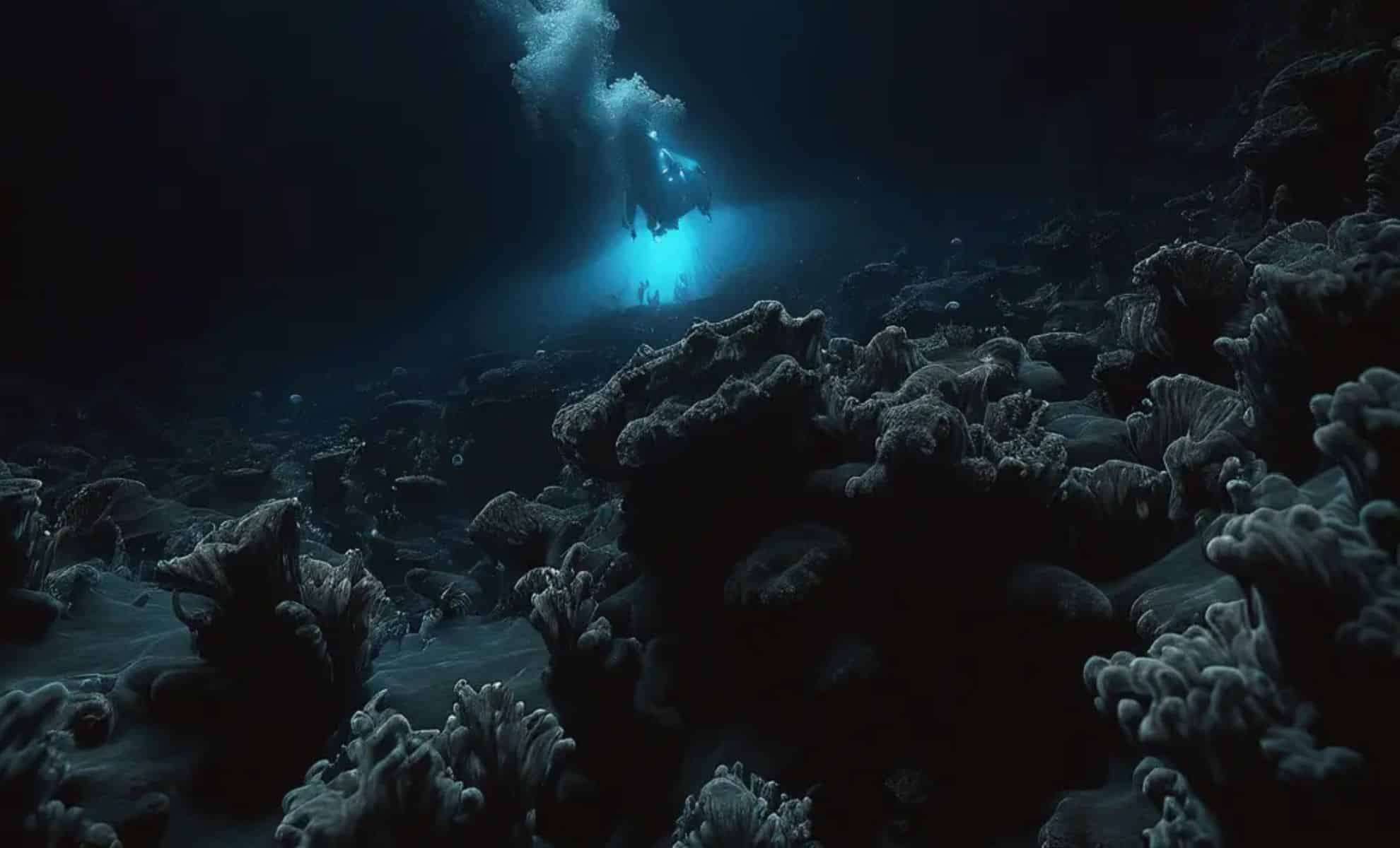
For many years, researchers have endeavored to unravel Earth's ancient geological history by piecing together clues that span millions of years. Recently, an extraordinary discovery beneath the Pacific Ocean floor promises to change how we understand and date these distant events. A combined team from Helmholtz-Zentrum Dresden-Rossendorf (HZDR), TUD Dresden University of Technology, and Australian National University (ANU) identified an unusual concentration of beryllium-10 (¹⁰Be) in seabed samples. This uncommon radioactive isotope, generated by cosmic ray interactions with the atmosphere and possessing a half-life of about 1.4 million years, is a valuable tool for dating geological processes extending back as far as 10 million years.
The team’s analysis revealed beryllium-10 concentrations nearly double the expected values, suggesting a previously unknown global event recorded in ocean sediments. If validated, this anomaly could act as a universal chronological indicator, enabling scientists to align disparate geological records worldwide with enhanced precision—significantly refining Earth's timeline. Researchers are actively investigating the source of this excess beryllium-10, which might illuminate past changes in oceanic circulation or point to extraterrestrial influences from millions of years ago.
Unearthing a Surprising Oceanic Signal
The investigation focused on ferromanganese crusts, mineral deposits enriched with iron and manganese oxides that develop incrementally on the seafloor and archive environmental changes over immense time periods. These layers accumulate elements, including ¹⁰Be, from seawater. Scientists extracted samples from the deep ocean and employed Accelerator Mass Spectrometry (AMS) to precisely quantify the isotope’s presence.

Upon scrutinizing the data, the team was struck by a remarkable anomaly. “Around the 10-million-year mark, we detected almost twice the anticipated amount of ¹⁰Be,” explains Dr. Dominik Koll from HZDR, the lead physicist on the project. “This was an unexpected and unexplained spike.” Such a pronounced variation lacked a straightforward explanation based on current geological or environmental models.
To rule out contamination or isolated phenomena, the researchers examined additional sediment samples from multiple oceanic sites. The consistent elevated levels of beryllium-10 across these locations bolster the argument that the phenomenon is of global scale.
Could Ancient Ocean Currents Hold the Answer?
A leading theory attributes the anomaly to dramatic shifts in Earth’s ocean circulation approximately 10 to 12 million years ago. Ocean currents are critical for distributing chemical elements worldwide, including isotopes such as ¹⁰Be. A significant reorganization of these currents might have caused an uneven accumulation of beryllium, particularly concentrating it in the Pacific basin.
“It is plausible that altered currents led to regional beryllium-10 hotspots,” notes Koll. This hypothesis links the isotope’s pattern to possible climate or tectonic upheavals that influenced global hydrodynamics, trapping the isotope in specific ocean reservoirs.
Confirming this idea would provide fresh perspectives on how ancient climate variations affected ocean chemistry. Yet, ocean circulation changes are only one possible trigger; an alternate explanation points toward a fascinating cosmic origin.
Did a Supernova Influence Beryllium-10 Levels?
Another intriguing possibility involves a nearby supernova explosion around 10 million years ago. Cosmic rays, highly energetic particles from space, generate ¹⁰Be when they collide with nitrogen and oxygen atoms in the atmosphere. A supernova could have intensified cosmic ray flux reaching Earth, causing an unusual surge in isotope production.
To evaluate this, researchers must gather more global measurements. “Further data are essential to discern if the anomaly stems from oceanographic processes or astrophysical causes,” Koll remarks. Detecting similar beryllium-10 increases worldwide would support the theory of a cosmic event dramatically impacting Earth’s atmospheric chemistry.
If so, this finding would reshape our understanding of how cosmic phenomena influenced Earth’s environment and climate throughout history.
Potential for a New Geochronological Benchmark
Regardless of its origin, the beryllium-10 anomaly may become a pivotal reference point in the field of geochronology. Aligning timelines across diverse geological archives, such as ice cores, sediment layers, and rock formations, is a persistent challenge. Reliable cosmogenic markers that span millions of years are rare, making this isotopic anomaly a valuable candidate for synchronizing global chronologies.
“Currently, we lack long-term cosmogenic markers. This anomaly could fill that gap,” Koll concludes. Confirmation of its presence in worldwide geological records could facilitate more precise dating of past environmental changes and improve our pinpointing of major events in Earth’s history.
Advancing Our Understanding of Earth’s Timeline
The identification of this unexpected beryllium-10 spike marks an exciting development in the quest to decipher Earth’s deep-time history. Be it through oceanic circulation changes or a dramatic astrophysical episode, the anomaly opens the door to refining the chronology of geological transitions. Ongoing studies will extend beyond the Pacific to assess whether this feature is a local curiosity or a planetary-scale signature.
With advancements in analytical technology enabling increasingly sensitive measurements, this research could transform paleoclimate, astrophysics, and earth science disciplines. Should this 10-million-year-old isotopic marker prove universal, it would revolutionize our understanding of how Earth’s climate, ocean systems, and cosmic interactions have shaped the planet.
This article has been republished from the following materials. Note: material may have been edited for length and content. For further information, please contact the cited source.
- Categories:
- News




0 comments
Sign in to Comment