
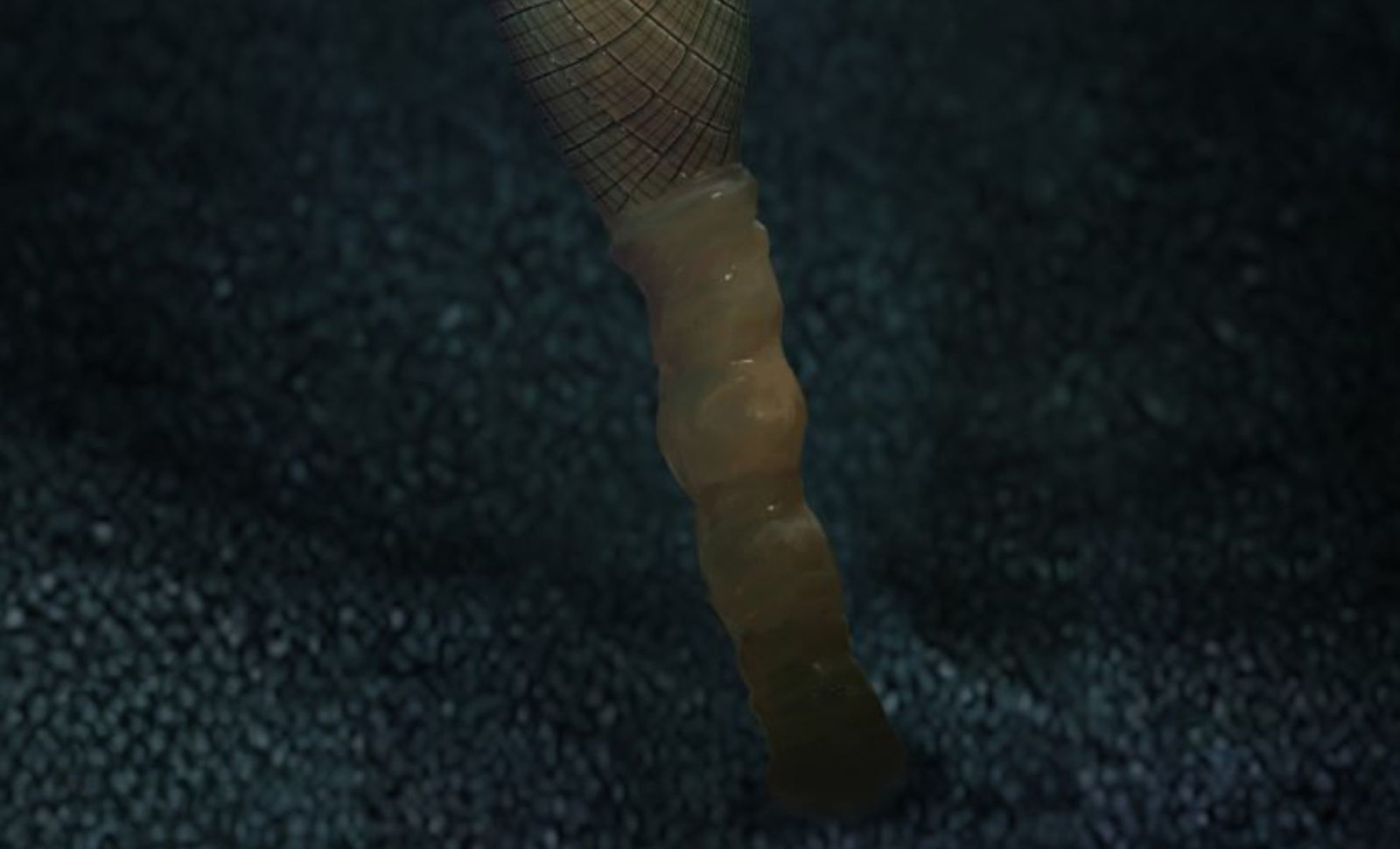
Led by Shuhai Xiao from Virginia Tech, the recent discovery indicates that the earliest sponges were likely devoid of mineral skeletons, a factor that could explain the scarcity of older sponge fossils. Sponges are among the first animal groups to have emerged, with genetic studies estimating their origin around 700 million years ago.
However, until now, the oldest confirmed sponge fossils have dated back only about 540 million years, creating a notable gap between genetic predictions and fossil evidence.
For a long time, scientists debated whether the fossil record was lacking or if molecular clock estimates were inaccurate. The new fossil, excavated from carbonate deposits near the Yangtze River, offers concrete proof from this “missing” era and suggests why earlier fossils have been so elusive.

Uncovering a Fossil from the 'Missing Era'
The contradiction surrounding early sponge origins comes from differing timelines. Molecular data indicates sponges appeared approximately 700 million years ago, but definitive sponge fossils had not been found in rocks of that age until now.
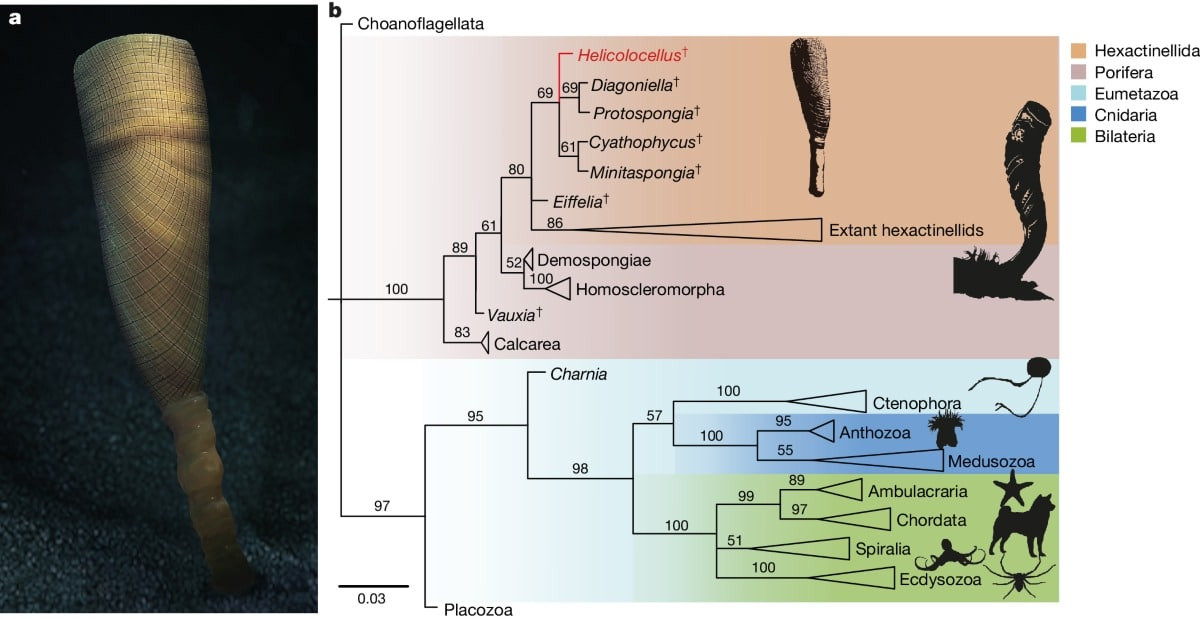
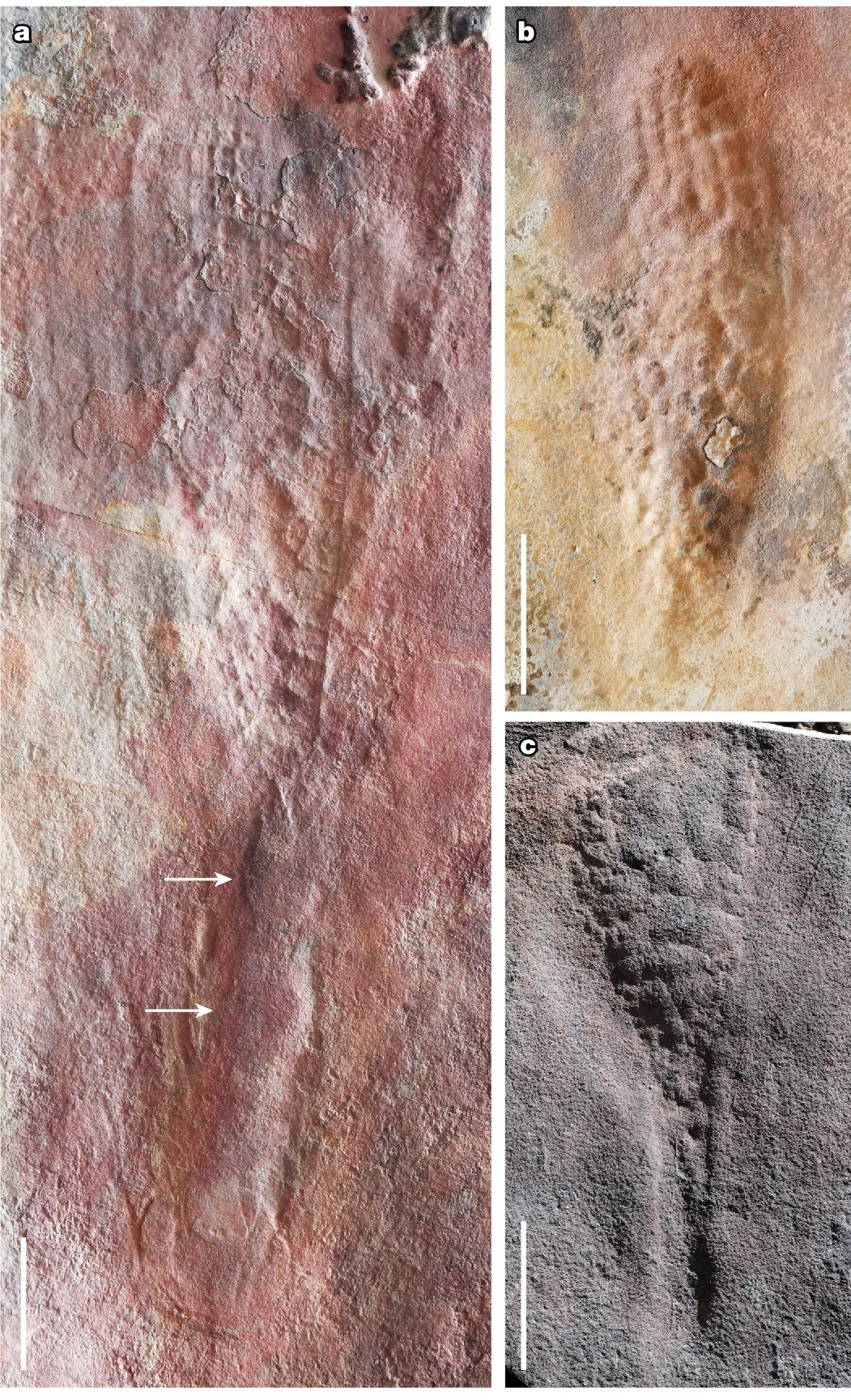
The research, published in Nature, reports a fossil dated near 550 million years ago, reducing the previously uncertain 160-million-year interval. The specimen was found in marine carbonate layers well known for preserving soft-bodied organisms from the late Ediacaran.
Shuhai Xiao shared that he first encountered a photo of the fossil five years earlier when a colleague sent him the image.
“I had never seen anything like it before,” he said, explaining that he quickly realized it represented something new.
The research team, which included experts from the University of Cambridge and the Nanjing Institute of Geology and Paleontology, carefully excluded other marine species such as sea squirts, corals, and sea anemones before confirming its identity as a sponge.
Why Ancient Sponges Rarely Fossilized
A key finding is that the earliest sponges may have lacked mineralized skeletons. Contemporary sponges often have mineral-rich spicules—tiny, needle-shaped structures—that aid fossil preservation.
In a previous 2019 study, Xiao and his team suggested that early sponges had not yet evolved the ability to form mineral components. As they traced invertebrate evolution backward, the spicules appeared more organic and less mineralized over time.
“If you extrapolate back, then perhaps the first ones were soft-bodied creatures with entirely organic skeletons and no minerals at all,” Xiao explained.
Such soft-bodied life forms would be extremely unlikely to fossilize unless rapidly buried in conditions that limited decay. The discovered fossil seems to have survived due to such exceptional preservation circumstances.
An Unusual Shape with Significant Implications
The fossil itself exhibits unique features: its surface bears a regular pattern of box-shaped compartments, each divided into multiple smaller segments. According to Xiaopeng Wang, a postdoctoral scholar associated with both the Nanjing Institute and the University of Cambridge, this pattern aligns the fossil with the lineage of glass sponges.
Remarkably, the specimen is about 15 inches long, showing a more intricate, conical body form than expected. Alex Liu from Cambridge noted that the fossil’s size surprised researchers who anticipated smaller early sponge fossils.
Besides narrowing part of the fossil record gap, this discovery alters how scientists might locate early animal life traces. As Xiao emphasized, this find suggests the first sponges were “spongey but not glassy,” lacking mineral skeletons despite sharing structural features with later species. This insight may direct future searches for similar fossils in ancient rock layers.
- Categories:
- Science










0 comments
Sign in to Comment