

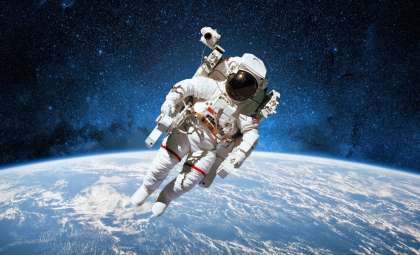
The dream of venturing beyond Earth’s atmosphere into the vast expanse of space has fascinated humans for generations. Yet for astronauts, the most hazardous part of their journey isn’t leaving orbit but safely coming back home. Re-entry through Earth’s atmosphere, often called the "most dangerous feat an astronaut faces," presents intense physical, technical, and mental obstacles. Their honest accounts highlight a challenge that is both breathtaking and daunting.
When Earth’s Atmosphere Turns Into a Formidable Barrier
As spacecraft descend toward Earth traveling at hypersonic velocities—nearly 28,163 km/h (17,500 mph)—the friction they encounter generates heat soaring above 3,000°F. This intense heat creates a luminous plasma layer surrounding the vehicle, glowing fiercely in shades of orange and purple.
Astronauts who have observed this blazing phenomenon describe its terrifying grandeur through their capsule windows. One compared the sensation to "piloting a meteorite back to Earth," perfectly capturing the wild and uncontrollable nature of re-entry.

Handling the extreme forces requires precise understanding of the physics involved in slowing down safely. Advanced heat shields on vehicles like Russia’s Soyuz or the NASA Space Shuttle either absorb heat by controlled ablation or deflect it using cutting-edge materials such as carbon composites. The consequences of even slight trajectory miscalculations or shield flaws could be catastrophic.
The Harrowing Reality of Returning Home
Innovations in technology have improved the hardware that protects astronauts, but the mental strain remains formidable. The combined assault of roaring flames, vibrations, and crushing g-forces overwhelms even highly trained astronauts.
One veteran astronaut candidly admitted, "It’s truly frightening." Pilots must keep unwavering concentration during these critical moments where the slightest misstep could lead to disaster. Online reactions show widespread respect for their courage, with many expressing amazement at their poise under such extreme conditions.
A social media commentator joked, "My mind would spiral into catastrophic scenarios, and I’d be gasping for breath." It’s through relentless training and mental preparation that these explorers conquer the ultimate test of their resilience.
Space Travel’s Lasting Influence on Perspective
Re-entry dangers underscore the risks tied to space exploration, yet astronauts often return with a changed perspective on life. The so-called ‘Lightbulb Moment‘ captures the deep emotional awakening experienced when viewing Earth as a fragile, interconnected sphere hanging in darkness.
NASA astronaut Ronald Garan famously described how this view strengthened his sense of humanity’s shared fate and the necessity for global unity. These insights often stay with astronauts indefinitely, shaping their views on worldwide challenges.
- Categories:
- Space





0 comments
Sign in to Comment