
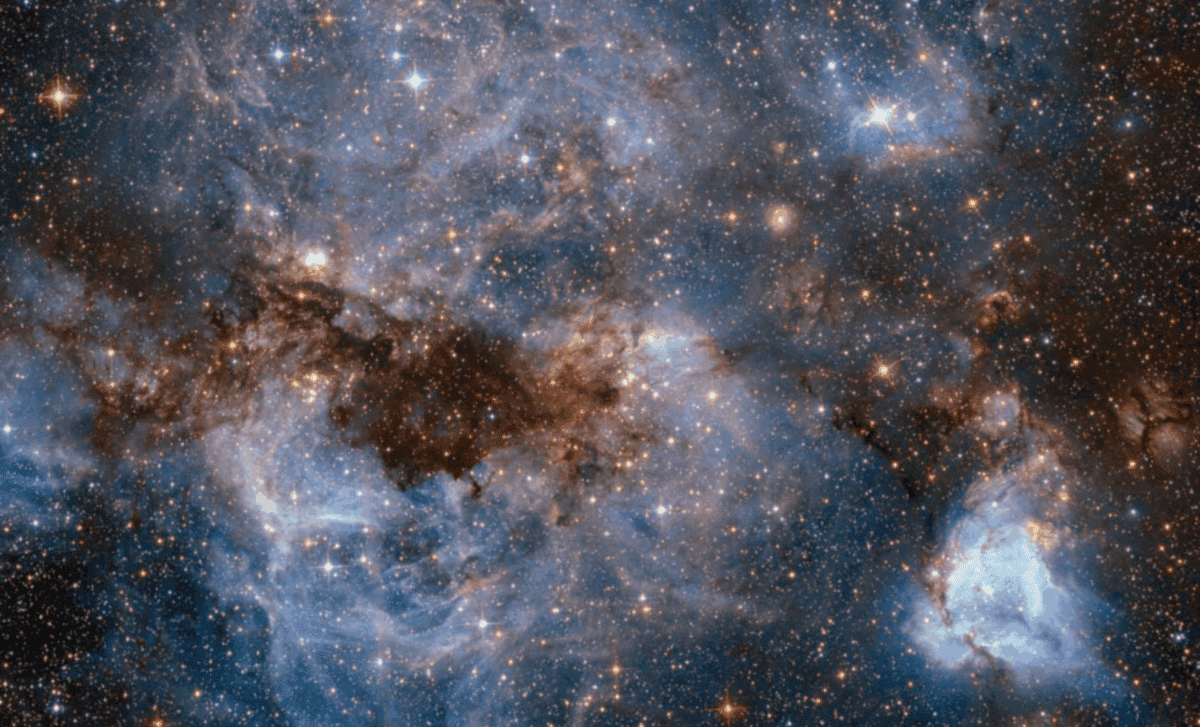
Researchers have identified an extraordinary star, SDSS J0715-7334, which may be the most chemically unaltered star ever observed. Situated in the halo of the Large Magellanic Cloud, this stellar object provides a unique window into the universe’s infancy and the birth of the first stars. These groundbreaking results, led by Alexander Ji from the University of Chicago, have been published in a preprint on arXiv, advancing our knowledge of early stellar history.
SDSS J0715-7334: A Stellar Time Capsule from the Early Cosmos
The finding of SDSS J0715-7334 represents a monumental breakthrough in astrophysics and cosmology. This star’s defining characteristic is its exceptionally low metallicity, indicating it contains far fewer heavy elements such as carbon, oxygen, and iron than typical stars we observe today. These elements normally form deep within stars during nuclear fusion and are spread throughout space by supernova explosions. This enrichment process is fundamental to the development of planets and life.
The composition of SDSS J0715-7334 closely aligns with theoretical models of the first stars, known as Population III stars. These primordial stars, born when the cosmos was young, were mostly made of hydrogen and helium, with minimal amounts of heavier elements. What distinguishes SDSS J0715-7334 is its extreme purity; its metal content is over ten times lower than even those stars previously identified by the James Webb Space Telescope, some of which were once considered metal-free.

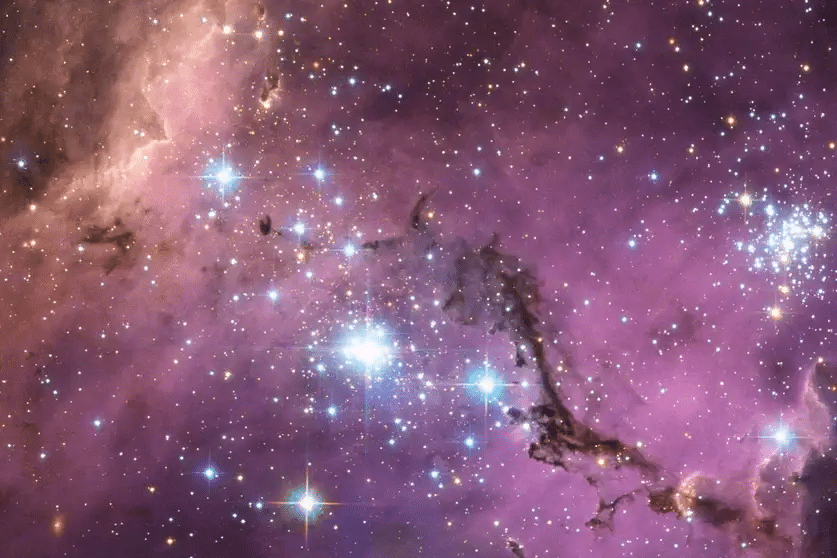
Low Carbon Levels Challenge Understanding of Early Stellar Cooling
One particularly intriguing aspect of SDSS J0715-7334’s makeup is its notably low carbon abundance. Past discoveries of similar near-pristine stars often revealed heightened carbon presence. Carbon, a heavier element, plays a vital role in the cooling of early stars by helping them shed energy and maintain stability, preventing premature explosions.
The remarkably scarce carbon in SDSS J0715-7334 raises questions about the star’s formation environment.
“The lack of carbon on SDSS J0715-7334 suggests that different environments in different places in the universe cool their gas differently at early times,” says Anna Frebel, an astronomer at MIT.
This implies that cooling processes in the infant universe varied regionally, potentially influenced by factors such as gas density, temperature, or the presence of trace elements. Frebel emphasizes that the mechanisms behind these cooling variations remain unclear, yet the discovery of SDSS J0715-7334 highlights this mystery and directs future research efforts.
Tracing Starlight: Evolution from Primordial to Modern Stars
Understanding SDSS J0715-7334’s importance requires insights into how stars evolve. Stars originate from enormous clouds of gas and dust, predominantly hydrogen and helium. As these clouds condense, their cores heat up until nuclear fusion ignites, producing heavier elements like carbon, oxygen, and iron. These elements form the foundation for planets and life throughout the cosmos.
The universe’s earliest stars, Population III stars, were made almost exclusively of hydrogen and helium and were massive and short-lived. Their explosive deaths as supernovae seeded space with heavier elements, enabling successive generations of stars. SDSS J0715-7334’s extreme deficiency in metals suggests it is a rare survivor from these early generations, offering astronomers a precious opportunity to investigate the universe’s formative epochs.
Collaborative Observations by SDSS and Magellan Telescope
The detection of SDSS J0715-7334 was achieved through the combined efforts of the Sloan Digital Sky Survey (SDSS) and the Magellan telescope in Chile. SDSS provided initial leads hinting at this unusual star, while Magellan’s advanced instrumentation allowed detailed follow-up observations that confirmed its extraordinarily low metallicity, setting it apart from surrounding stars.
These powerful astronomical instruments are key to exploring the universe’s ancient past. By examining the spectral signatures of distant stars like SDSS J0715-7334, scientists gain valuable data on the composition and characteristics of cosmic objects formed billions of years ago, enhancing our comprehension of galactic and stellar evolution.
- Categories:
- News



0 comments
Sign in to Comment