
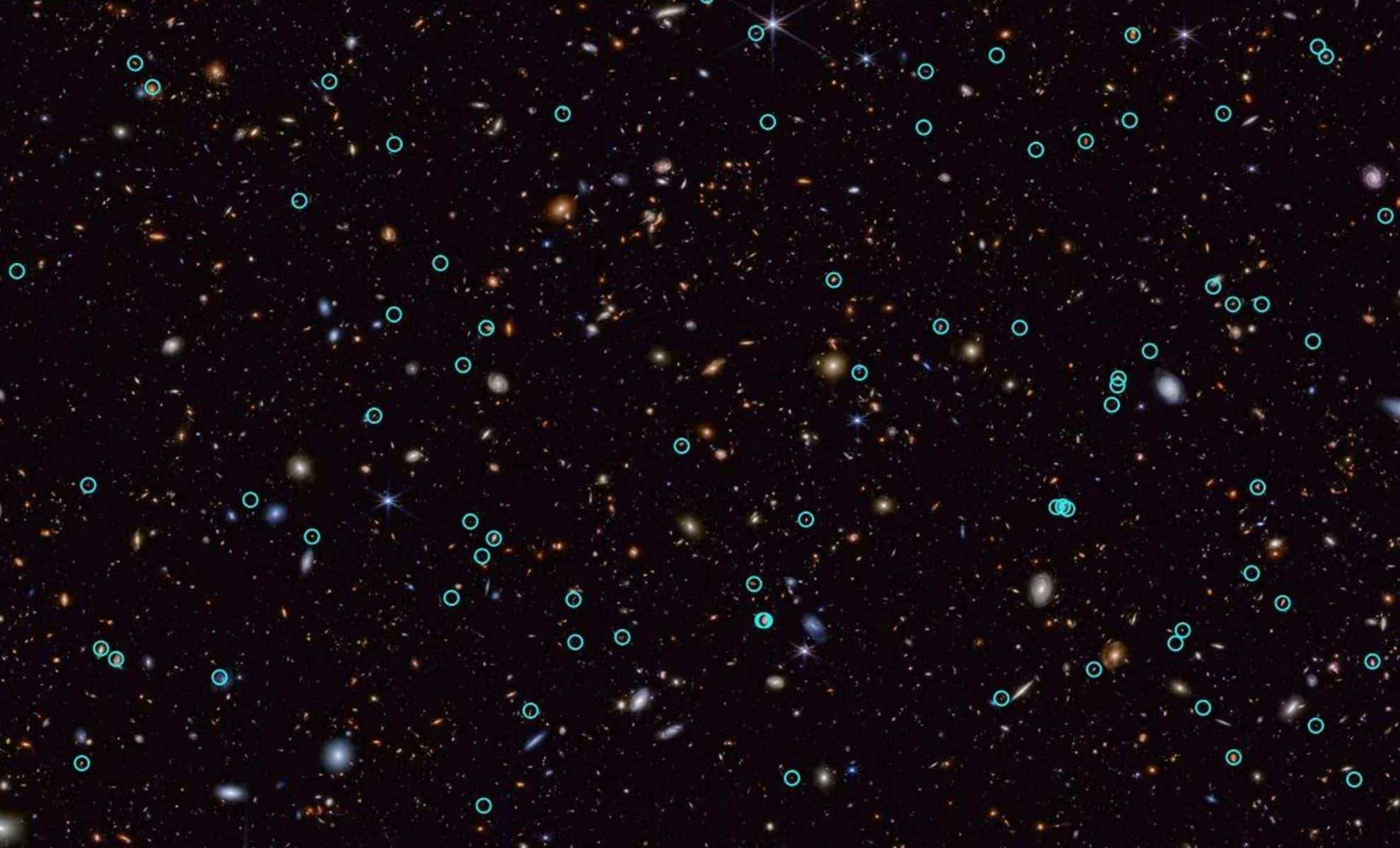
The James Webb Space Telescope (JWST) has empowered astronomers to identify supernovae originating from the Universe's dawn, offering unprecedented insight into its formative stages.
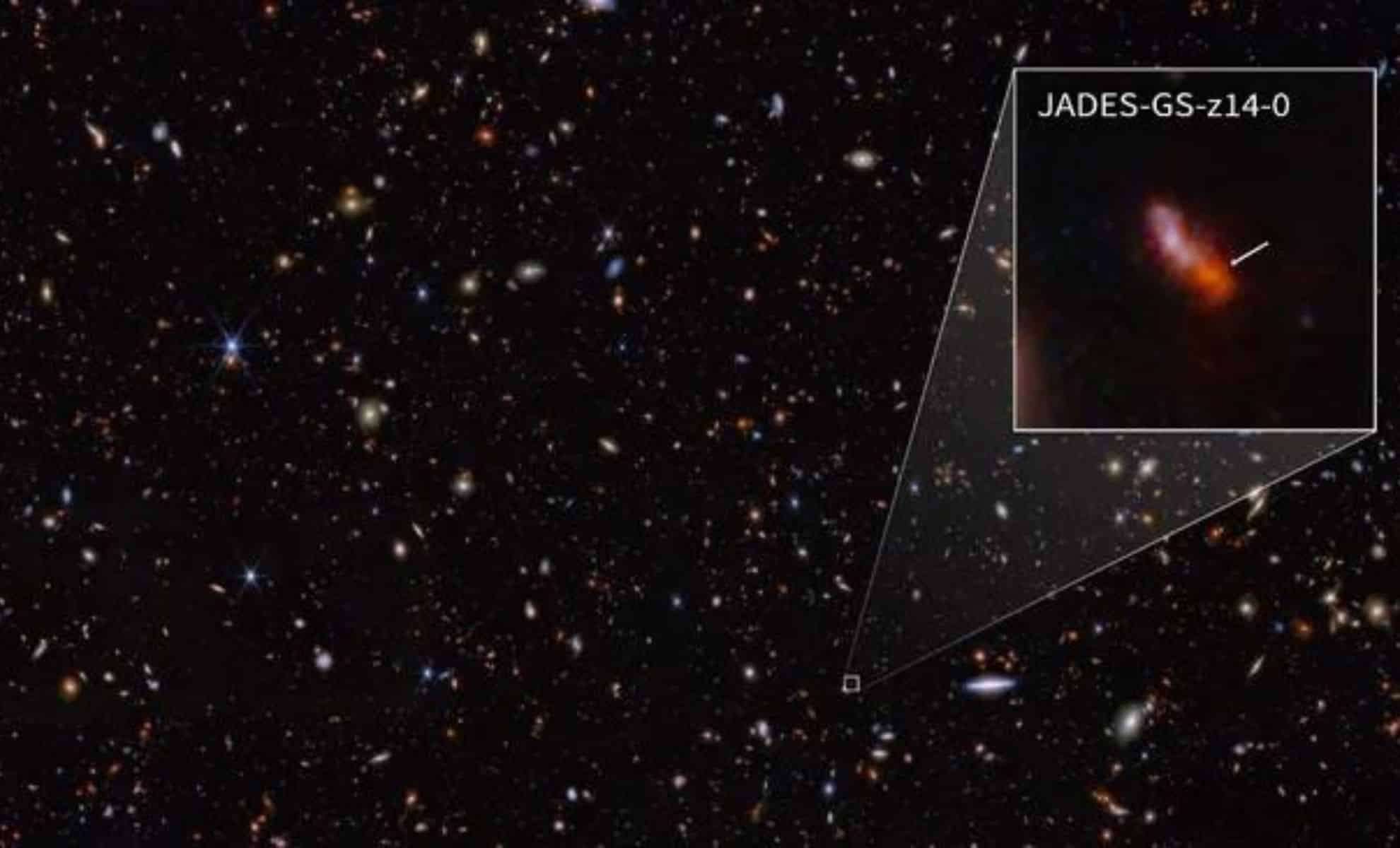
These findings emerged through the efforts of the JWST Advanced Deep Extragalactic Survey (JADES), which also marked the detection of the most remote galaxy so far, JADES-GS-z14-0. The announcements were made public during the 244th American Astronomical Society meeting in Madison, Wisconsin.
Unearthing Ancient Stellar Cataclysms
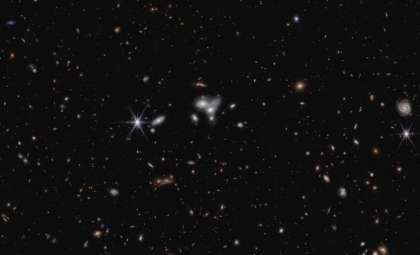
Thanks to the formidable observing power of the JWST, researchers spotted around 80 objects exhibiting brightness variations, predominantly supernovae.

These massive stellar explosions signify the death throes of giant stars. By comparing data gathered over a year with earlier records, scientists found a much larger population of supernovae in the early cosmos than previously recorded. “Webb is a supernova discovery powerhouse,” commented Christa DeCoursey, a doctoral student at the University of Arizona. “The immense quantity and vast distances of these detected supernovae are the standout highlights of our survey.”
The Impact of Webb’s Observations
Prior to JWST, only a handful of supernovae beyond a redshift of 2—which corresponds to roughly 3.3 billion years after the Big Bang—had been documented.
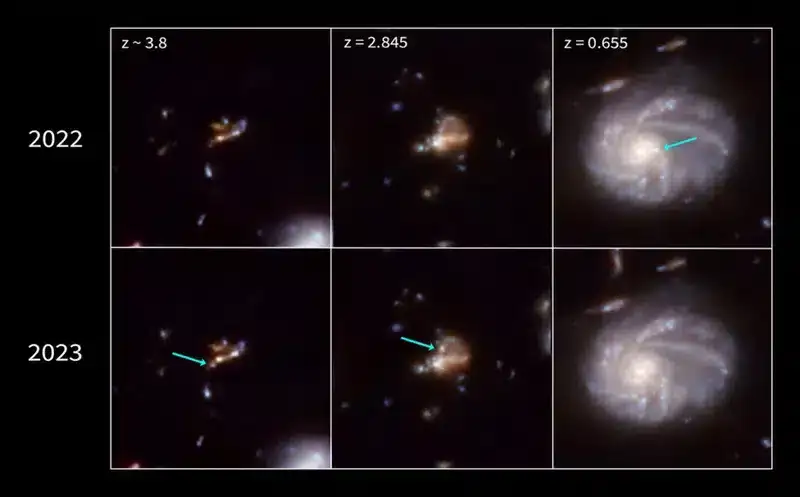
The expanded JADES dataset includes numerous supernovae that erupted when the Universe was under 2 billion years old, featuring the furthest spectroscopically confirmed supernova at a redshift of 3.6.
This explosion took place when the Universe was merely 1.8 billion years old. “This is our inaugural snapshot of transient phenomena in the high-redshift Universe,” explained Justin Pierel, a NASA Einstein Fellow at the Space Telescope Science Institute.
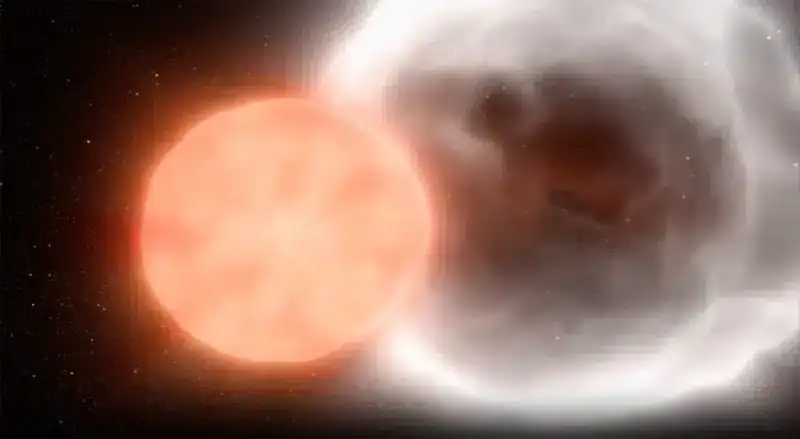
The study implies that these primordial supernovae may possess characteristics distinct from those in the nearby Universe, shedding light on conditions during the cosmos's infancy.
Detecting such distant supernovae profoundly advances our grasp of cosmic history. JWST data reveal that supernovae were more prevalent in the young Universe than formerly believed.
This elevated occurrence points to a highly active and tumultuous early Universe, where frequent stellar detonations played a vital role in galaxy formation. These explosions spread heavy elements essential for new star and planet formation into surrounding space.
Moreover, unveiling supernovae at these redshifts challenges existing models of star birth timing and processes. The presence of massive stars dying so early suggests star formation was well underway earlier than some predictions anticipated, fine-tuning theories on stellar evolution in the early Universe.
Additionally, a portion of these newly found supernovae are Type Ia supernovae, which act as “standard candles” for measuring cosmic distances due to their consistent intrinsic brightness.
The team confirmed at least one Type Ia supernova at a redshift of 2.9, corresponding to an explosion when the Universe was 2.3 billion years old.
This achievement breaks the earlier record of the farthest confirmed spectroscopic Type Ia supernova at a redshift of 1.95. “We're truly unlocking a new realm in transient astronomy,” stated STScI Fellow Matthew Siebert. “Historically, exploring these realms has led to surprising and exciting discoveries.”
Identifying supernovae at such distances offers crucial insights into the Universe’s expansion rate. Analyzing their light helps astronomers chart the Universe’s growth over time.
This knowledge is key to unraveling the mysteries of dark energy, the enigmatic force accelerating the cosmic expansion. The JWST’s capacity to observe supernovae at unparalleled distances extends our view of the Universe’s expansion history farther than ever before.
Probing Cosmic Expansion
A pivotal outcome of the survey includes detecting Type Ia supernovae, valuable as “standard candles” to measure immense distances by comparing intrinsic and observed brightness.
The identification of a Type Ia supernova at redshift 2.9, indicating an explosion when the Universe was 2.3 billion years old, eclipses the previous record at 1.95. “Opening this new window on transients promises discoveries beyond expectations,” affirmed STScI Fellow Matthew Siebert.
- Categories:
- Astronomy ,
- News ,
- Space




0 comments
Sign in to Comment