
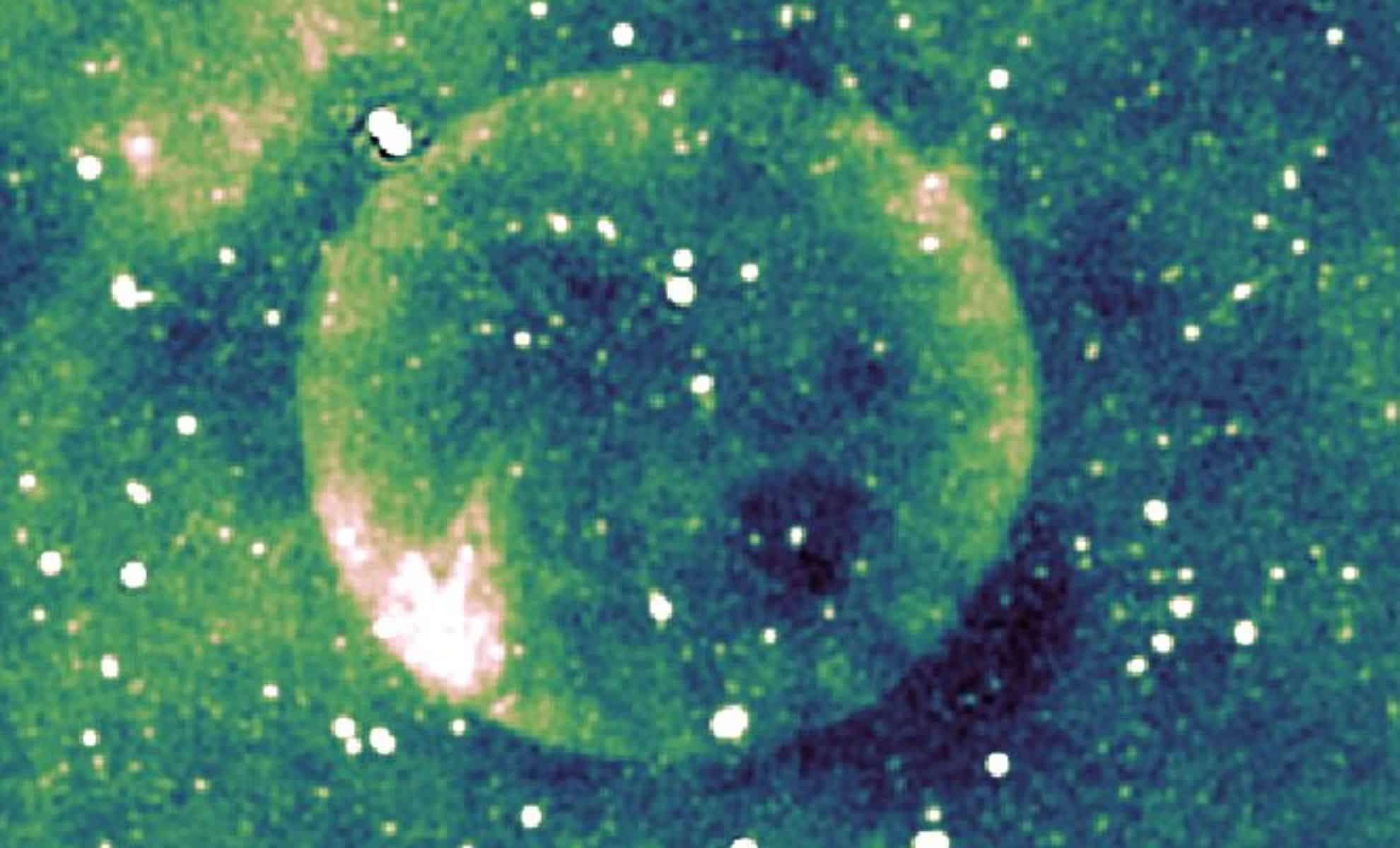
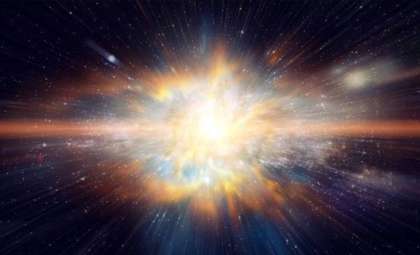
Researchers have identified an exceptionally symmetrical spherical object inside the Milky Way that has left scientists wondering about its formation and history. Dubbed Teleios, borrowing from the ancient Greek term for “perfection,” this nearly flawless expanding shell is thought to be the leftover remains of a supernova burst. The findings, recently submitted to the Publications of the Astronomical Society of Australia and available via arXiv, are based on observations conducted with the Australian Square Kilometre Array Pathfinder (ASKAP) radio telescope. While the object's perfect geometry and faint radio emissions are striking, many details about its characteristics are still uncertain, prompting further investigation.
Teleios’s Extraordinary Roundness Challenges Conventional Supernova Studies
Supernova remnants typically show irregular forms due to the chaotic nature of the explosions and the uneven distribution of interstellar matter they encounter. In sharp contrast, Teleios boasts an almost flawless spherical shell, making it an anomaly among known remnants. This remarkable symmetry hints at either a highly uniform immediate environment or an especially balanced supernova event. The team suggests that a supernova occurring in a relatively empty space devoid of dense gas and dust may allow the expelled material to maintain a near-perfect spherical expansion before breaking apart. This characteristic renders Teleios a unique subject for examining supernova dynamics in pristine cosmic settings. The scientists comment, “We have made an exhaustive exploration of the possible evolutionary state of the supernova based on its surface brightness, apparent size and possible distances,” underscoring their thorough analysis of the object.
Estimating Teleios’s Distance is Key to Understanding Its Age and Scale
Pinpointing how far away Teleios lies is essential for determining its actual dimensions and lifespan. Researchers have identified two main distance estimates: roughly 7,175 light-years and 25,114 light-years from Earth. If at the closer range, Teleios would measure about 46 light-years across and represent a relatively young remnant, likely under 1,000 years old. At the farther distance, it would span approximately 157 light-years and be more than 10,000 years old. These divergent distances influence interpretations of the supernova’s development and physical traits. The team also explored the possibility of a nearer position near 3,262 light-years, speculating Teleios might be linked to a less powerful Type Iax supernova that leaves behind a surviving stellar core. Yet, available data do not strongly support this closest distance, keeping the true scale of Teleios unresolved.

Unexpected Lack of X-Ray Signals Adds to Teleios’s Mystique
An intriguing puzzle surrounding Teleios is its absence of detectable X-ray radiation, which contradicts typical expectations for Type Ia supernova remnants. Usually, shockwaves from these explosions heat surrounding gases and produce robust X-ray emissions, but Teleios only emits weak radio signals. This inconsistency raises important questions about the remnant’s physical conditions and the nature of the explosion itself. The researchers note, “All possible scenarios have their challenges, especially considering the lack of X-ray emission that is expected to be detectable given our evolutionary modelling. While we deem the Type Ia scenario the most likely, we note that no direct evidence is available to definitively confirm any scenario and new sensitive and high-resolution observations of this object are needed.” Further detailed and multi-spectrum observations will be crucial to unravel the true characteristics of this enigmatic supernova remnant and its environment.
- Categories:
- News




0 comments
Sign in to Comment