
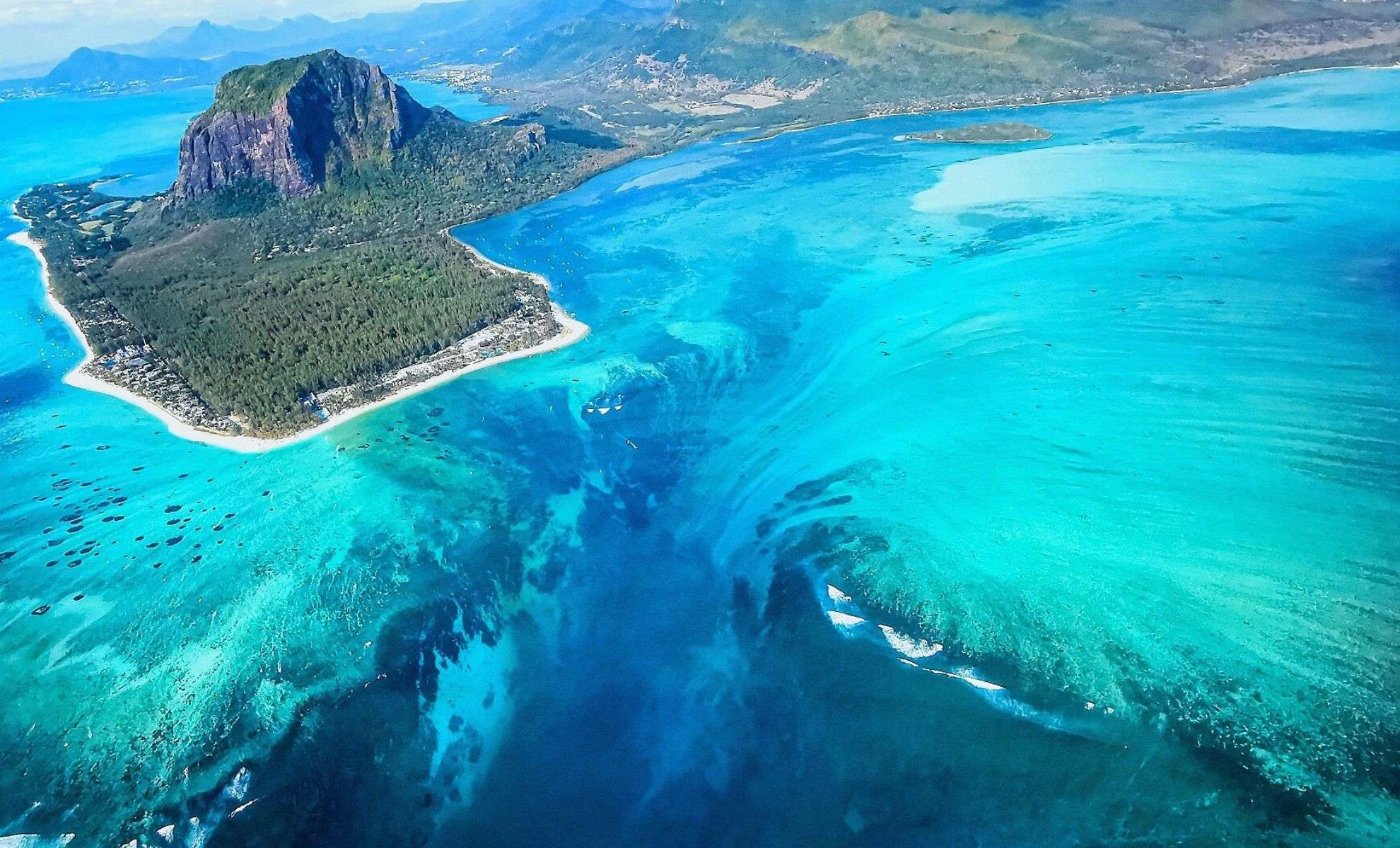
While iconic waterfalls such as Niagara and Angel Falls captivate people worldwide, an immense yet hidden waterfall surpasses them all in scale. Located beneath the Arctic Ocean’s frigid surface, the Denmark Strait cataract is recognized as the planet’s largest waterfall, though no human has witnessed its full force directly. Extending an astonishing 11,500 feet underwater, this colossal cascade quietly impacts Earth’s climate systems. Nestled between Greenland and Iceland, it plays a vital role in global ocean currents, with scientists only recently unraveling its immense influence.
Denmark Strait Cataract: The Ocean’s Hidden Titan
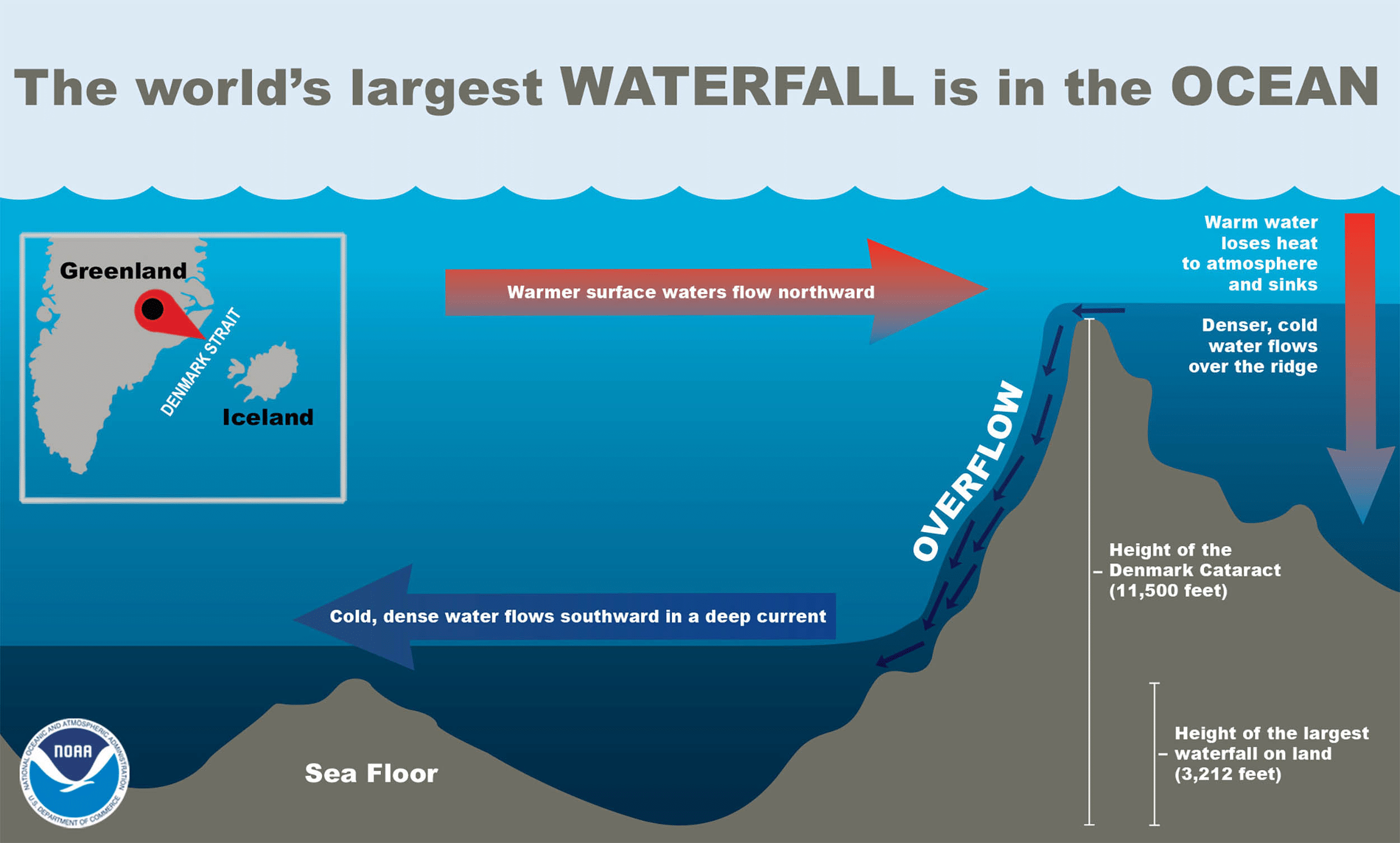
Unlike typical waterfalls formed by rivers tumbling over cliffs, the Denmark Strait cataract is an oceanic marvel with unique mechanics. Originating deep below the sea surface, it occurs where cold, dense Nordic Sea waters plunge beneath the Atlantic Ocean. This underwater waterfall propels more than 3.2 million cubic meters of water each second, dramatically outpacing rivers like the Amazon in volume.
Despite its immense flow, the cataract remains invisible beneath roughly half a mile of seawater, silent and without the spray or noise characteristic of surface waterfalls. It courses over a submerged ridge—a glacial remnant from the last Ice Age—that acts as the launch point for this extraordinary descent, creating a flow unfathomably greater than any terrestrial waterfall.

Climate Influence of the Largest Underwater Waterfall
The Denmark Strait cataract’s significance goes well beyond its size. This flow of chilled, dense water into the Atlantic helps power the Atlantic Meridional Overturning Circulation (AMOC), a critical engine for global heat distribution and nutrient cycling. This circulation pattern affects weather across continents, influencing mild European winters and oceanic ecosystems dependent on plankton nourishment.
However, climate change threatens to disrupt this dynamic. Scientists are closely monitoring shifts in the cataract’s flow, as alterations could impact global weather phenomena, including hurricane behaviors and ocean temperatures. Marine expert Anna Sanchez Vidal notes observable changes near the Catalan coast: “A good example is on the Catalan coast, where the decrease in the number of tramontane days in winter in the Gulf of Lion and north of the Catalan coast is causing a weakening of this oceanographic process, which is decisive in regulating the climate and has a great impact on deep ecosystems.”
As Arctic warming alters temperature and salt gradients crucial to driving the cataract, the waterfall’s consistency may decline, potentially causing major shifts in ocean circulation patterns worldwide.
The Polar Regions’ Vital Role in Ocean Circulation
Appreciating the Denmark Strait cataract’s function requires understanding polar contributions to Earth’s oceanic currents. In these regions, sea ice formation generates dense water masses that sink to the ocean floor, kickstarting vast current systems essential to the planet’s climate. David Amblàs from the University of Barcelona’s Department of Earth and Ocean Dynamics explains, “The poles are the regions where most of the dense water masses – generated by the formation of sea ice at the surface – eventually reach the global ocean floor.”
He further describes the poles as “the heart of the oceanic circulatory system,” pumping cold, heavy water into deep ocean basins through periodic overflows. These processes not only shape global climate but also sustain marine life by transporting nutrients to surface waters where ecosystems thrive.
- Categories:
- News






0 comments
Sign in to Comment