
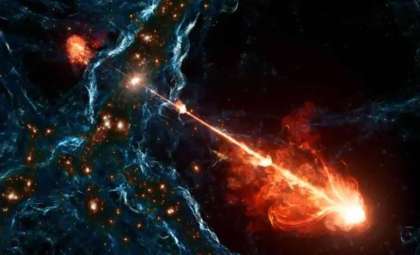
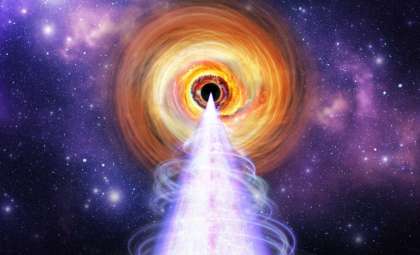
Researchers have succeeded in quantifying the immense energy released by jets propelled from black holes. These jets, which eject matter at velocities approaching the speed of light, rank among the universe’s most powerful phenomena. Until recently, accurately gauging their true power proved challenging. New insights from the Cygnus X-1 system, a binary system composed of a star and a black hole, unveil that these jets channel away a substantial fraction of the energy consumed by the black hole, reshaping theories about black hole behavior and their cosmic influence.
An Intricate Celestial Interaction
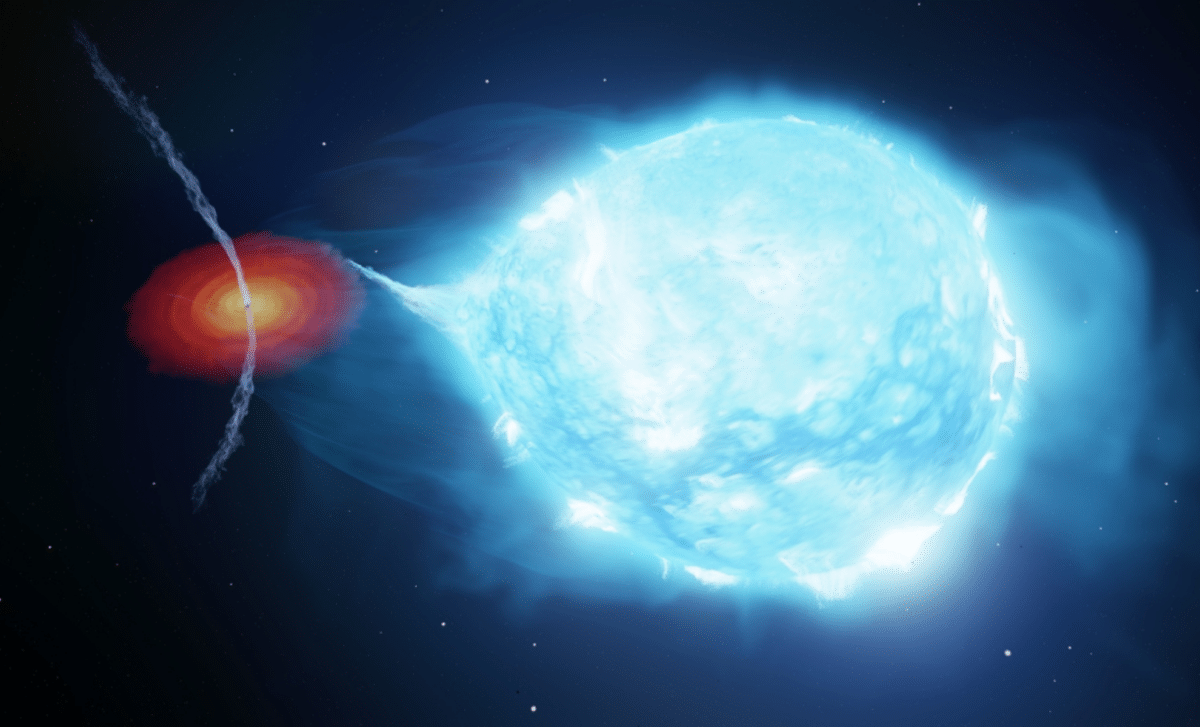
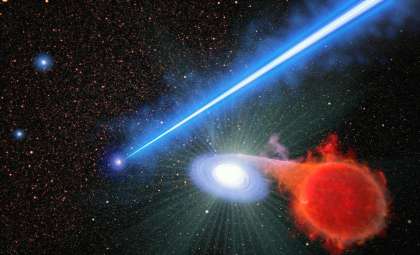
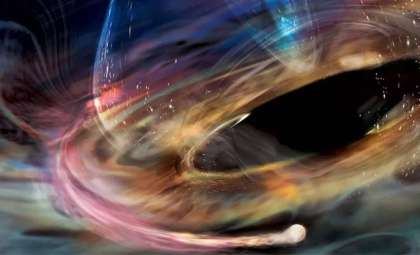
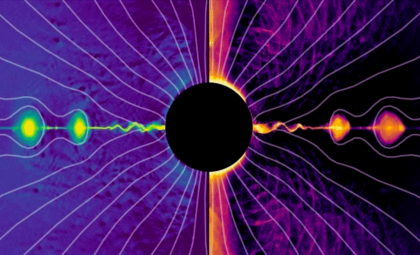
Cygnus X-1 holds the distinction of being the first black hole discovered, paired with a massive star roughly 40 times greater in mass than the Sun. In this gravitational embrace, the black hole draws in material from its stellar companion at an exceptional pace. As material spirals inward, powerful magnetic forces accelerate it, launching jets outward at near-light speed.
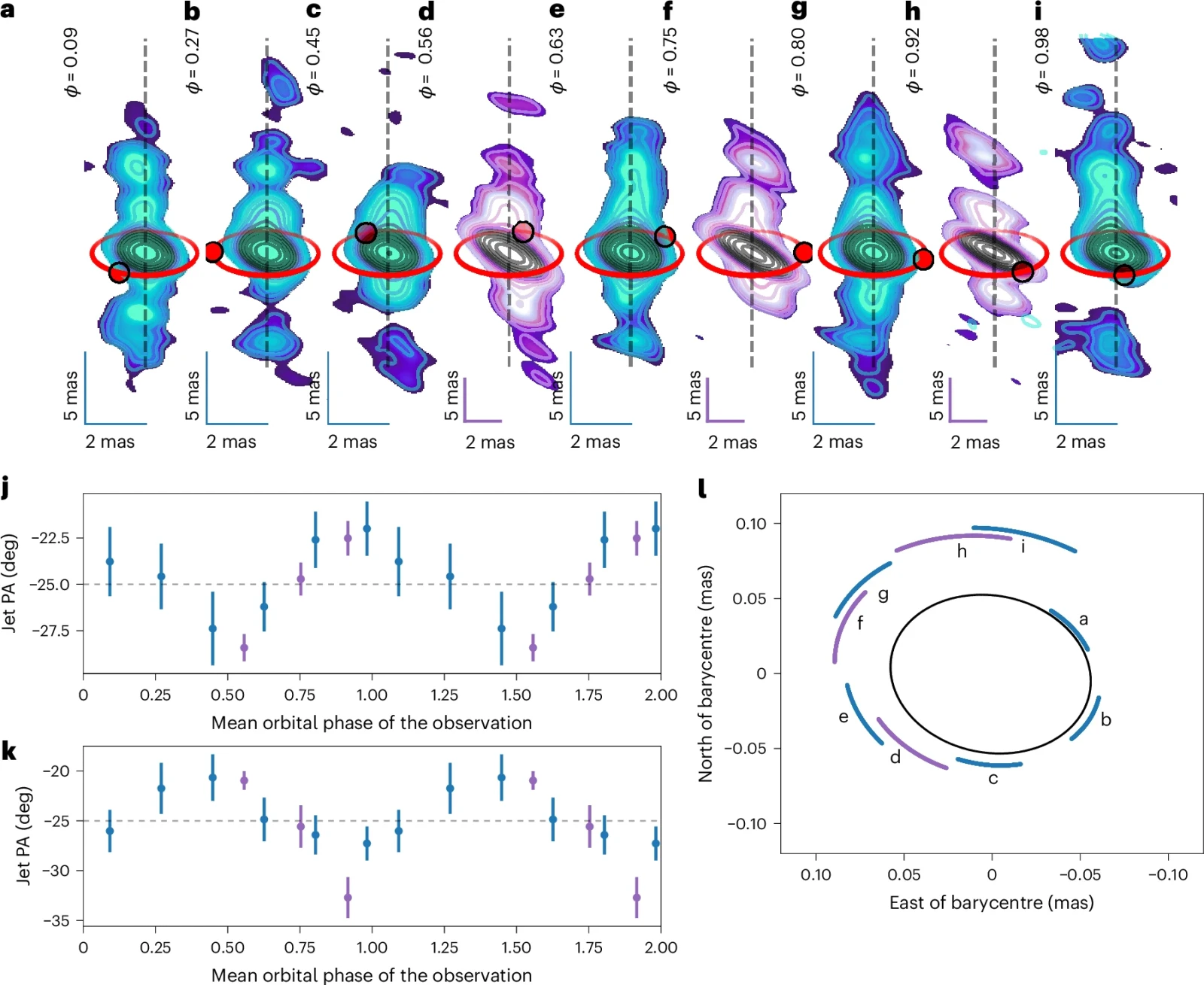
What sets this system apart is the influence exerted by the companion star’s potent stellar wind, a stream of charged particles emitted from its surface. This wind interacts with the jets, causing them to bend and alter their trajectories. Such interplay adds complexity to the jets’ motion, modifying their evolutionary paths over time.

Determining Jet Energy Output
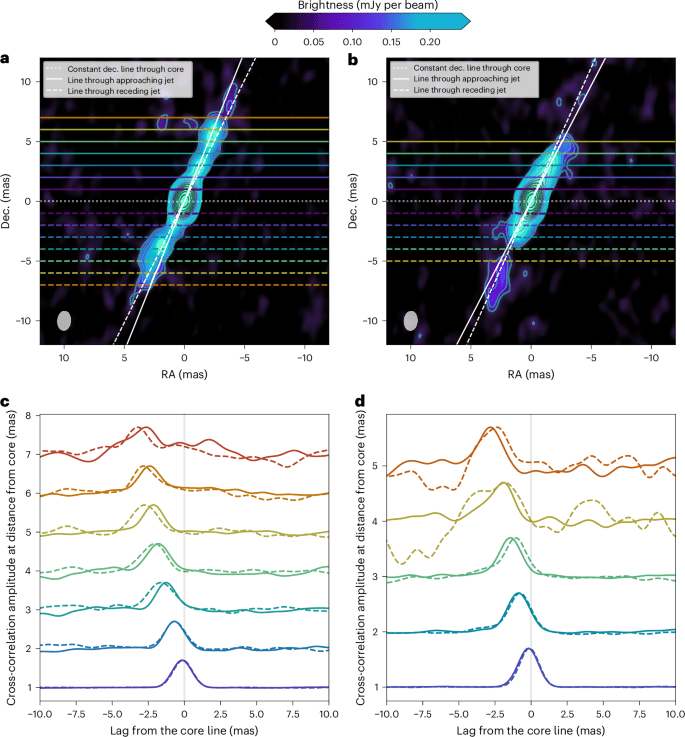
Although recognized for their remarkable energy, determining the immediate power output of black hole jets has been an enduring obstacle. Through cutting-edge high-resolution imaging techniques, astronomers have now visualized the jets’ dynamics with exceptional clarity. Integrating observations from multiple radio telescopes, they effectively constructed a virtual telescope with a resolution spanning thousands of kilometers.
“A key finding from this research is that about 10% of the energy released as matter falls in towards the black hole is carried away by the jets,” said Dr. Steve Prabu, a key researcher in the study published in Nature Astronomy. This revelation is crucial because it validates long-standing assumptions in the field. “This is what scientists usually assume in large-scale simulated models of the universe, but it has been hard to confirm by observation until now.”
These results don’t only clarify the workings of Cygnus X-1 but also offer a vital reference for black hole jets universally. This breakthrough enables researchers to better interpret jet phenomena across black holes of varying masses.
Establishing a Baseline for Further Exploration
“The fundamental physics near black holes remains consistent regardless of their mass,” noted Professor James Miller-Jones. “This measurement now offers a solid benchmark for understanding jets from black holes ranging from ten to millions of solar masses.”
This pivotal discovery paves the way for studying jets from black holes located in distant galaxies, potentially millions or billions of light-years away.
Future observational projects like the Square Kilometer Array Observatory, under development in Australia and South Africa, will enable astronomers to investigate black hole jets across countless galaxies. With this new calibration point, scientists anticipate uncovering deeper insights into the interactions between black holes and their cosmic surroundings.
The Role of Jet Energy in Galaxy Formation
Black hole jets influence much more than the black holes themselves; they play a vital role in shaping their galactic environment. By injecting enormous energy into the surrounding interstellar space, these jets impact star formation and drive the evolution of galaxies.
“These jets serve as a critical feedback mechanism that influences galaxy development,” explained Dr. Prabu. Measuring their power offers scientists crucial clues about how galaxies evolve alongside their central black holes.
Insights into the ways black hole jets mold galaxies enhance our broader understanding of cosmic evolution. Rather than merely consuming matter, black holes actively participate in the life cycles of the galaxies they inhabit, acting as dynamic agents of change across cosmic time.
- Categories:
- News







0 comments
Sign in to Comment