

Blue Origin has recently achieved a significant milestone by conducting a full-scale engine test on its highly anticipated New Glenn rocket. This success is a critical step as the company prepares for its first orbital flight and future missions supporting deep-space exploration, including a planned NASA Mars initiative. The test took place at their Florida test site and has generated renewed confidence in the rocket’s upcoming launch readiness.
A Key Validation for New Glenn
The New Glenn, a massive two-stage launch vehicle for both government and commercial missions, completed a crucial qualification test this week. Blue Origin reported that its seven BE-4 engines on the first stage were fired simultaneously for a full-duration trial that confirmed their consistent performance. “All seven engines performed nominally during the 38-second test, including 22 seconds at full throttle,” Blue Origin stated on X, highlighting the successful outcome.
This test was more than a routine check; it was a demonstration of the BE-4 engines’ power and reliability. These engines, running on liquid oxygen and liquefied natural gas, rank among the most potent privately developed in aerospace history. Besides powering New Glenn, the same engine model is integral to United Launch Alliance’s Vulcan Centaur rocket, underscoring their strategic role in U.S. launch operations. Engineers closely assessed vibrations, thermal stresses, and engine response to ensure performance stability ahead of flight integration.

Overcoming years of development challenges, this ignition test signals a major turning point for New Glenn. With this achievement, Blue Origin steps forward as a serious contender amid a competitive field that includes SpaceX’s Falcon Heavy and NASA’s Space Launch System (SLS).
Preparing for Orbits and Interplanetary Ventures
The New Glenn is engineered to transport heavy cargo into Earth orbit and serve as a reusable platform for missions extending to farther reaches of space. Its first stage is designed to land on an offshore platform in a manner similar to SpaceX’s drone ships, targeting up to 25 reuse cycles to dramatically reduce launch expenses and increase launch cadence.
This recent engine fire test aligns with the expanding role of NASA leveraging commercial aerospace collaborations. Support contracts for Mars exploration, which involve delivering scientific payloads and establishing communication networks, reinforce the partnership between governmental agencies and private enterprises. Demonstrating New Glenn’s engine reliability under full thrust advances Blue Origin’s mission to facilitate human expansion into space.
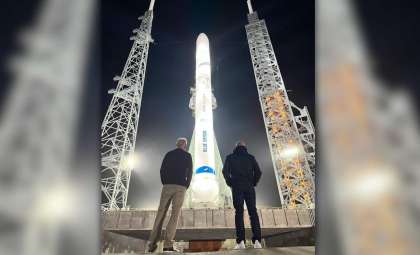
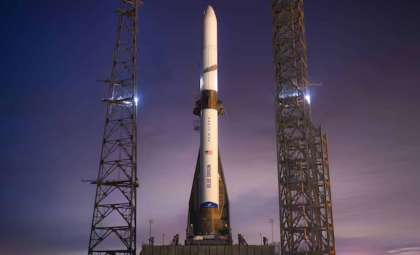
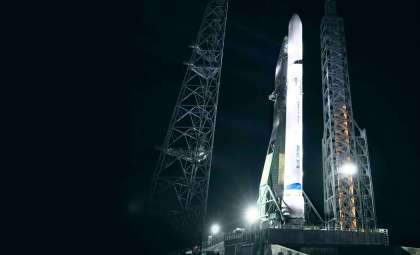
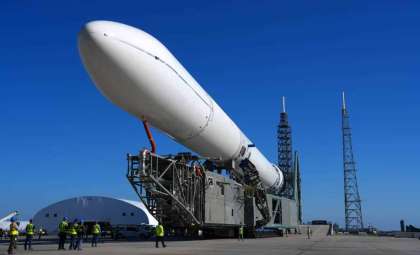
Work is actively underway at Launch Complex 36, the historic site that previously hosted NASA launches, where Blue Origin is assembling the first flight-ready hardware. The rocket’s large payload fairing, nearly seven meters wide, highlights its capability to carry sizable scientific and interplanetary instruments. A series of system integration tests are planned to pave the way for the inaugural launch, projected for 2025.
Shaping the Future of Heavy-Lift Launches
This milestone highlights Blue Origin as a major contender in the next era of heavy-lift launch services. While SpaceX pushes ahead with its Starship development, Blue Origin adopts a meticulous and technically robust approach to proving New Glenn’s dependability. Their ambition goes beyond competition to setting new standards in reliability for commercial aerospace.
The success of New Glenn could enhance U.S. launch autonomy, providing both NASA and commercial clients with more versatile options for orbital and deep-space missions. These advancements illustrate a transformative period in space access, shifting from costly, infrequent endeavors to repeatable, cost-effective launches that support ongoing exploration.
Looking ahead, the coming months are critical. With test data currently under thorough review, Blue Origin anticipates moving closer to final launch certification. The recent engine firing was a powerful affirmation of the company’s commitment. The dawn of New Glenn is on the horizon.
- Categories:
- Space









0 comments
Sign in to Comment