
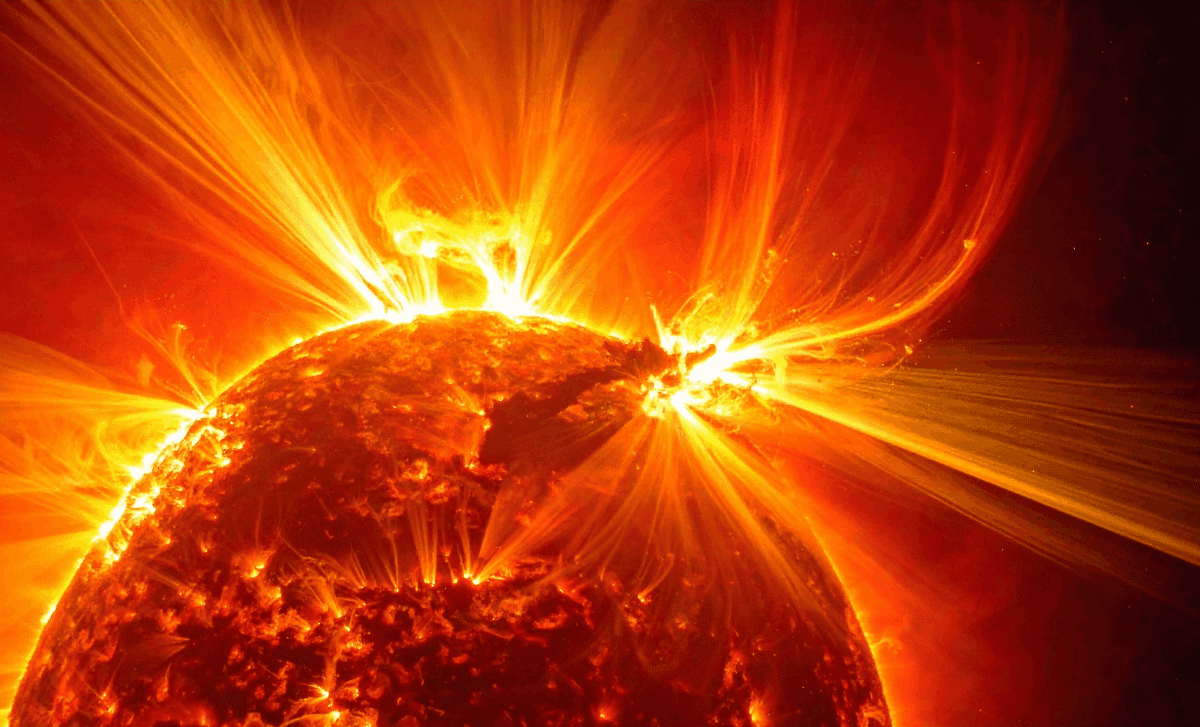
Scientists have long been intrigued by the extraordinary heat of the sun’s corona, which reaches millions of degrees, far hotter than the Sun’s surface. A recent study in Nature Astronomy provides the first direct proof of elusive torsional Alfvén waves, detected at the Daniel K. Inouye Solar Telescope in Hawaii, which could explain how energy moves through the Sun’s atmosphere.
Unveiling Subtle Twisting Waves Among Solar Plasma
For more than eighty years, experts have theorized about hidden magnetic waves in the solar corona transporting substantial energy. Originally proposed in 1942 by Nobel Prize winner Hannes Alfvén, these twisting waves have evaded observation due to their delicate and small-scale features. Utilizing the advanced Cryogenic Near Infrared Spectropolarimeter (Cryo-NIRSP) on the Inouye Solar Telescope, researchers have now succeeded in detecting signals indicative of these waves.
Professor Richard Morton from Northumbria University’s School of Engineering, Physics and Mathematics, leading the collaborative team, created innovative analysis methods to distinguish torsional motions from the predominant plasma oscillations. Morton stated,

“The movement of plasma in the sun’s corona is dominated by swaying motions. These mask the torsional motions, so I had to develop a way of removing the swaying to find the twisting.”
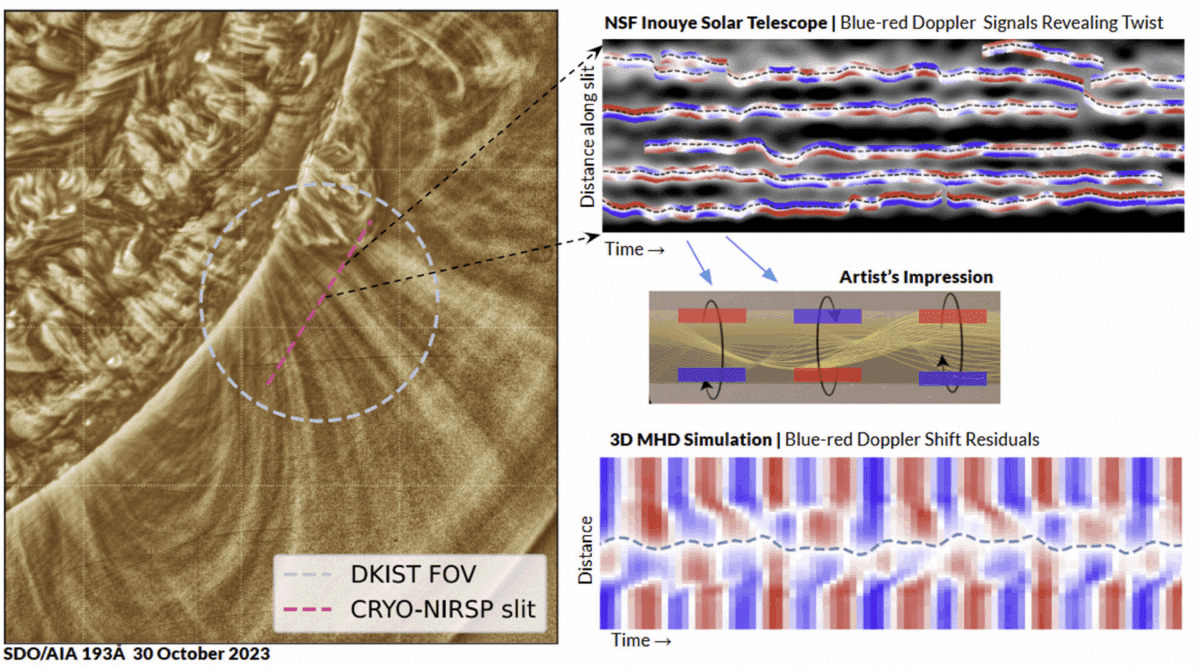
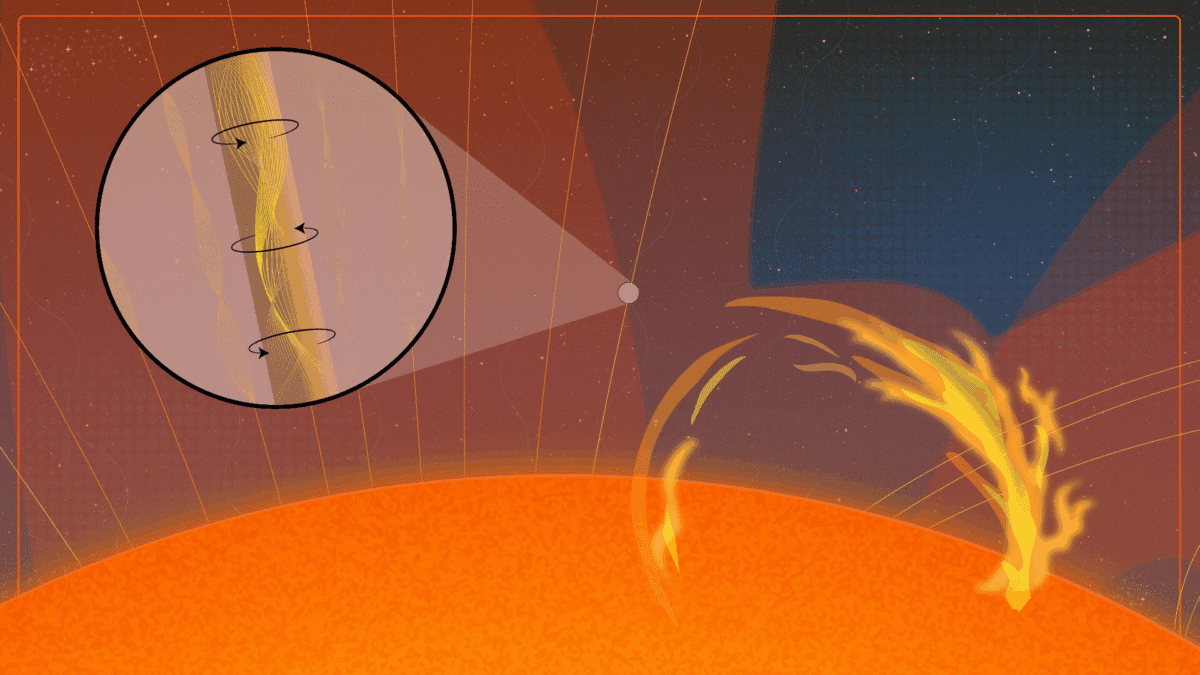
The sensitive Cryo-NIRSP instrument tracked wavelength shifts caused by plasma moving toward and away from Earth at temperatures exceeding 1.6 million degrees Celsius. These spectral red and blue shifts revealed the twisting pattern of the magnetic field lines—clear evidence of torsional Alfvén waves. This milestone, detailed in Nature Astronomy, could reshape our understanding of solar energy transfer processes.
Resolving a Mystery That Spanned Eight Decades
This discovery aligns closely with longstanding theoretical ideas that torsional waves play a vital role in heating the solar corona. Differing from large magnetic disturbances during solar flares, these persistent, subtle waves permeate the corona continuously.
“This discovery ends a protracted search for these waves that has its origins in the 1940s,” said Professor Morton. “We’ve finally been able to directly observe these torsional motions twisting the magnetic field lines back and forth in the corona.”
By supplying crucial observational data, the study fills a key gap in solar physics, supporting models that describe how magnetic turbulence energizes the corona and fuels the solar wind. This stream of charged particles profoundly affects space weather and Earth-based technologies.
Backed by the UK Research and Innovation (UKRI) and involving partners such as Peking University, KU Leuven, and Queen Mary University of London, the research highlights the impact of international cooperation and advanced technology in solar studies.
Unraveling the Energy Behind the Solar Wind
Beyond theoretical advancement, this breakthrough has practical significance. The solar wind, which extends from the corona, carries magnetic disturbances affecting satellites, navigation systems, and power infrastructure on Earth. Understanding torsional Alfvén waves enhances space weather modeling and improves predictions of geomagnetic storms.
“This research provides essential validation for the range of theoretical models that describe how Alfvén wave turbulence powers the solar atmosphere,” Morton added. “Having direct observations finally allows us to test these models against reality.”
The team plans to continue observations with the Inouye Solar Telescope, currently the largest solar observation facility globally. With ongoing data from Cryo-NIRSP, scientists hope to further clarify how these waves travel and dissipate energy, closing the gap between theory and observation in solar physics.
Advancing Our Knowledge of the Sun’s Fiery Atmosphere
While the mystery of the corona’s intense heat isn’t fully solved, this observation provides the strongest proof that magnetic wave energy is a fundamental factor. The corona is a dynamic realm filled with swirling magnetic energies that constantly reshape the solar environment impacting our entire solar system.
As Professor Morton’s group and other researchers expand on these findings, our understanding of how the Sun maintains its hot atmosphere will deepen. This achievement underscores that, despite being our closest star, the Sun continues to harbor secrets that only modern instruments and persistent inquiry can unlock.
- Categories:
- News









0 comments
Sign in to Comment