

For decades, the origins of cosmic rays—extremely energetic particles traveling through space—have eluded full explanation, especially a curious feature in their energy distribution known as the “knee.” New research points toward black hole-powered micro-quasars as critical players in unraveling this cosmic mystery. A recent paper from the Chinese Academy of Sciences, published in Science Bulletin, presents strong evidence implicating these powerful systems as prime sources of cosmic rays at the knee energy level.
Decoding the Mystery of the Cosmic Ray “Knee”
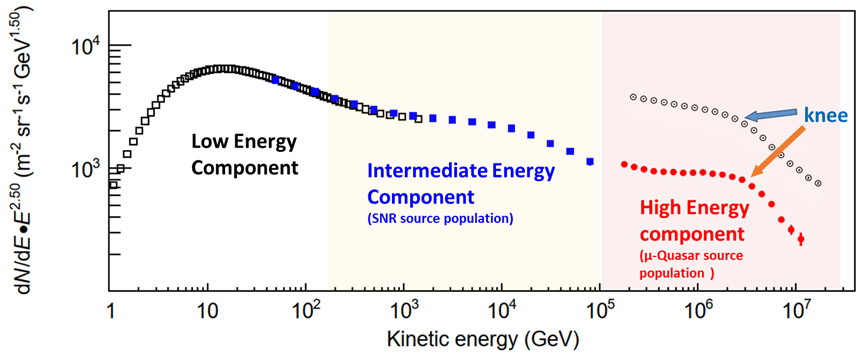
The cosmic ray spectrum includes an intriguing breakpoint called the “knee,” where particle intensities drop sharply around energies above 3 PeV. This bend has challenged scientists since its discovery nearly 70 years ago, with early models attributing it to limits in acceleration by supernova remnants. Yet, these remnants couldn't fully account for the exceptionally high energies observed at the knee.
Fresh insights from the Chinese Academy of Sciences highlight micro-quasars—binary systems with black holes—as the probable accelerators responsible for generating these ultra-high-energy particles. The study, accessible via Science Bulletin, details how jets powered by black holes in micro-quasars can catapult particles to energies surpassing the knee, redefining how we think about cosmic ray acceleration.

Micro-Quasars: The Galactic Particle Accelerators
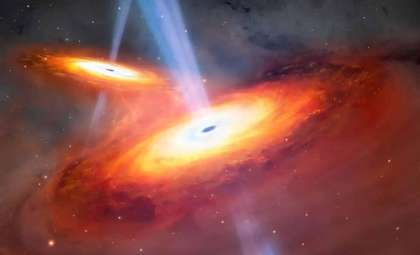
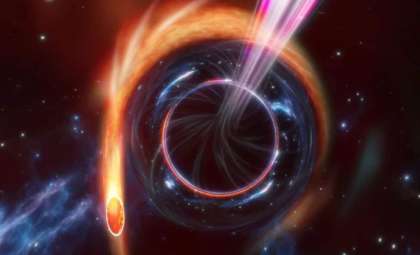
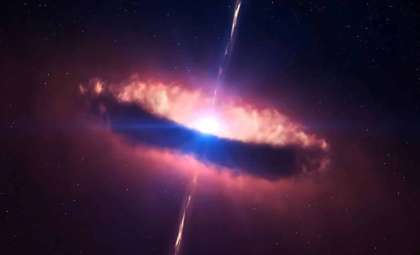
Micro-quasars are compact, highly energetic systems similar to massive quasars but on a smaller scale. Each consists of a black hole siphoning material from a nearby star, forming an accretion disk that feeds powerful relativistic jets. These jets can accelerate particles to velocities nearing the speed of light.
Research led by the Institute of High Energy Physics at the Chinese Academy of Sciences has singled out certain micro-quasars like Cygnus X-1, SS 433, and V4641 Sgr as potent sources of cosmic rays exceeding 1 PeV, well beyond the knee. Observations of gamma-ray emissions from these objects confirm their role as high-energy particle accelerators contributing significantly to the knees’ signature in cosmic ray spectra.
Advanced Methods to Probe Cosmic Ray Spectrum
Measuring cosmic ray energies around the knee has long been challenging due to the rarity of such high-energy particles and the limitations of satellite detectors’ sensitivity and coverage. Ground-based observatories like LHAASO (Large High Altitude Air Shower Observatory) also face atmospheric interference that complicates particle identification and measurement.
To tackle these difficulties, LHAASO developed sophisticated multi-parameter detection techniques, improving the accuracy of identifying high-purity proton cosmic rays. This innovation allowed for unprecedented precision in mapping the cosmic ray energy spectrum, unveiling a complex structure featuring a previously unknown “high-energy component.” These findings shed new light on the acceleration mechanisms behind the cosmic ray knee.
Black Holes as Cosmic Particle Accelerators
This breakthrough links black holes more directly than ever to the acceleration of cosmic rays. While supernova remnants were once thought to be the main contributors of cosmic rays, they cannot account for the extreme energies beyond the knee.
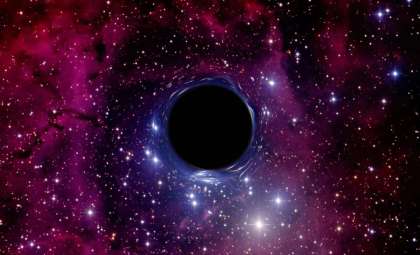
Instead, black hole-driven micro-quasars create intense jets and unique conditions conducive to producing ultra-high-energy cosmic rays. Demonstrating this connection positions black holes at the center of cosmic ray research, ushering in a new era of understanding the universe’s most energetic phenomena.
- Categories:
- Space




0 comments
Sign in to Comment