
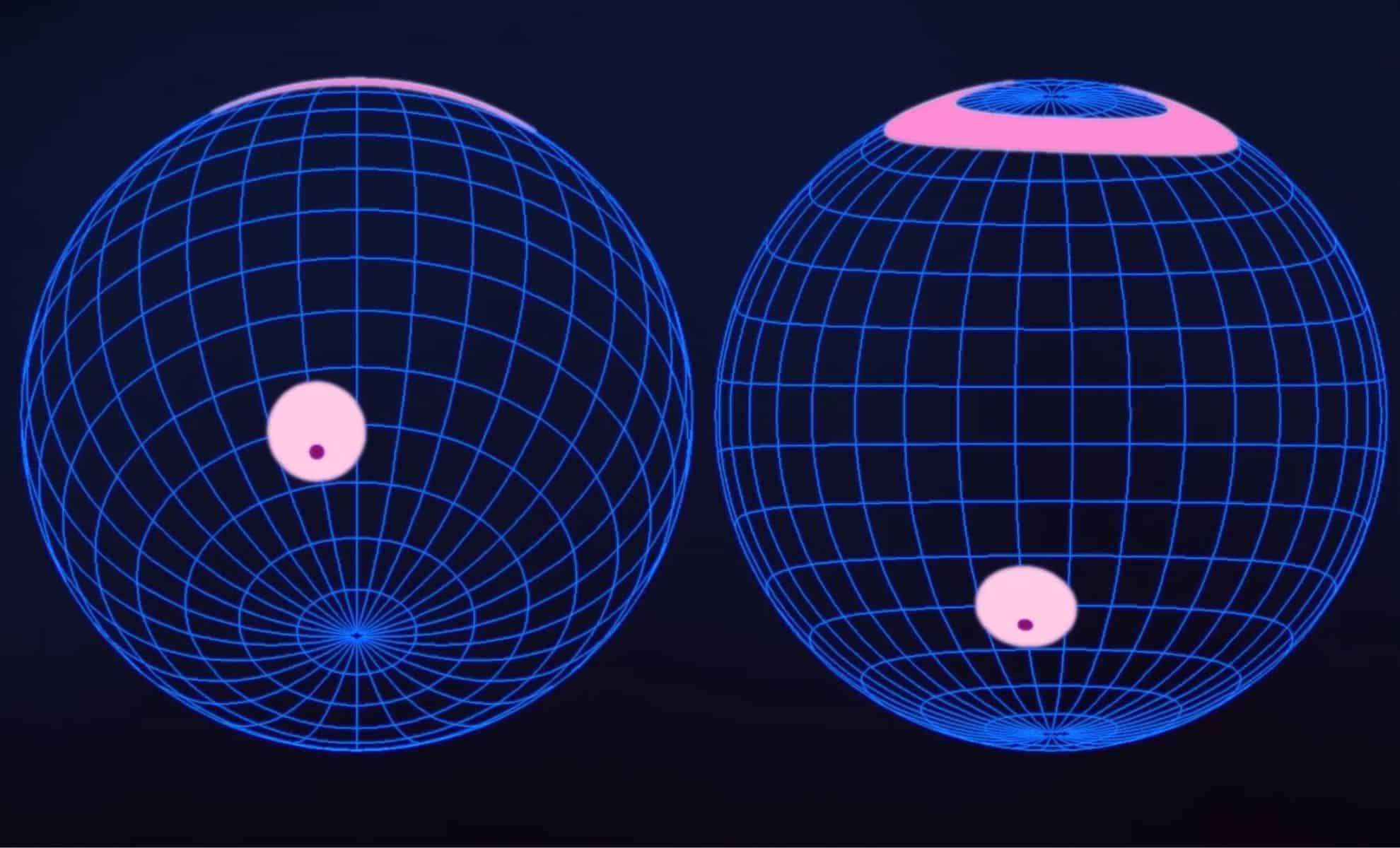
Scientists have accurately determined the size and mass of PSR J0437-4715, the closest millisecond pulsar, finding its radius to be 11.4 kilometers and its mass about 1.4 times that of our sun.
Conducted by researchers at the University of Amsterdam, this study sheds new light on the neutron star’s internal makeup and its magnetic field configuration.
Advanced Methods Deliver Unmatched Accuracy
PSR J0437-4715 is a rapidly spinning neutron star located roughly 510 light-years away in the Pictor constellation. It completes 174 rotations every second and orbits a white dwarf companion. This pulsar emits radio and X-ray pulses every 5.75 milliseconds, making it the closest and brightest example of its kind documented.

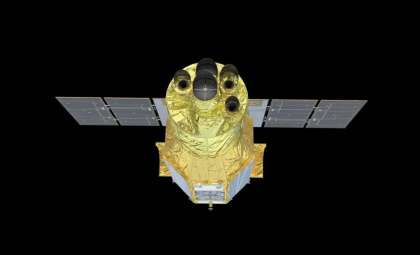
The team harnessed data from the NICER X-ray telescope on board the International Space Station (ISS), utilizing pulse profile modeling techniques that rely on intricate statistical analyses performed on the Snellius supercomputer in the Netherlands.
Combining X-ray observations with mass data from Daniel Reardon and collaborators at the Parkes Pulsar Timing Array enabled the scientists to precisely compute the star’s radius and chart the temperature layout of its magnetic poles. Principal investigator Devarshi Choudhury stated, “We had hoped to measure the radius with accuracy and confirm that the hot magnetic poles aren’t exactly opposite each other. We managed to achieve both.”
NICER’s precise timing data was vital for this analysis, exposing an asymmetric positioning of the pulsar’s hot spots—areas emitting X-rays due to intense magnetic influence. This asymmetric distribution has posed new challenges and opened fresh avenues for understanding neutron star interiors.
New Perspectives on Neutron Star Matter
The latest findings about PSR J0437-4715 suggest a "softer equation of state" than models previously indicated. This implies neutron stars have a lower maximum mass limit, which aligns well with gravitational wave observations. Anna Watts, an expert in neutron stars at the University of Amsterdam, commented, “This harmony beautifully matches what gravitational wave detections imply.”
The discoveries hint that ultra-dense matter inside neutron stars is less compact and more compressible than once thought, improving our grasp of exotic material behavior under phenomenal pressures unreplicable on Earth. Accurate measurements of both mass and radius restrict possible equations of state governing this extreme environment.
Additionally, the team uncovered that the hot magnetic poles on PSR J0437-4715 aren’t diametrically opposed, offering fresh clues about the neutron star’s magnetic field dynamics and temperature patterns. Understanding this uneven pole placement advances our comprehension of magnetic field behavior and the star’s inner architecture. Mapping temperature variations further reveals details about thermal processes in these compact stars.
Advancing Our Knowledge of Neutron Star Physics
This investigation adds to a series focusing on millisecond pulsars, enhancing the scientific community's understanding of these extraordinary objects. Upcoming studies will delve deeper into neutron stars’ equations of state and the connections between their masses and radii, especially regarding other massive pulsars.
The results from this research carry important consequences for modeling neutron star properties and the extreme physics that govern them. Refining their mass and size measurements enables researchers to better define stability thresholds and fundamental characteristics of matter under intense conditions. The findings also bolster modeling efforts essential for interpreting signals detected by gravitational wave observatories such as LIGO and Virgo.
The accurate characterization of PSR J0437-4715 by the University of Amsterdam team marks a milestone in neutron star research. These insights enrich our understanding of this particular pulsar and contribute broadly to astrophysics, deepening knowledge about the universe’s most extreme stellar remnants. Ongoing studies using sophisticated tools like NICER and powerful supercomputers highlight the value of integrated scientific approaches to unlock cosmic mysteries.
- Categories:
- Astronomy ,
- News ,
- Space ,
- Physics








0 comments
Sign in to Comment