
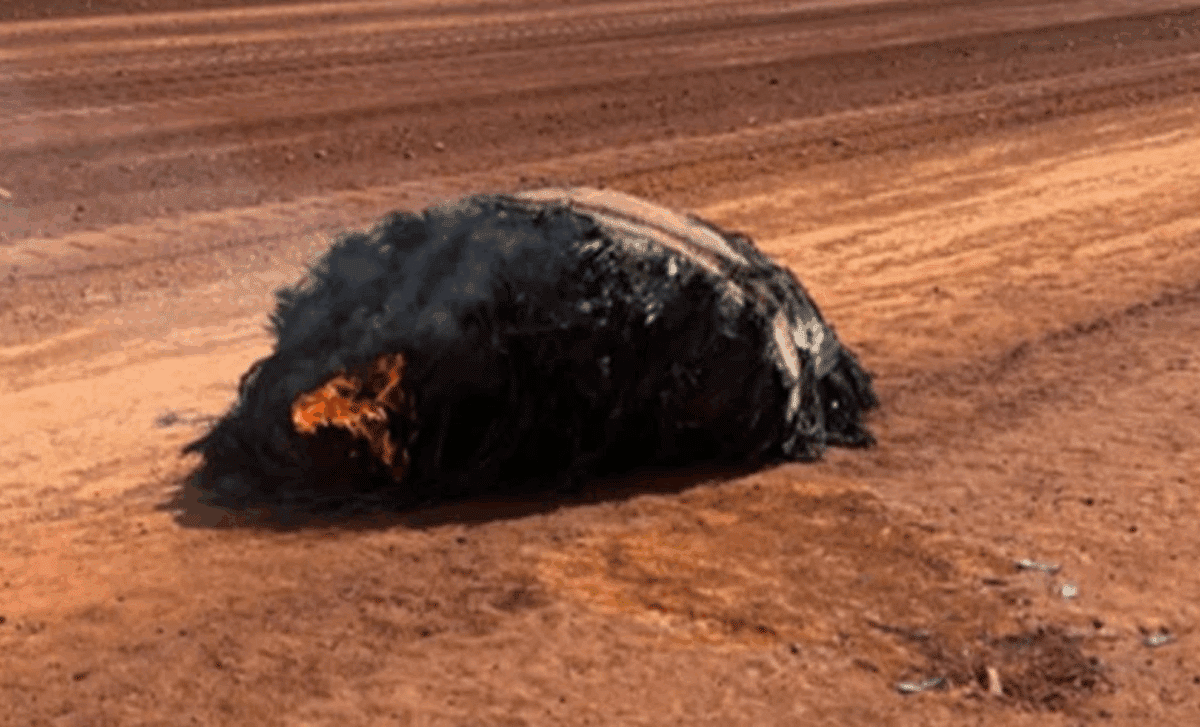
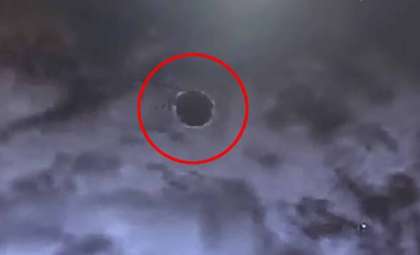
In the isolated Pilbara region of Western Australia, a glowing, burning object was found on October 18, 2025, stirring intrigue and concern. Believed to be remnants of space equipment, this discovery has triggered an extensive probe involving regional authorities, the Australian Space Agency, and emergency response teams. As investigations progress, fresh insights into this peculiar find are emerging.
Unveiling the Enigmatic Object
An enormous flaming object was spotted along a secluded road close to Newman, a town known for its mining operations in Western Australia. Mine workers first noticed the strange sight, prompting a rapid response and dispatch of emergency personnel. The object remained aflame upon responders’ arrival, strongly indicating it originated somewhere beyond Earth’s upper atmosphere.
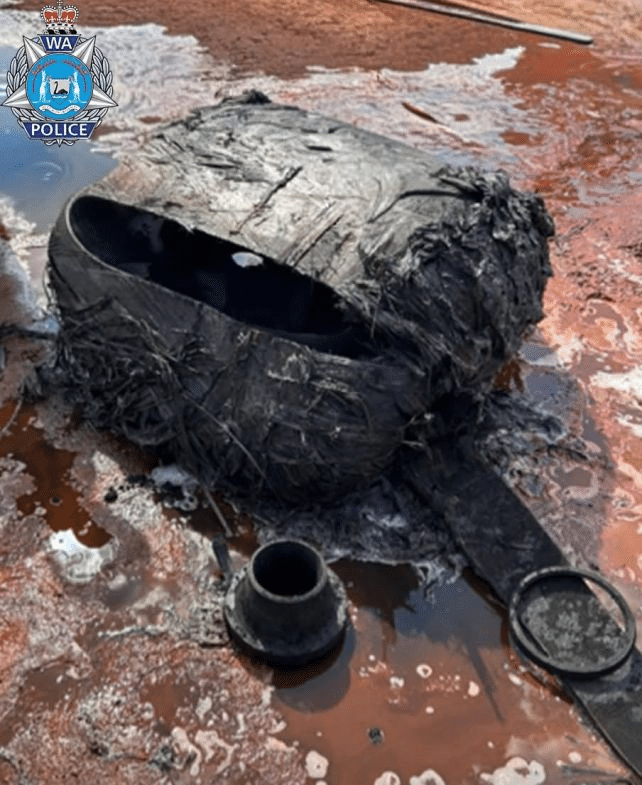
The Western Australia Police Force's preliminary inspection revealed this was no ordinary debris. Initial findings indicated the object was composed of carbon fiber, a material commonly employed in space components such as composite-overwrapped pressure containers and rocket fuel tanks. These parts are integral to spacecraft and launch vehicles, raising speculation about whether this blazing fragment could be a remnant of a larger craft that re-entered Earth's atmosphere.

Space Debris Investigation Intensifies
As the inquiry gained momentum, a joint operation formed between the Australian Space Agency, the Department of Fire and Emergency Services, and the Western Australia Police Force aimed at pinpointing the object’s origin.
A popular hypothesis suggests the fragment could be a segment of a Chinese rocket, possibly the fourth stage of the Jieling rocket launched in September 2025. Australian space archaeologist Alice Gorman, speaking to The Guardian, remarked that the materials and observed characteristics align with debris from that particular mission. Although confirmation is pending, evidence so far reinforces the space junk theory.
“The object has been secured, and there is no current threat to public safety,” said the Western Australia Police Force in a statement.
Despite early apprehensions around the object's provenance and potential hazards, officials have assured the public that no immediate risks are present.
Rising Concern Over Space Debris Falling to Earth
The accumulation of orbital debris, or "space junk," poses an escalating challenge due to the frequency of satellite launches and rocket deployments. While many fragments disintegrate upon atmospheric re-entry, sturdier objects occasionally survive and land on Earth’s surface. An incident similar to this occurred in 2023, when spacecraft debris washed ashore on a Western Australian beach.
The Australian Transport Safety Bureau has excluded the possibility of involvement by commercial aircraft, ruling out any connections to known planes. This simplifies suspect sources, with space debris emerging as the most plausible explanation. The finding underscores an urgent issue: the increasing amount of re-entering space refuse.
Guidelines for Encountering Space Debris
Though infrequent, discoveries of space remnants are treated with utmost seriousness. The Australian Space Agency has provided recommendations for the public on how to respond if they come across suspected space junk. Individuals are strongly cautioned against touching such objects, as they may contain dangerous substances. Instead, they should immediately notify emergency responders, who have the expertise to safely evaluate and address such situations.
Following the Pilbara event, authorities promptly secured the site. The Western Australia Police Force reiterated, "The object has been secured, and there is no current threat to public safety," to reassure citizens that while the probe is ongoing, no imminent danger exists.
The Larger Issue: Managing Earth's Orbiting Debris
This occurrence in Western Australia highlights a mounting problem in space exploration: the accumulation and control of orbital debris. Annually, over 5,000 tons of material, including obsolete satellites, spent rocket segments, and collision fragments, enter Earth’s orbit. Although much burns up during re-entry, a share of debris reaches the planet's surface.
With the space sector’s rapid growth, developing efficient methods for tracking and removing dangerous debris becomes increasingly vital. The Australian Space Agency, alongside international partners, is investing in innovative technologies aimed at capturing and safely disposing of space junk to minimize risks to both orbiting assets and populations on Earth.
- Categories:
- News






0 comments
Sign in to Comment