
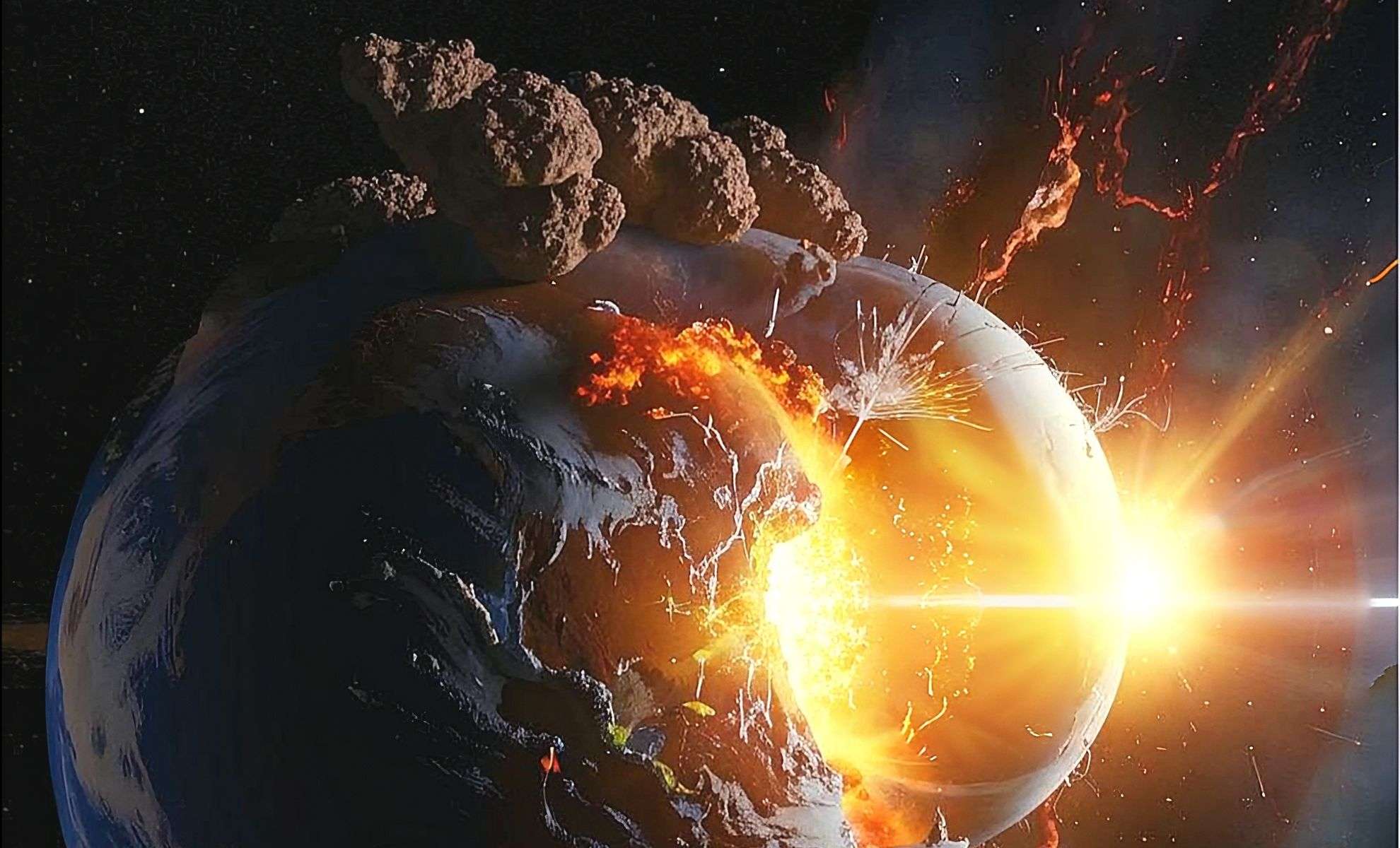
A new investigation detailed in Science Advances reveals that although Earth assembled rapidly in its infancy, it initially lacked the essential ingredients for life. Key components like water and other volatile substances were absent until a massive collision with a Mars-sized object called Theia changed its composition dramatically.
Swift Formation Left Earth Devoid of Key Elements
Researchers from the University of Bern’s Institute of Geological Sciences estimate that Earth’s initial chemical makeup was finalized just three million years after the Solar System’s formation. Their timeline was established using the radioactive decay system from manganese-53 to chromium-53, offering an unprecedented precision in dating early planetary development.
“A high-precision time measurement system based on the radioactive decay of manganese-53 was used to determine the precise age,” said Dr. Pascal Kruttasch, first author of the study.
Add Cosmo Herald as a Preferred Source

However, this rapid assembly meant Earth initially lacked vital compounds such as water, carbon, and sulfur. Formed close to the Sun, in a hot region of the early Solar System, the planet couldn’t retain these volatile materials on its surface or within its crust.
Tracing Earth's Chemical Past Through Isotopic Evidence
To understand how Earth’s chemical composition evolved, scientists analyzed chromium isotopes from meteorites and the oldest terrestrial rocks. Meteorites preserve the primordial Solar System makeup, while ancient rocks retain subtle isotopic markers revealing when Earth’s core, mantle, and crust separated.
“These measurements were only possible because the University of Bern has internationally recognized expertise and infrastructure for the analysis of extraterrestrial materials,” said Professor Klaus Mezger, co-author and isotope geochemist.
The results demonstrate that Earth’s internal layering was completed before it acquired the life-essential volatiles. This finding challenges the notion that such materials arrived gradually from the inner Solar System, which lacked sufficient volatile content. The data instead suggest a dramatic external source.
The Giant Impact: Moon Formation and Life’s Ingredients
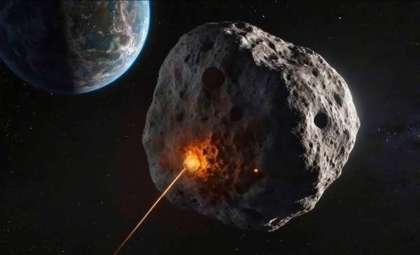
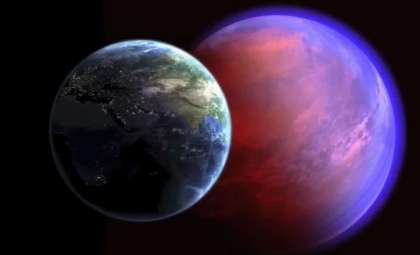
The game-changing event is likely a massive collision with Theia, a planetary body thought to have originated from the colder outer reaches of the Solar System rich in volatiles. This impact not only generated the material that coalesced into the Moon, but may also have delivered Earth’s crucial stockpile of volatiles.
Supporting this theory, Earth and the Moon share nearly identical isotopic compositions, implying a common origin from this violent encounter. Furthermore, Earth’s current elemental makeup exhibits an abundance of volatiles not explainable by local sourcing. Together, these clues present a cohesive picture of a defining collision that shaped our planet’s habitability.
Understanding Habitable Worlds Beyond Orbit Alone
Two planets positioned at the same distance from their stars can have drastically different environments—especially if one experiences a volatile-rich impact and the other does not. As the research team emphasizes, "habitable conditions depend on more than orbit — they hinge on a planet’s formation history and acquisition of life-supporting materials."
Despite widespread backing for the giant impact hypothesis, many aspects remain elusive. As Dr. Kruttasch notes, "this crucial event is still not fully understood." Ongoing research aims to develop refined models explaining the shared chemical signatures and simultaneous formation of Earth and its satellite, pushing forward our grasp of planetary origins and life's emergence.
- Categories:
- Space





0 comments
Sign in to Comment