
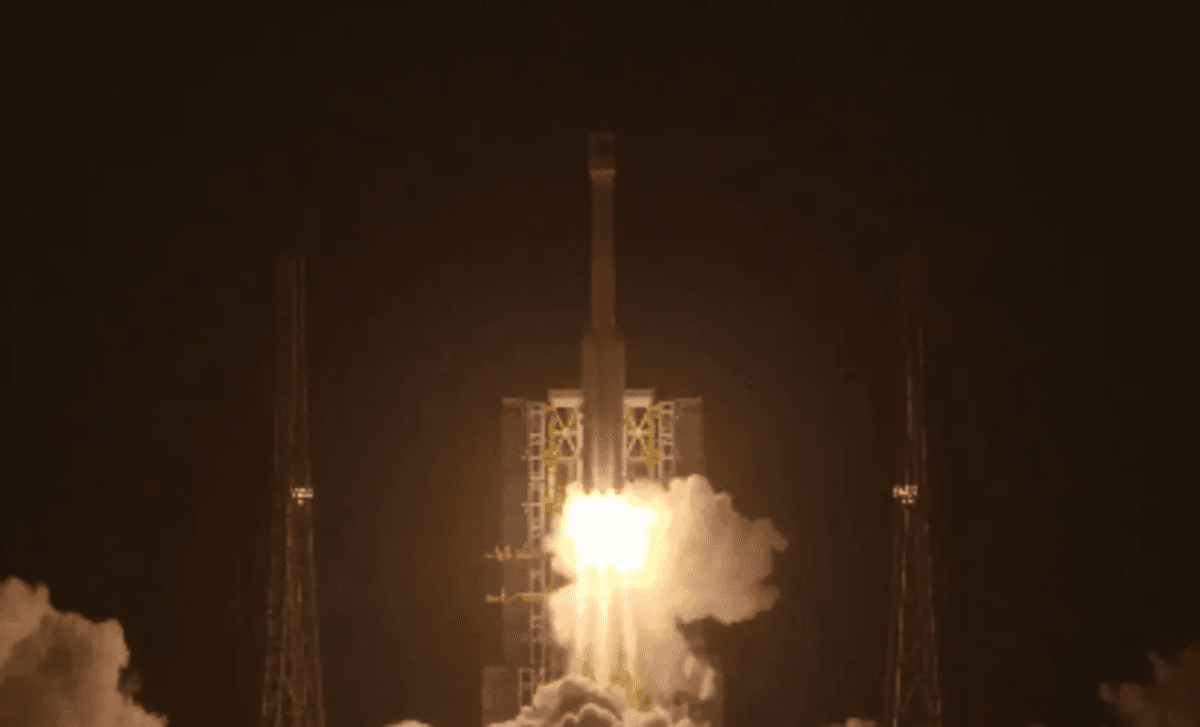
On December 31, 2025, China successfully deployed two state-of-the-art satellites, Shijian-29A and Shijian-29B, aboard a modified Long March-7 rocket launched from the Wenchang Space Launch Center, according to CGTN. This mission underscores China's accelerating progress in orbital technology, with a focus on space object detection and verification.
Closing 2025 with a High-Profile Launch
In the final hours of 2025, China’s aerospace program marked another significant achievement. At 6:40 a.m. local time, the enhanced Long March-7 vehicle took off from Hainan Island, carrying a dual payload consisting of the Shijian-29A and Shijian-29B satellites. Successfully placed into their predetermined orbits, these satellites are tasked with advancing space technology experiments, according to official statements.
This launch is part of an expanding portfolio of missions aimed at pioneering new orbital technologies and testing innovative sensor systems. The Long March-7 variant employed here is recognized for its adaptability, capable of launching both single and dual satellite payloads, which showcases China’s increasing frequency of space endeavors—73 missions in 2025 compared to 51 in the prior year.

Shijian-29 Series: Innovation in Orbit
The Shijian satellite lineup, managed by the China Aerospace Science and Technology Corporation (CASC), serves as a testbed for new materials, spacecraft components, and orbital operations. The newly launched Shijian-29A and 29B particularly focus on enhancing space surveillance capabilities and validating detection technologies essential for modern space activities. CGTN notes these missions primarily support verification of space object monitoring systems.
Though specific payload details remain classified, experts speculate the satellites house cutting-edge sensors, radar innovations, or AI-driven systems engineered to track rapidly moving objects and satellite networks efficiently. This effort aligns with China’s ambitions to develop autonomous space situational awareness tools amid an increasingly congested low Earth orbit (LEO) environment.
Long March-7: Enhancing China’s Launch Versatility
The Long March-7 rocket stands at the core of China’s medium-lift launch fleet, optimized for missions requiring high-inclination or geosynchronous transfer orbits. Developed by the China Academy of Launch Vehicle Technology (CALT) under CASC, this rocket also functions as a platform for advancing propulsion technologies and modular launch systems.
The vehicle used in this flight featured modifications reflecting ongoing upgrades aimed at improving flexibility across various orbital mission demands. This adaptability illustrates China’s broader strategy to refine launch logistics and rapidly accommodate diverse payloads. Completing the 623rd launch in the Long March series, this mission further demonstrates the robustness and progressive enhancement of China's space launch infrastructure.
- Categories:
- News








0 comments
Sign in to Comment