
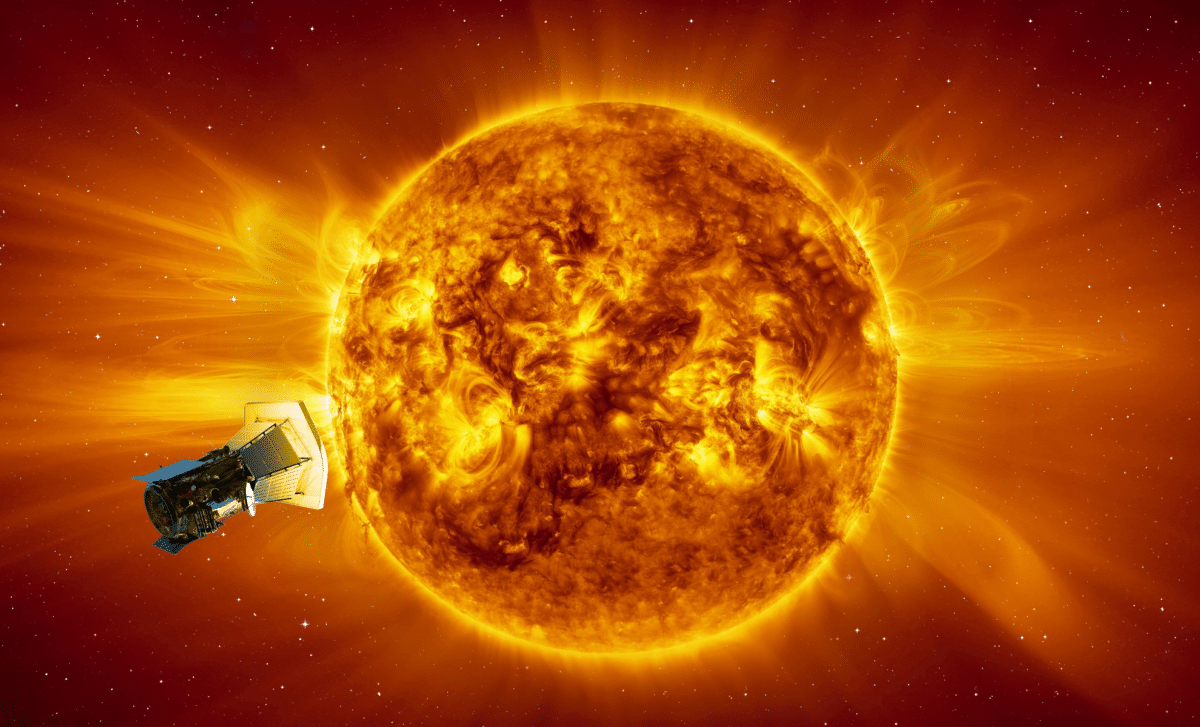
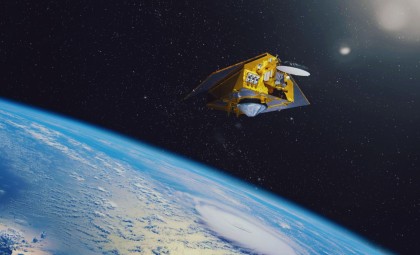
China is gearing up to launch its inaugural solar observation spacecraft, Xihe-2, aimed at the Sun-Earth Lagrange 5 (L5) point. Scheduled between 2028 and 2029 as noted by CGTN, this mission aspires to deliver unparalleled insights into solar dynamics and advance the prediction of space weather phenomena. Positioned at a rare vantage point, Xihe-2 promises to deepen our knowledge of solar events and enhance forecasting of solar flares and geomagnetic disturbances.
China’s Trailblazing Mission to the Sun-Earth L5 Point
In an unprecedented venture, China plans to dispatch Xihe-2, its first dedicated solar probe, to the Sun-Earth L5 point. Located roughly 150 million kilometers from Earth, this region maintains a gravitational balance between the Earth and the Sun. As the fifth Lagrange point, it provides an optimal location for monitoring solar activity and observing space weather. By placing the probe here, China will establish the first man-made observatory at this strategic spot, offering scientists fresh data on solar behavior and its effects on Earth’s space environment.
The Strategic Advantage of the L5 Location
The decision to target the L5 point stems from its gravitational stability, which enables the probe to stay in position with minimal fuel expenditure. This long-lasting orbital stability, combined with advanced onboard instruments, will facilitate precise monitoring of solar phenomena. According to CGTN, the L5 vantage also offers an unobstructed solar view, free from atmospheric distortions, ideal for capturing detailed magnetic field variations, solar flares, and eruptions.

Transforming Solar Science with Xihe-2
Xihe-2 is outfitted with state-of-the-art sensors to detect magnetic fields with great accuracy, enabling detailed study of solar flares and coronal mass ejections (CMEs). These solar events can disrupt Earth’s magnetosphere and satellite operations, highlighting the importance of early warnings. By forecasting solar storm activities up to five days ahead, Xihe-2 will provide critical lead time to prepare for potential space weather hazards, helping safeguard communication infrastructure and electric power systems.
Xihe-2: Enhancing China’s Solar Exploration Timeline
This endeavor marks a pivotal advancement in China’s growing space ambitions. Building on the success of the 2021 launch of Xihe, China’s first solar explorer capturing H-alpha solar spectral imagery from low Earth orbit, Xihe-2 extends this pursuit by reaching the more demanding L5 point. This mission signifies a bold leap forward in China’s journey of space science and sun observation.
The Consequences of Space Weather on Earthly Systems
Solar-driven space weather events—including flares and CMEs—can severely impact technological systems here on Earth, interfering with satellite communications, GPS accuracy, and power distribution networks. Given society’s increasing reliance on space-dependent technology, advancing our understanding of these phenomena is crucial. The Xihe-2 mission will improve predictive models and help mitigate the effects of space weather, protecting critical infrastructure worldwide through earlier detection and response.
Collaboration Fuels China’s Solar Science Initiative
Xihe-2 results from the combined efforts of several Chinese institutions including Nanjing University, the China Meteorological Administration, and the Shanghai Academy of Spaceflight Technology. This partnership showcases China’s commitment to innovation and leadership in space exploration as it pushes forward comprehensive research beyond Earth’s bounds.
The Role of Lagrange Points in Expanding Space Observations
Lagrange points, discovered by mathematician Joseph-Louis Lagrange, are unique zones where gravitational forces from two celestial bodies, like Earth and the Sun, counterbalance each other. These points provide stable locations for spacecraft to maintain fixed positions relative to those bodies. Specifically, the fifth Lagrange point offers an uninterrupted solar view, making it indispensable for continuous and detailed solar observations. This stability will empower scientists with unprecedented solar data, advancing our comprehension of stellar processes.
- Categories:
- Space




0 comments
Sign in to Comment