
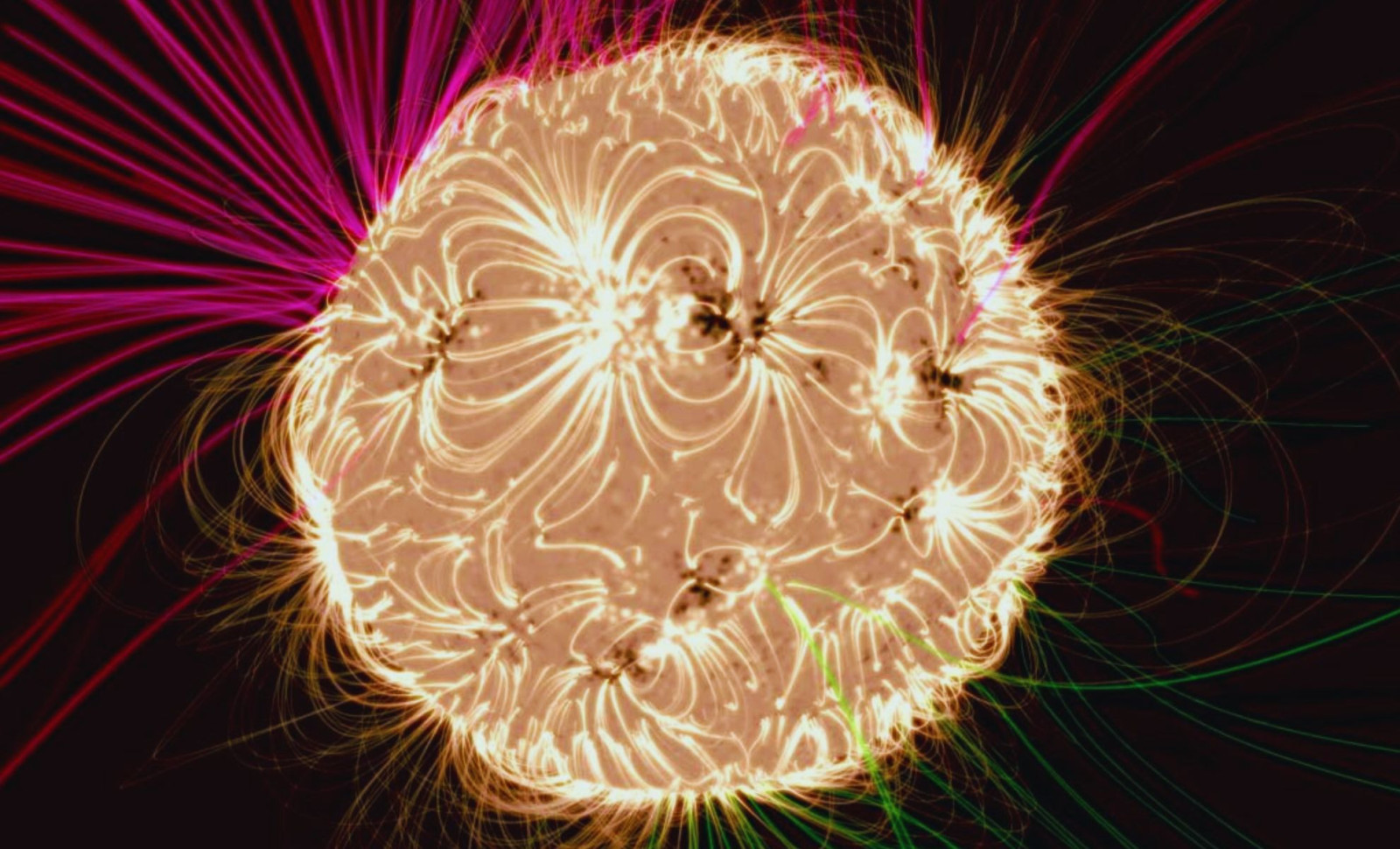
NASA has achieved an unprecedented milestone by making the Sun’s elusive magnetic behavior visible to the naked eye for the first time. During a recent close approach, the Parker Solar Probe recorded footage revealing magnetic switchbacks—abrupt reversals in the Sun’s magnetic field direction—within the solar corona. Previously only theorized, these elusive magnetic features are now accessible for both scientists and the public to observe in real time.
The newly released video is part of an official NASA report, heralded as the first moment when the "magnetic Sun" could be witnessed in motion. This advancement represents a significant breakthrough in heliophysics, confirming longstanding theories and paving the way for deeper exploration of magnetic processes that influence both solar and interplanetary environments.
Insights into Magnetic Switchbacks Close to the Sun
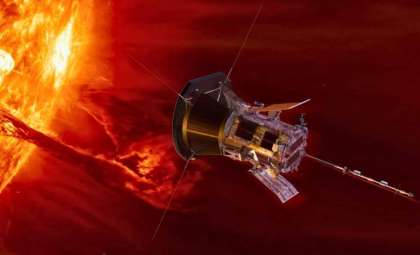
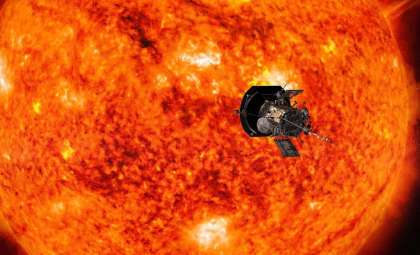
Launched in 2018, the Parker Solar Probe was engineered to venture nearer to the Sun’s surface than any prior spacecraft. In a critical stage of its mission, the probe encountered sections of solar wind shaped by intense magnetic irregularities dubbed switchbacks. First indirectly detected in 2019, these sudden magnetic kinks had never been visually captured—until now.

As detailed by the American Space Agency, these discoveries were made possible by the probe’s WISPR (Wide-Field Imager for Parker Solar Probe) instrument, which tracked dust and particulate matter swept up by these magnetic disturbances. This visualization allows scientists to directly observe the Sun’s dynamic magnetic field actively shifting and twisting.
“We’re not sure exactly where in the sun the magnetic field is created,” explained Dean Pesnell, a space scientist at NASA’s Goddard Space Flight Center in Greenbelt, Maryland. “It could be close to the solar surface or deep inside the sun – or over a wide range of depths.”
Visual Evidence Marks a Key Leap Forward
For researchers studying solar physics, gaining the ability to directly observe the magnetic field is revolutionary. The Sun’s magnetic activity is the engine behind solar flares, coronal mass ejections, and the solar wind—all phenomena that impact Earth’s space weather. Until now, these effects could only be understood via indirect data or predictive models.
NASA scientists report that the new footage clearly demonstrates how magnetic activity governs the motion of solar particles, providing an unmatched window into the Sun’s atmospheric dynamics. The observed switchbacks reveal bursts of magnetic energy that alter the outbound flow of charged particles. As Pesnell describes:
“At solar maximum, the magnetic field has a very complicated shape with lots of small structures throughout – these are the active regions we see. At solar minimum, the field is weaker and concentrated at the poles. It’s a very smooth structure that doesn’t form sunspots.” His description frames the footage in the broader context of the Sun’s magnetic cycle.
New Perspectives from Parker Solar Probe’s Mission
Data gathered by the Parker Solar Probe is expected to enhance forecasting models for solar storms, crucial for shielding communication networks, satellites, and electrical grids from disruption. While comprehensive scientific evaluation of this footage continues, the achievement already marks a turning point.
Witnessing the real-time magnetic fluctuations of the Sun’s magnetic behavior is a historic first—transforming a long-theorized aspect of solar physics into observable and quantifiable phenomena. As the Parker Solar Probe presses onward, scientists anticipate more revelations about our star, but this initial unveiling has already shed light on one of the Sun’s deepest mysteries.
- Categories:
- Space






0 comments
Sign in to Comment