

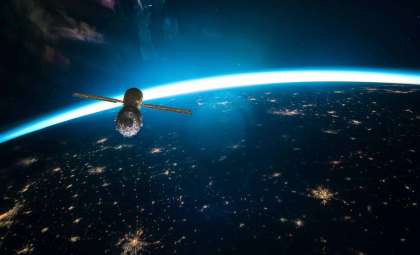
Recent findings show that heightened solar activity is reducing the operational time of SpaceX’s Starlink satellites, causing them to descend back to Earth more quickly than anticipated. This phenomenon could elevate the danger posed by satellite debris reaching the planet's surface, challenging current safety expectations.
Impact of Solar Storms on Starlink Satellites’ Operational Duration
A research article led by Denny Oliveira at NASA’s Goddard Space Flight Center analyzed reentry events of Starlink satellites launched between 2020 and 2024. This timeframe coincides with increasing solar activity as the Sun approached its 11-year peak in October 2024.
Within these five years, 523 Starlink units reentered Earth’s atmosphere. Statistical analysis revealed that geomagnetic storms stimulate a premature loss of altitude, leading satellites to return sooner than originally projected. Although Starlink satellites are engineered for about a five-year lifespan, their time in orbit is cut short by approximately 10 to 12 days due to these space weather events.

The phenomenon results from geomagnetic storms heating and expanding Earth's upper atmosphere, thereby increasing drag on satellites and accelerating their orbital decay.
Increased Risk of Satellite Collisions Due to Geomagnetic Effects
Besides reducing satellite lifespans, atmospheric expansion from solar storms heightens collision probabilities. Collision prediction models used by SpaceX and other satellite operators currently do not fully incorporate these drag fluctuations caused by geomagnetic disturbances.
This shortfall can cause satellites to deviate from predicted paths unpredictably, raising the likelihood of in-orbit collisions. With the rapid growth of satellite populations—especially the rise of megaconstellations like Starlink—this creates an increasingly complex environment for space traffic monitoring.
Rapid Reentry Speeds Raise Debris Survival Questions
Unexpectedly, Oliveira’s analysis also found that satellites descend through Earth's atmosphere at greater speeds during geomagnetic storms. This could potentially increase the amount of debris that survives reentry and lands on terrestrial surfaces. Although higher velocity usually generates more frictional heating—causing spacecraft to burn up fully—the faster descent might reduce atmospheric interaction, allowing fragments to persist.
In 2024, a 5.5-pound piece of Starlink debris was recovered on a farm in Saskatchewan. SpaceX has affirmed that while debris can return to Earth, it poses “no risk to humans on the ground, at sea, or in the air.” There are currently over 7,500 Starlink satellites in orbit, with ambitions to expand the network to 42,000.
Addressing Challenges in an Overcrowded Orbital Environment
Oliveira highlighted that the sheer number of satellites now in Earth’s orbit is unprecedented in history. “Satellites are returning nearly every week, potentially moving to daily incidents in the near future,” he noted.
Gaining a deeper understanding of how solar phenomena influence satellite endurance and reentry behavior will be essential to safely managing the congested space environment and reducing hazards related to orbital debris reentering Earth's atmosphere.
- Categories:
- Space







0 comments
Sign in to Comment