
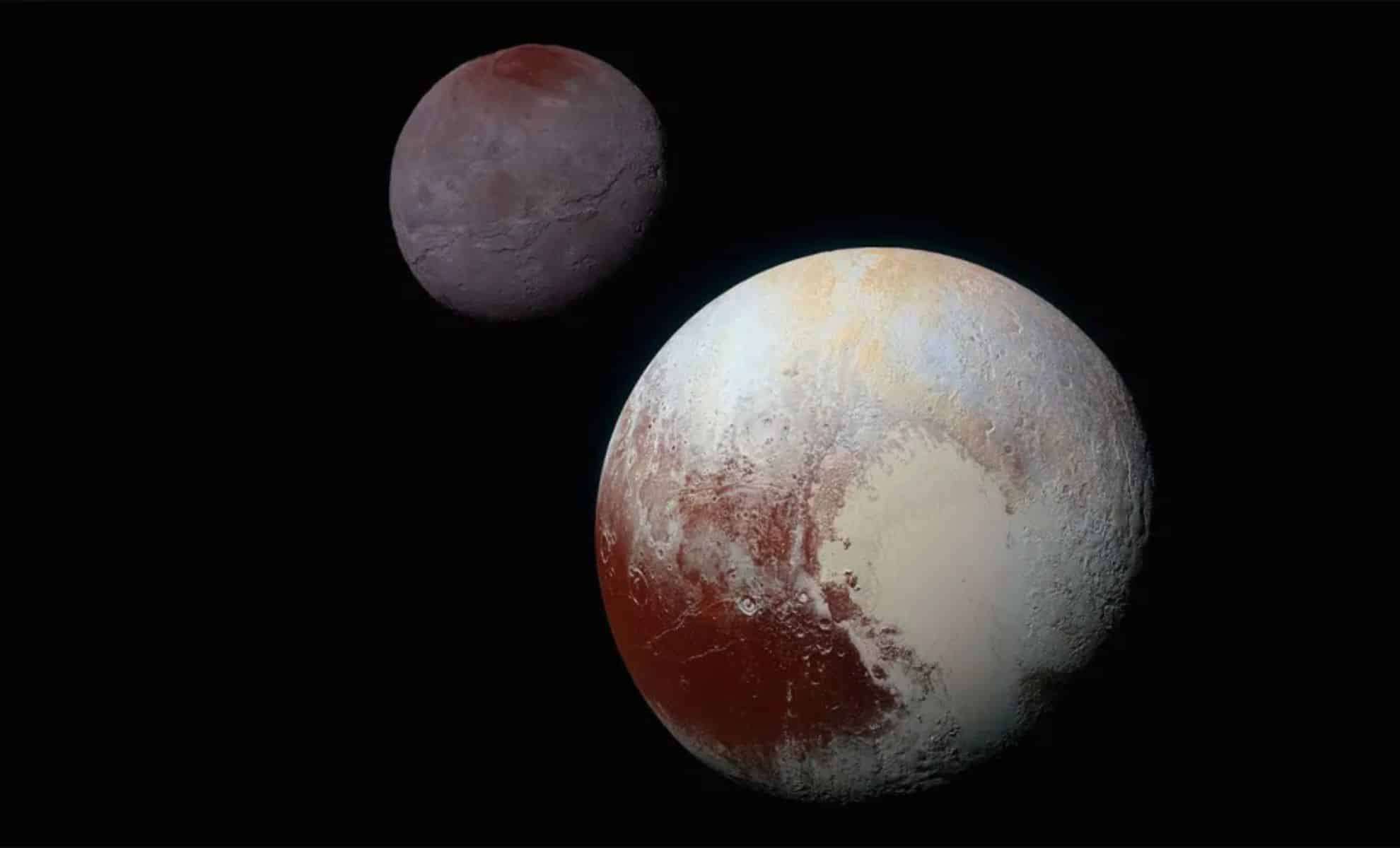
Scientists have identified a remote celestial object that could qualify as a new dwarf planet, orbiting the Sun at a distance more than double that of Pluto.
The object, named 2017 OF201, was detected by a team from the Institute for Advanced Study in Princeton, New Jersey. It stands among the most distant solar system constituents ever captured using optical telescopes. With an orbital period of roughly 25,000 years, this find could lead to the discovery of numerous others lurking in the farthest reaches of our solar neighborhood.
Dimensions and Trajectory of 2017 OF201
The celestial object 2017 OF201 is estimated to be about 435 miles (700 kilometers) in diameter, making it smaller than Pluto, which measures approximately 1,477 miles (2,377 kilometers). Should radio telescope data confirm the size, it would be the largest distant object discovered in the outer solar system in over ten years. Despite its modest scale, 2017 OF201’s unusual orbit distinguishes it from most known solar bodies.

Regarded as an “extreme” trans-Neptunian object (TNO), it is an icy entity residing far beyond Neptune, situated in the Kuiper Belt. Once believed to be sparsely populated with large bodies, this region now appears to host many more substantial objects than previously thought. Researchers relied on the Dark Energy Camera in Chile and the Canada-France-Hawaii Telescope to take 19 separate exposures spanning seven years. These observations revealed intricate details about the object’s size and orbit.
A Remarkable and Unstable Path
One striking characteristic of 2017 OF201 is its highly elongated orbit. “Its aphelion—the farthest distance from the Sun—reaches more than 1600 times the distance between Earth and the Sun, while its perihelion, the closest approach, lies about 44.5 times Earth’s distance from the Sun, comparable to Pluto’s,” explained Cheng.
Such an extended orbit suggests that 2017 OF201 has undergone substantial gravitational disturbances. Astronomer Sihao Cheng proposed, “It likely had close interactions with a giant planet, which propelled it into this far-flung orbit.” There is even speculation that 2017 OF201 might have once been thrust into the Oort Cloud—a remote region filled with cometary bodies—before being nudged back inward toward the Sun by an unidentified force.
Expanding Our View of the Outer Solar Frontier
The identification of 2017 OF201 opens up compelling new avenues for investigating the solar system's distant zones. This object resides in the Kuiper Belt, a broad belt beyond Neptune that was long assumed to be mostly empty of sizable entities. The detection of 2017 OF201 suggests the Kuiper Belt could shelter many more hidden worlds.
Since 2017 OF201 remains within the inner solar system—and thus detectable—only about 1% of its orbit, astronomers infer that numerous similar objects might still be concealed by the limits of current observational technology.
Cheng estimates there may be more than 100 similar bodies in this remote solar system zone awaiting discovery as observational tools improve. The presence of objects with highly stretched orbits like 2017 OF201 adds complexity to our understanding of the solar system’s outer environment, where many puzzles remain unresolved.
- Categories:
- News











0 comments
Sign in to Comment