
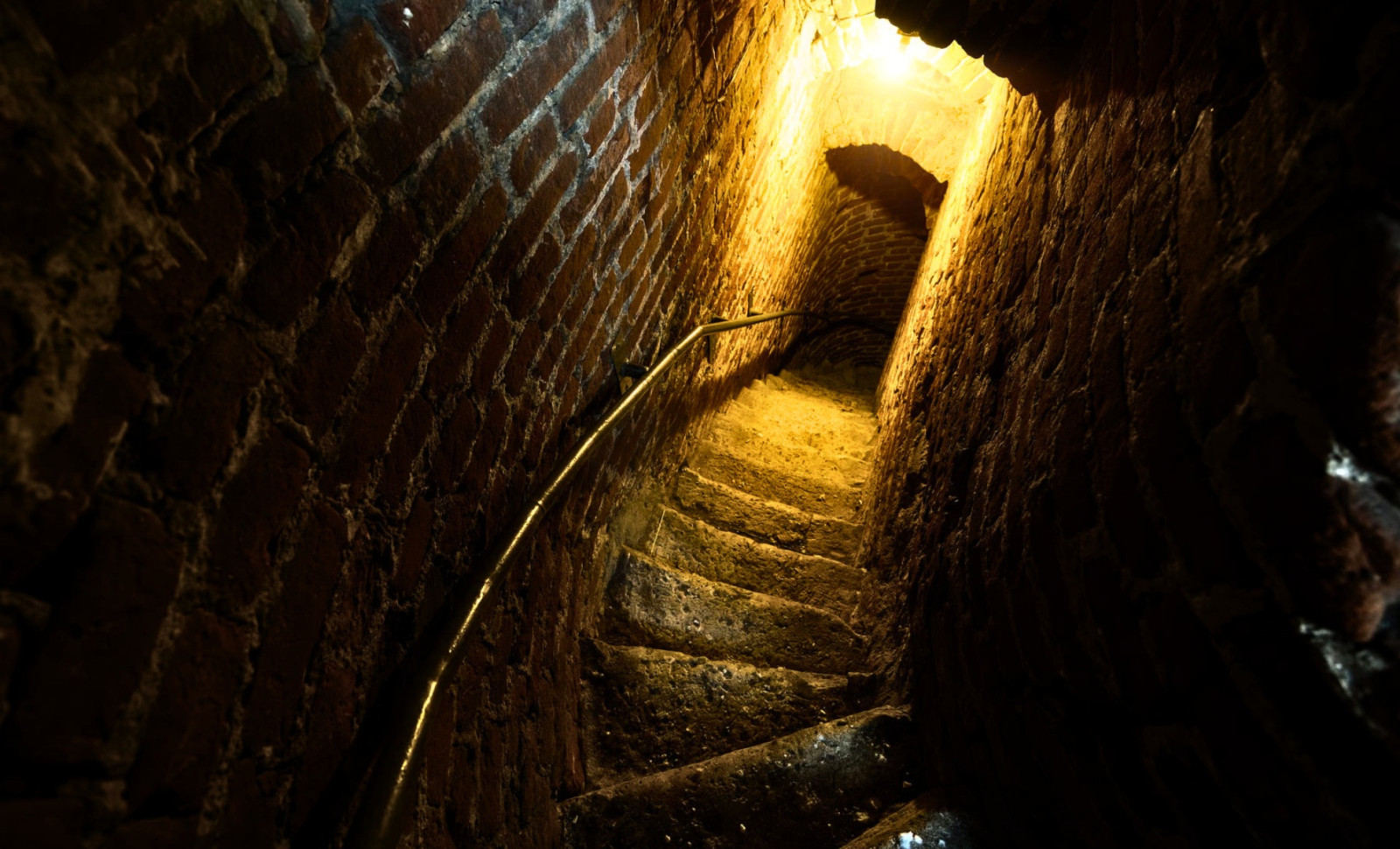
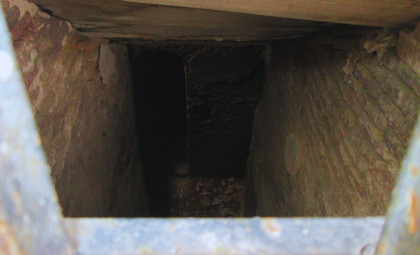
During restoration work on a damaged floor at the Church of Saint-Philibert in Dijon, France, a stone slab was lifted, revealing a previously undocumented staircase. This hidden stairwell descended into a sealed burial vault untouched for over 400 years. Beneath this vault, archaeologists uncovered successive layers of tombs, sarcophagi, and ancient structures dating back more than a thousand years.
Constructed in the late 12th century, the church is the only remaining Romanesque edifice of its kind in Dijon. The floor repairs were prompted not by historical interest but due to structural damage caused by a poorly executed renovation in 1974, which had installed a heated concrete slab atop floors that had accumulated salt deposits over several centuries. When the slab was removed for inspection, the hidden staircase was revealed.
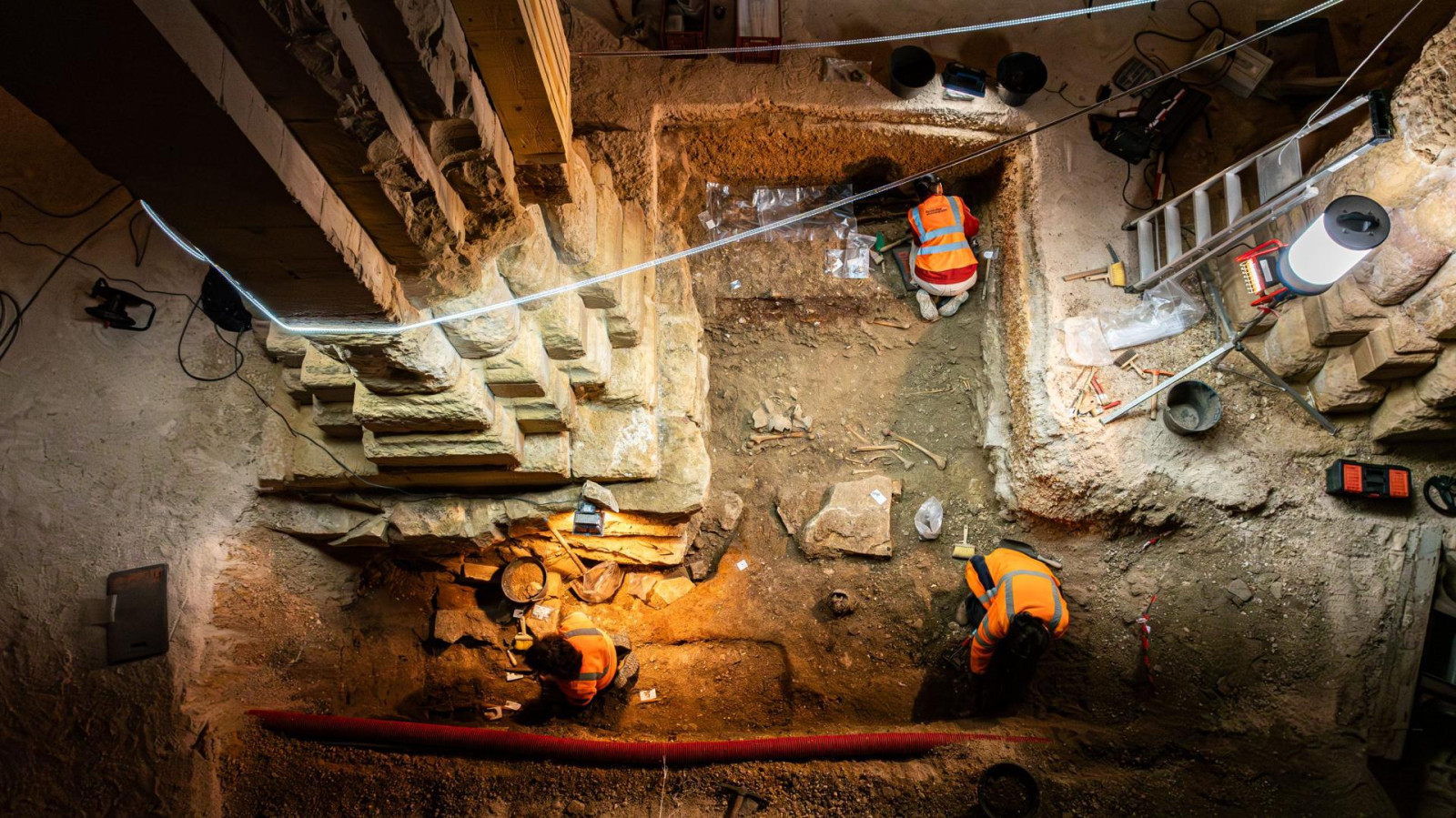
Experts from the French National Institute for Preventive Archaeological Research (INRAP) were called upon to investigate further. What began as an assessment of structural issues quickly evolved into an extensive excavation planned to reach depths of up to three meters.

Structural Damage Triggered by an Ill-Advised Renovation and Salt Accumulation
Following its deconsecration after the French Revolution, the church served as a salt storage facility during the 18th and 19th centuries, resulting in heavy salt infiltration into the building’s stonework. The salt itself was relatively inert until the 1974 renovation introduced a heated concrete slab, which caused repeated expansion and contraction of salt deposits, leading to cracking and deterioration of the church’s foundation over decades.
The removal of the heated slab to evaluate damage uncovered the hidden stairwell and set the stage for a remarkable archaeological exploration.
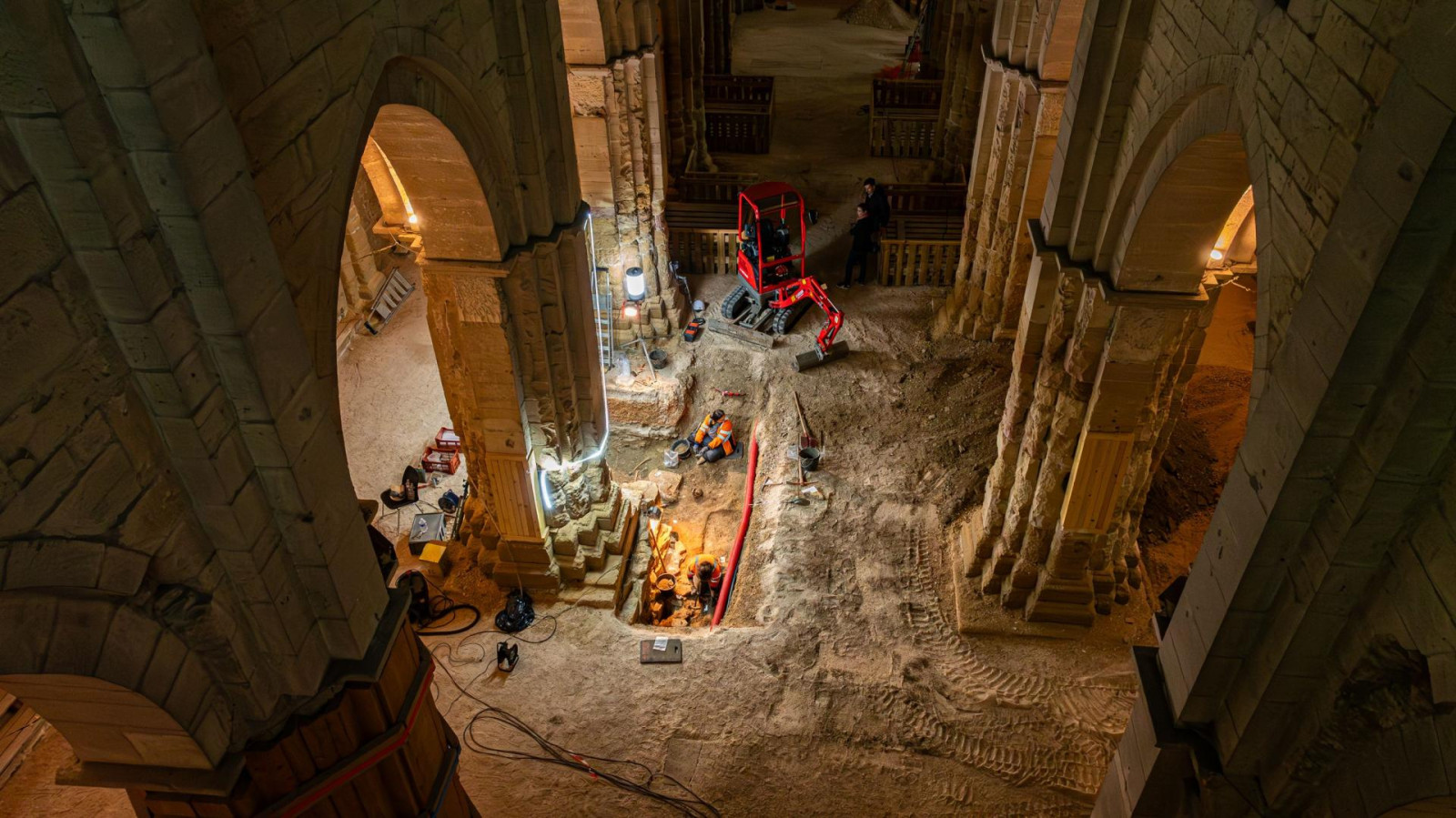
Entrusting the task to INRAP archaeologists proved decisive. The deeper the team explored, the more unexpected finds emerged. What began as a routine repair exposed more than a thousand years of layered history beneath the church floor.
Communal Burial Practices Reflecting Past Crises
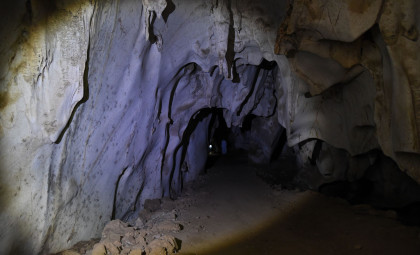
The newly found staircase opened onto a sealed burial chamber located in the church’s transept, dated by INRAP to the 15th or 16th century. This vault contained the remains of children and adults interred in wooden coffins. Over time, older bones were shifted aside within the coffins to accommodate new burials, a practice typical of communal vaults from that era.
The majority of the buried were adults wrapped in burial shrouds. “Very few artifacts accompanied the burials aside from occasional coins and two rosaries,” INRAP reported. The vault measured approximately nine feet deep and included six recovered sarcophagi.
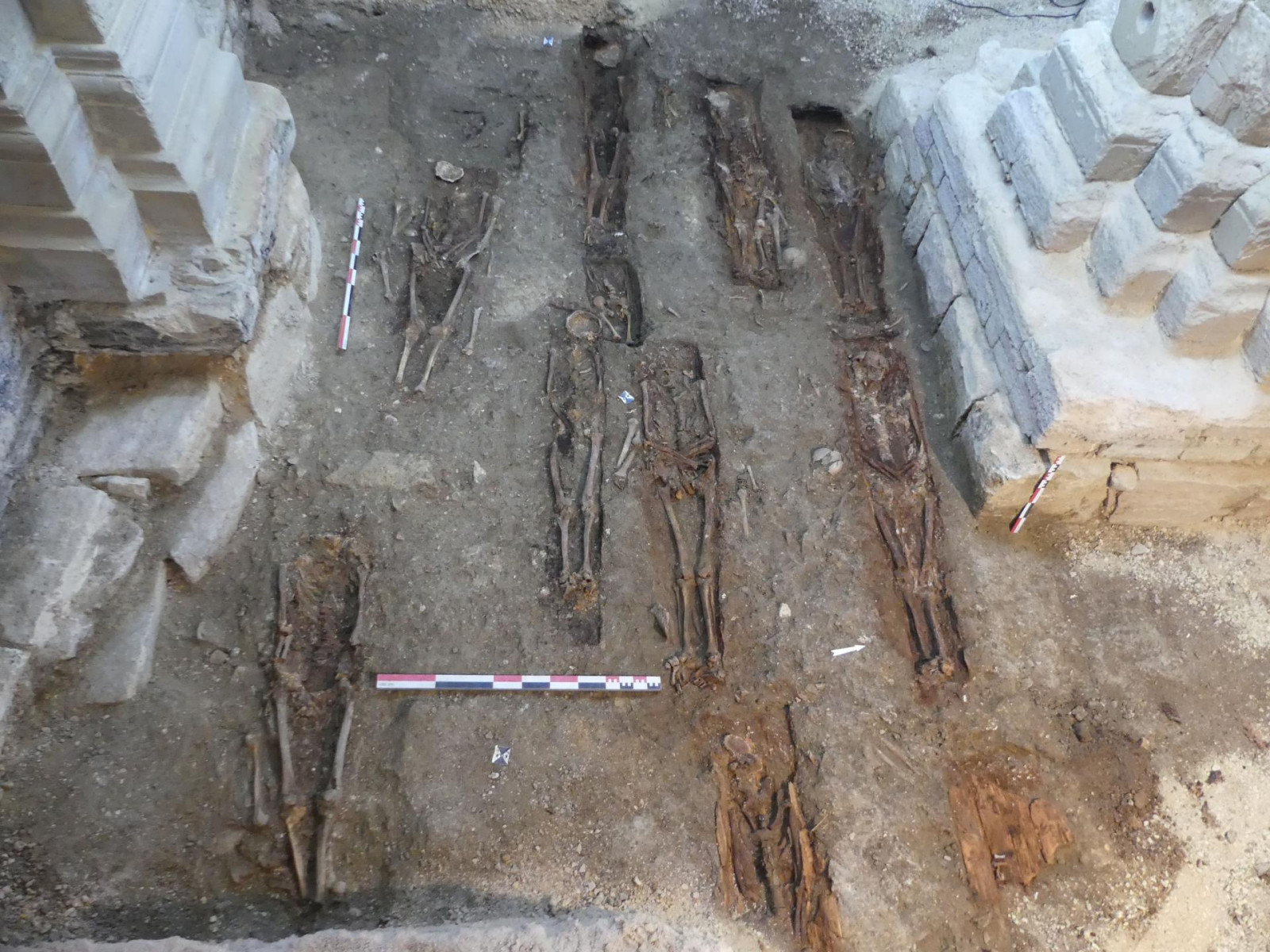
The burial density and configuration suggested to some experts the possibility of these interments resulting from a major event like a famine or epidemic. However, INRAP presented this only as a hypothesis pending further study of the remains.
Additionally, the church’s nave yielded coffins dated between the 14th and 18th centuries, all aligned east-west and containing minimal grave goods, confirming that Saint-Philibert functioned as an ongoing burial site for centuries prior to its closure.
Unearthing Sarcophagi and Layers of City History
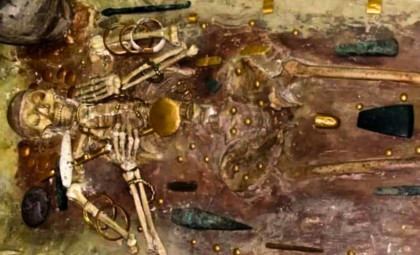
The burial vault itself was not the oldest discovery. Beneath these 15th-16th century remains, archaeologists found stone slab tombs dating from the 11th to 13th centuries, predating the existing Romanesque church. Below those were six sarcophagi believed to be from the Merovingian period (6th to 8th centuries), with some possibly originating even earlier.
Architectural features identified at the site, including walls built using opus spicatum — a characteristic herringbone masonry technique — indicate that a 10th-century structure once stood here. INRAP speculated the site might have been a religious location even before the current church, continuing a typical pattern across Europe where new sacred buildings were constructed atop earlier ones.
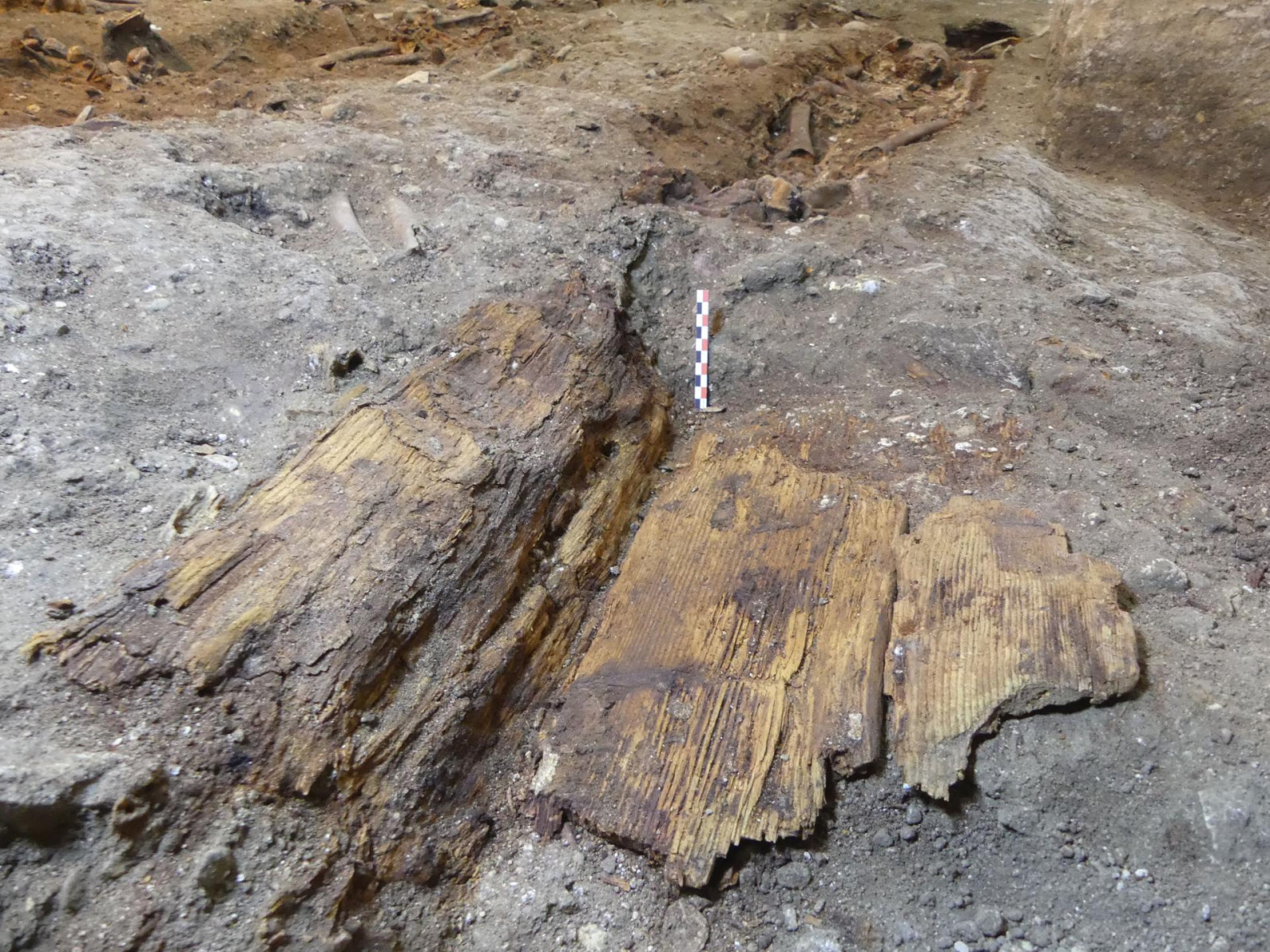
A collection of ancient sarcophagi estimated to be roughly 1,500 years old was found to have been positioned inside structures used between Late Antiquity and the Early Middle Ages, according to INRAP. This transitional epoch remains incompletely understood, and the site provides a rare continuous historical sequence from the 6th century through the modern day.
The planned three-meter excavation revealed multiple layers of habitation and burial across diverse historical periods, each reflecting distinct communities and architectural phases in central Dijon.
A Millennia-Long Chronicle Unearthed Beneath a Single Church
The excavation is ongoing as per INRAP’s latest updates. Researchers are focused on cataloging, conserving, and interpreting the rich vertical archaeological record uncovered. Despite the church’s centuries of transformations and damage, it now stands as a continuous historical archive stretching back at least to the 6th century, possibly earlier to Roman times.
The Merovingian sarcophagi and earlier architectural remnants add previously unknown dimensions to Dijon’s history. INRAP emphasized that very few European sites provide such an unbroken stratigraphy from Late Antiquity to the present within a compact area.
INRAP confirmed that their investigation uncovered remains spanning from Late Antiquity through modern times within the planned excavation depth, with work still underway at Saint-Philibert.
- Categories:
- Science




0 comments
Sign in to Comment