
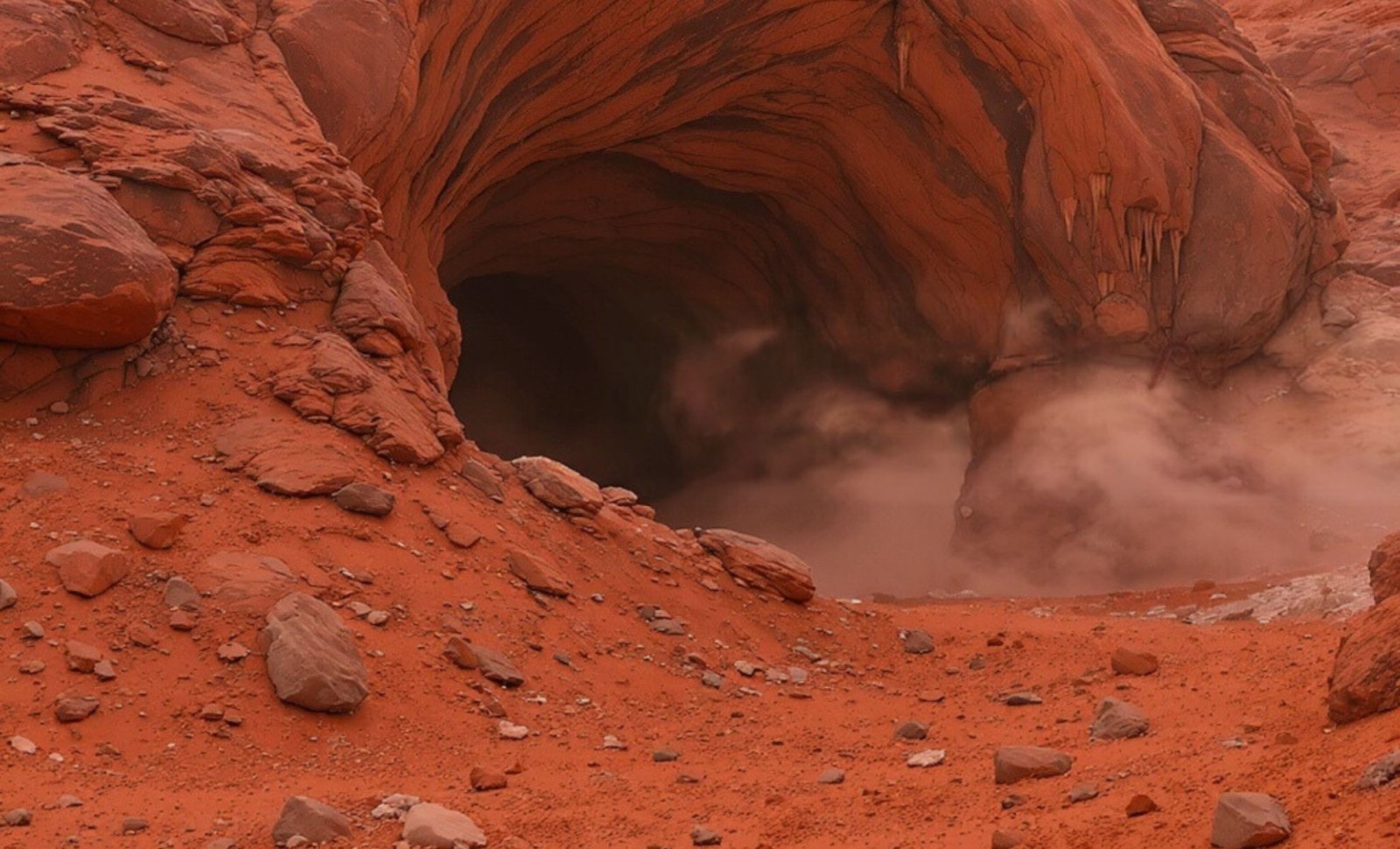
Scientists have uncovered intriguing evidence of enormous caves on Mars shaped by ancient water flows. These impressive caverns, carved out by mildly acidic water dissolving the Martian rock, could serve as prime locations for finding clues of long-gone life forms.
A study released on October 30 in The Astrophysical Journal Letters suggests that upcoming missions targeting these subterranean formations might reveal insights into biological activity from billions of years ago, back when Mars had a more hospitable climate.
Unveiling Mars’ Karstic Cave Systems
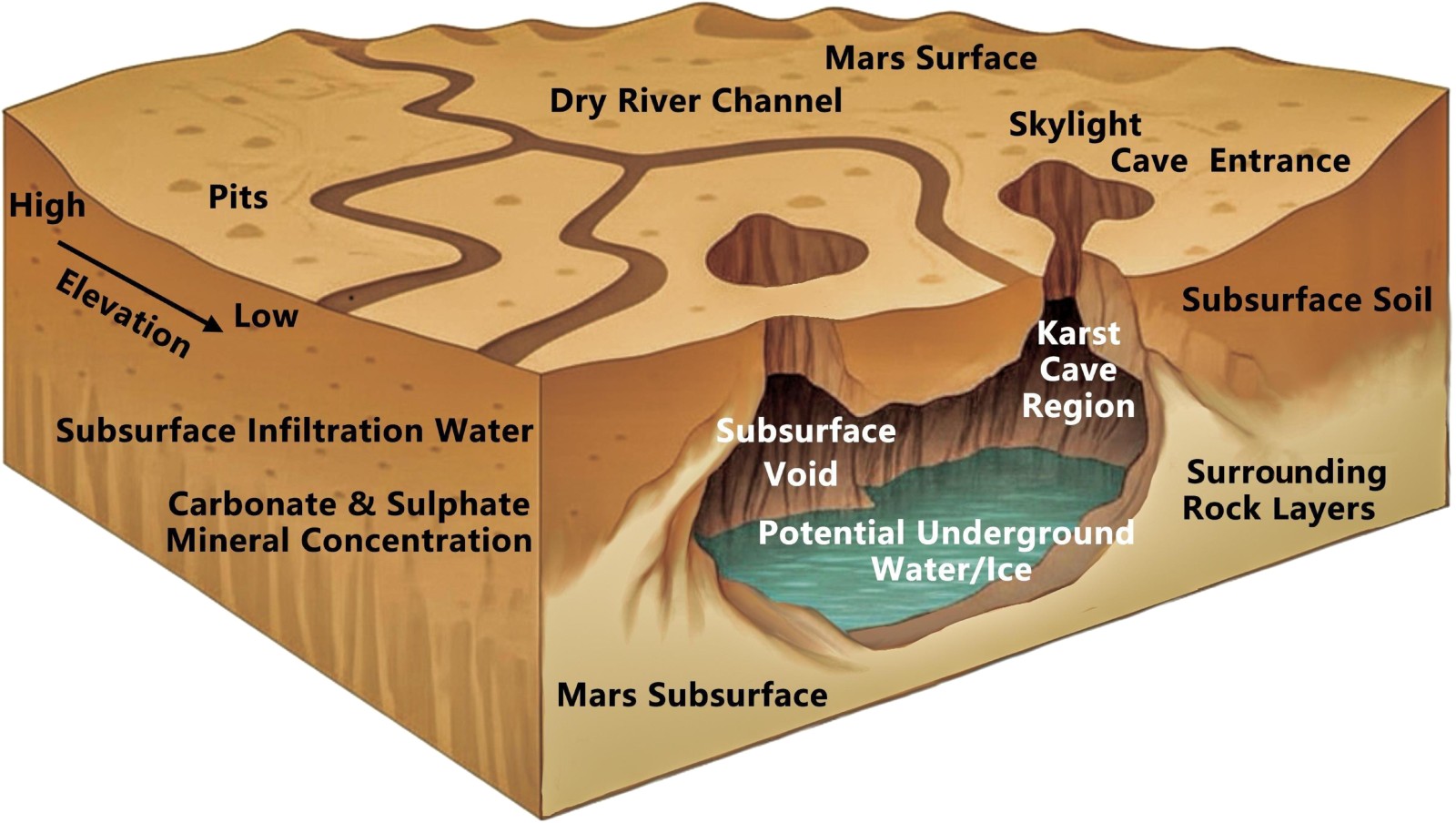
Karstic caves develop when acidic water erodes soluble rock types like limestone or gypsum, a well-known process on Earth responsible for vast cave networks. This same mechanism is now confirmed to have occurred on Mars for the first time, marking a significant breakthrough in Martian geology.

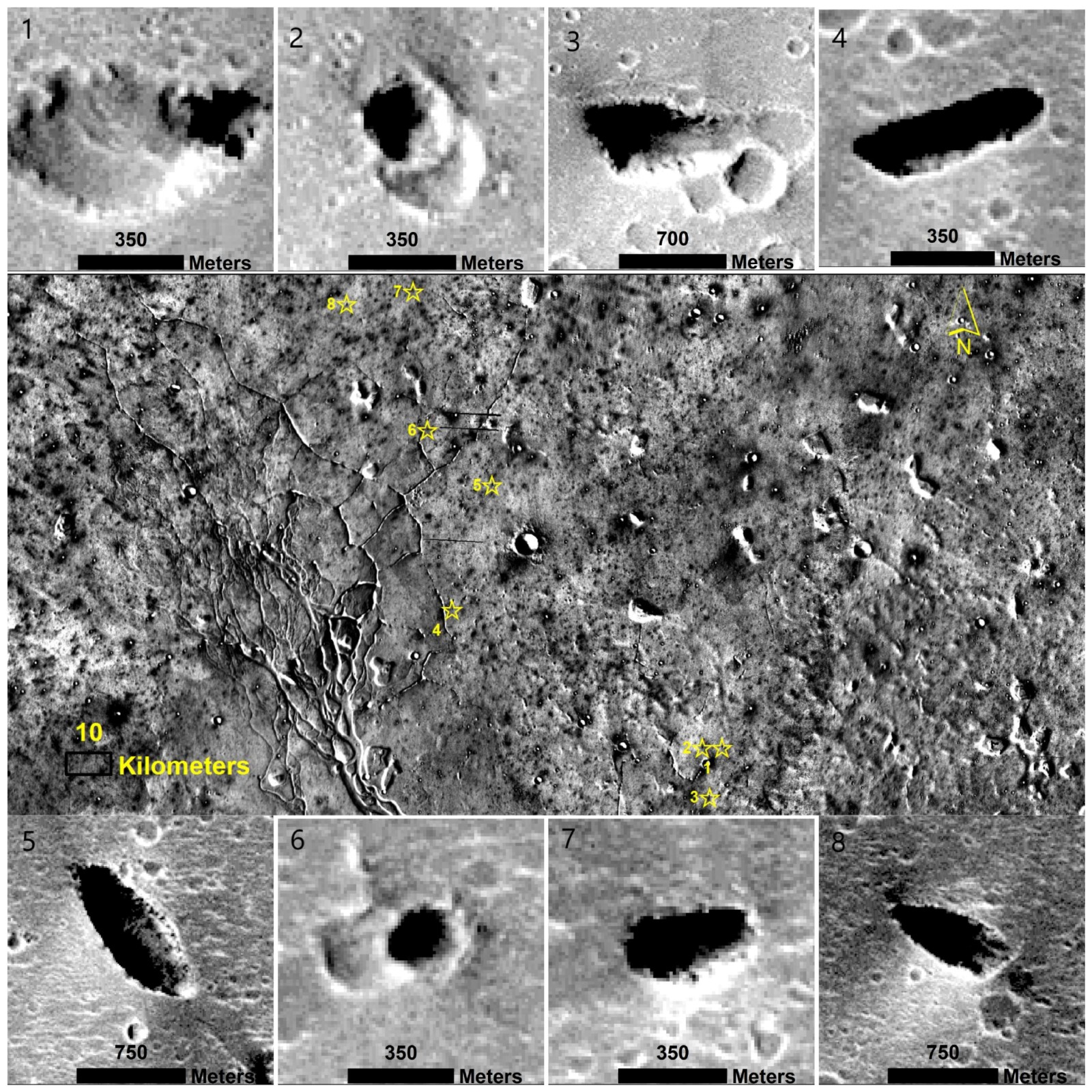
Chunyu Ding, a scientist from Shenzhen University, led the investigation by analyzing data from various Mars missions, including NASA’s Mars Odyssey and the Mars Reconnaissance Orbiter. With this combined dataset, Ding’s team identified eight prominent cave openings in Hebrus Valles, an area characterized by ancient river channels and hydrated mineral deposits—clear signs that water once shaped this landscape.
Researchers hypothesize that over 3.5 billion years ago, these waters, potentially from expansive lakes or seas, laid down carbonate and sulfate minerals now integral to the rock formations enveloping the caves.
The Potential for Life Preservation in Martian Caves
According to the research, these caves may provide ideal conditions to protect traces of ancient life. While the Martian surface endures harsh temperature swings, dust storms, and intense UV radiation, caves offer a sheltered and more stable environment. Ding’s team proposes that these underground spaces might have once harbored microenvironments with water, capable of supporting microbial organisms.
This discovery is crucial because, if microbial life ever flourished on Mars, these caves represent safe havens that could have allowed it to survive the planet’s extreme surface conditions.
Challenges and Future Exploration Strategies
Exploring these caves presents technical challenges, primarily due to their ceilings potentially obstructing communication signals between explorers and mission control. Although some caves feature large skylight openings, traversing the Martian terrain remains difficult.
To overcome these obstacles, Ding and collaborators propose deploying diverse robotic explorers working collaboratively. This may include wheeled rovers, climbing robots specialized for vertical surfaces, and aerial vehicles capable of flying in and out of the caves to deliver gear and collect samples. As Ding stated:
“Our results suggest that Hebrus Valles is unlikely to be a completely isolated case, but these caves also will not be everywhere on Mars.” He added, “They are likely concentrated in a limited set of regions that satisfy the necessary depositional and hydrological conditions. It is quite reasonable to expect more karstic caves to be discovered in other, similar environments in the future.”
Additionally, these caves could prove vital not only for scientific study but also for future human explorers, providing natural protection against hazardous radiation and frequent dust storms on the Martian surface.
- Categories:
- News











0 comments
Sign in to Comment