
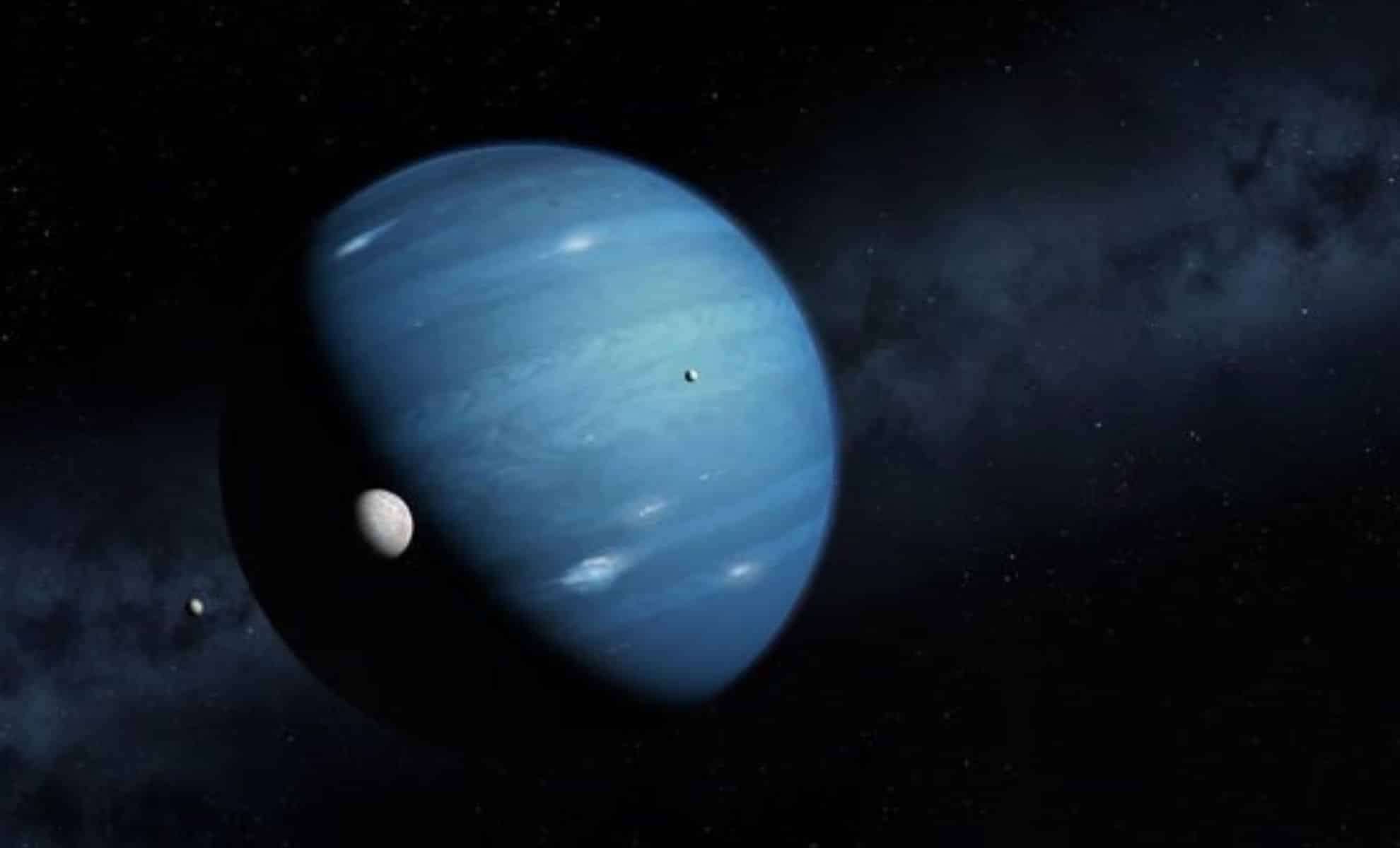
The idea of Planet Nine, often called Planet X, has fascinated space researchers for many years. This proposed celestial body, estimated to have a mass about seven times that of Earth, might hold the key to understanding some of the most enigmatic behaviors of distant solar system objects.
Located far beyond Neptune's orbit, Planet Nine is thought to exist in a dimly lit area approximately 155 billion miles away from the Sun. Its gravitational pull is believed to influence the unusual trajectories of objects within the Kuiper Belt, a distant collection of icy bodies and dwarf planets surrounding the outer edge of our solar neighborhood.
Attention has especially focused on the Kuiper Belt due to the discovery of six objects with grouped, atypical orbits hinting at the presence of a massive unseen planet. Confirming Planet Nine could solve one of astronomy’s most intriguing mysteries.

Vera C. Rubin Observatory: Revolutionizing the Search
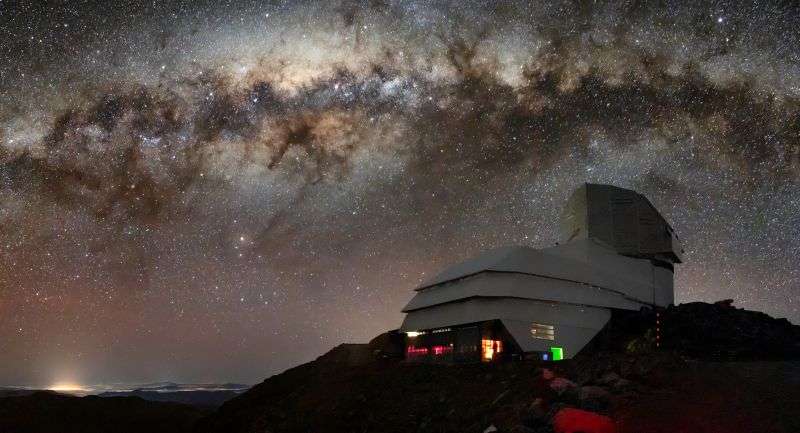
The forthcoming Vera C. Rubin Observatory, located in Chile, represents a major advancement in planetary hunting. Set to begin operations in May, this cutting-edge observatory houses the largest digital camera ever designed, enabling it to scan the southern skies with remarkable precision and collect extensive data throughout the next decade.
Unlike earlier searches for Planet Nine that mainly depended on indirect clues and theoretical models, the Rubin Observatory emphasizes direct detection by continuously observing faint, moving objects in the sky, increasing the chance of spotting the concealed planet.
Dr. Ed Bloomer, senior astronomy manager at the Royal Museums Greenwich in London, highlighted the difficulty of this endeavor:
“It’s tempting to think that since we can observe incredibly distant galaxies, detect faint gravitational waves and even image black holes, that we should have a complete A-Z of our solar system. Relatively speaking, that’s just the local neighborhood, right? But actually, it’s a very difficult job trying to locate everything.”
Locating a planet at such a remote distance entails significant challenges. Unlike stars, which create their own light, Planet Nine would only reflect the much weaker sunlight, making it extremely dim and difficult to detect by earlier telescopes.
Modeling Insights and Observational Obstacles
The hypothesis of Planet Nine emerged in 2016 thanks to Michael Brown, a planetary astronomy professor at Caltech. His work is grounded in mathematical models proposing that the peculiar paths of several Kuiper Belt objects are best accounted for by a distant, massive planetary companion.
Dr. Bloomer expressed the significance of these models:
“By observing the motion of other objects in the solar system, mathematical modeling suggests that there is a chance the best explanation for their orbits is the presence of a thus-far undetected planet. Now, that’s all pretty non-committal language (and various astronomers will have strong feelings one way or the other) because what we’re lacking is direct observation.”
The Rubin Observatory is expected to provide the crucial imagery needed to verify these predictions. Still, experts like Michael Smith, astronomy professor at the University of Kent, advise prudent evaluation of current claims:
“The available data are subject to many selection effects and observational biases. Therefore, we tend not to take claims as evidence. We take the interpretations of convinced scientists as interesting or with a pinch of salt. However, some of the speculations will, of course, turn out to be verified.”
His remarks highlight the necessity for careful data analysis alongside enthusiasm for potential discoveries. The observatory’s findings will be pivotal in confirming or challenging existing theories.
Hurdles in Spotting the Hidden Planet
Despite the Rubin Observatory’s impressive technology, pinpointing Planet Nine remains daunting. Due to its extreme remoteness, it won’t shine brightly in telescope images. As Dr. Bloomer explained:
“The modeling suggests that Planet Nine—if it exists—is incredibly far away from the Sun. And broadly speaking, the problem is that this means it is going to be very, very dim: unlike a star, say, which would be producing light, Planet Nine will only really be reflecting light from our Sun.”
The actual discovery might be subtle rather than dramatic. Dr. Bloomer described what astronomers might first notice:
“Directly discovering a ‘Planet Nine’ in our solar system might start with an astronomer noticing (or being told by their computer), ‘Hey, that pixel is brighter than it was a few days ago. I should make sure to check what it looks like a couple of days from now.’”
This meticulous monitoring emphasizes the intricate work involved in isolating the faint signature of distant objects against the immense cosmic background.
The Broader Impact of a Potential Discovery
Should Planet Nine be confirmed, it would rank among the most remarkable achievements in recent astronomy. Aside from unraveling the Kuiper Belt's mysteries, this finding would revolutionize our comprehension of solar system dynamics and spark new scientific pursuits.
Moreover, the discovery would resonate far beyond academic circles. Growing public fascination with planetary exploration, driven by missions to Mars, breathtaking visuals from the James Webb Space Telescope, and debates about Pluto’s classification, would fuel widespread excitement about this new world.
Dr. Bloomer reminded us of the importance of patience in this quest:
“A detection isn’t impossible though, you just need to monitor the right part of the sky at the right time with the right equipment.”
This mission blends optimism with scientific discipline, embodying humanity’s ongoing passion for uncovering the universe’s secrets, whether or not Planet Nine ultimately becomes part of our celestial family.
- Categories:
- News










0 comments
Sign in to Comment