
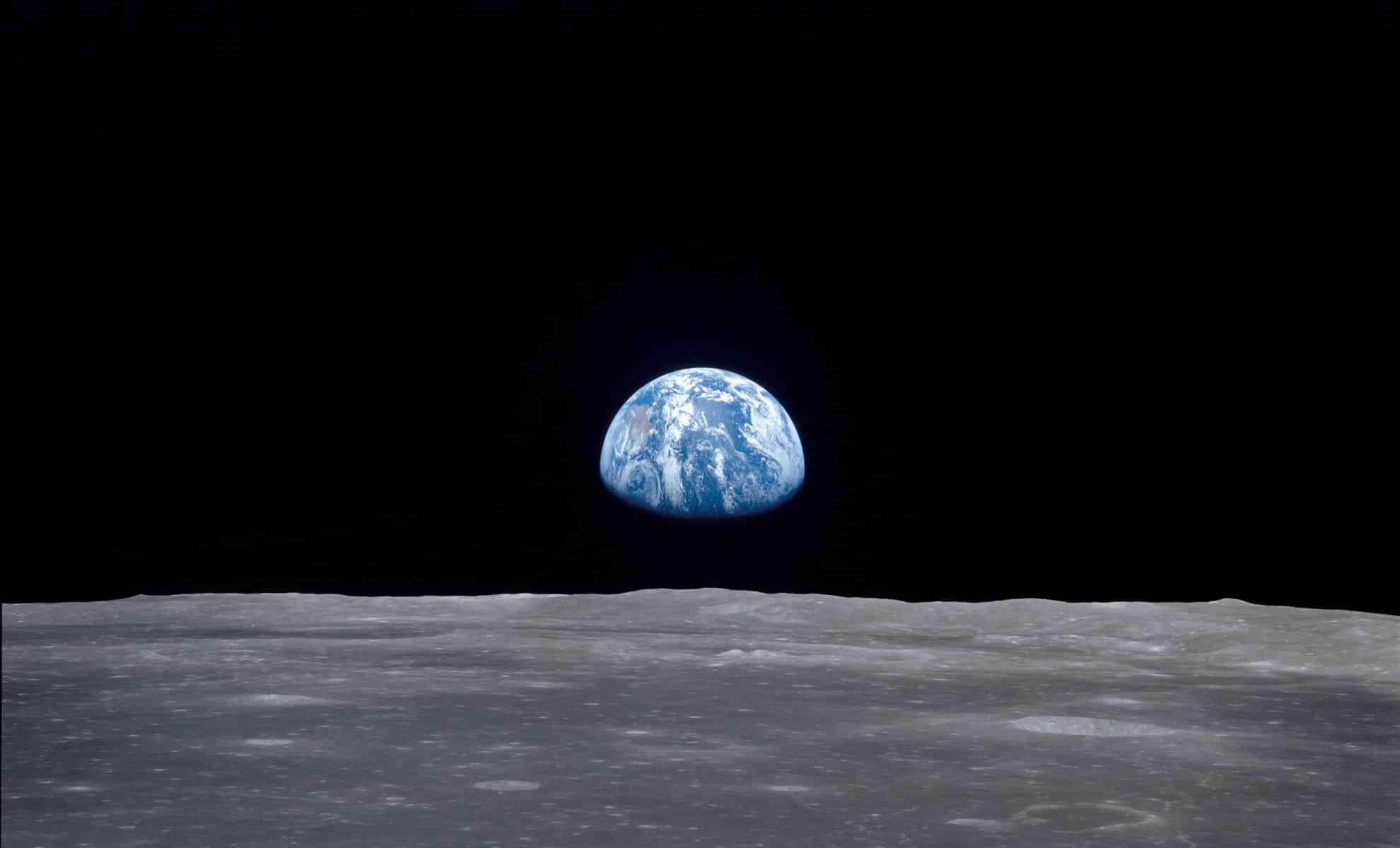
A moon crater famously featured in one of space exploration's most iconic images is now instrumental in the hunt for life beyond Earth. This crater, spotlighted in the renowned Earthrise photograph captured by Apollo 8 astronaut William Anders, was recently studied by the European Space Agency’s (ESA) Jupiter Icy Moons Explorer (JUICE) spacecraft. This observation supports JUICE’s broader mission of investigating Jupiter’s distant moons and their habitability potential.
From Legendary Image to Vital Alien Life Investigation
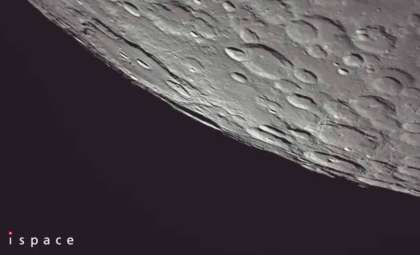
The feature, initially named “Pasteur T” and now renamed Anders’ Earthrise after the astronaut, spans roughly 25 miles (40 kilometers) on the moon’s far side. The crater’s most famous depiction is in the unforgettable Earthrise photo taken on December 24, 1968, showing Earth ascending above the lunar horizon—an enduring symbol in space history. Nearly six decades later, the crater has gained renewed importance by helping validate instruments designed for missions searching for extraterrestrial life within our solar neighborhood.
While en route to Jupiter, the JUICE probe approached the moon to test its scientific gear. Among these was the Radar for Icy Moon Exploration (RIME), which is vital for mapping icy Jovian moons. Although JUICE’s main goal is to study Jupiter’s moons, this lunar flyby offered a unique chance to evaluate RIME’s effectiveness on another celestial surface.

RIME and the Quest for Life Beyond Earth
RIME utilizes radio waves to probe beneath icy crusts by sending pulses and interpreting their reflections, revealing underground formations. Its ultimate mission is to investigate the ice-covered moons Europa, Ganymede, and Callisto, uncovering environments that could foster life.
During the lunar flyby, ESA researchers took advantage of the moment to test RIME on a rocky surface. They temporarily shut down other instruments for an eight-minute window to minimize noise, allowing RIME to gather data with enhanced clarity.
Addressing Technical Challenges
Despite clear objectives, the RIME instrument faced interference issues caused by electronic noise from JUICE, impacting radar accuracy. This prompted a lengthy effort from scientists to refine data processing techniques.
Through improved algorithms, researchers generated a precise elevation map of Anders’ Earthrise crater. When compared with earlier data from NASA’s Lunar Orbiter Laser Altimeter (LOLA), the results showed excellent agreement, confirming RIME’s readiness for the demanding tasks ahead.
Now accurately calibrated, RIME is prepared to conduct more detailed analyses as JUICE advances toward its core mission exploring Jupiter’s moons.
Could JUICE Uncover Signs of Life?
With its instruments validated, JUICE continues its journey toward Jupiter, planning to perform 35 flybys of the gas giant’s intriguing moons. This mission will deliver unparalleled data on the moons’ make-up, surfaces, and their ability to sustain life beneath icy shells. Findings will enrich our understanding of the formation of gas giants and their satellites and assess the potential for life in these distant worlds.
From its famous origins in the Earthrise photo to its instrumental role in today’s search for alien life, Anders’ Earthrise crater exemplifies humanity’s ongoing endeavor to explore solar system mysteries and the possibility of life beyond Earth.
- Categories:
- News



0 comments
Sign in to Comment