

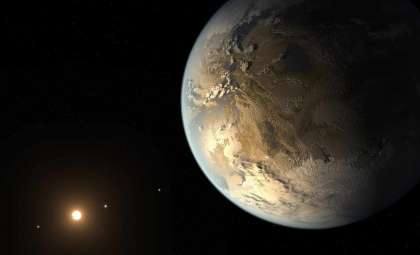
An exoplanet recently identified just 35 light-years away from our solar system stands out as a highly compelling candidate in the search for extraterrestrial life. This planet, designated L 98-59 f, orbits a faint, cool red dwarf star within a tightly packed planetary system known for several small, rocky worlds.
Researchers from the Trottier Institute for Research on Exoplanets at Université de Montréal report that L 98-59 f occupies the star’s habitable zone, where conditions might allow liquid water to be stable given the right atmosphere.
Introducing the Fifth Member of the L 98-59 Planetary Family
The identification of L 98-59 f adds another intriguing member to this compact planetary system. This super-Earth weighs at least 2.8 times the mass of Earth and travels in a nearly circular orbit, completing a revolution every 23 days. Though its orbit is close and fast, the planet receives a stellar flux comparable to that of Earth, placing it comfortably in the habitable zone.

Charles Cadieux, a postdoctoral scholar and lead author of the published research, highlighted the importance: “Discovering a temperate planet in such a compact system underscores the astonishing variety of exoplanetary configurations and reinforces the significance of exploring potentially habitable planets orbiting low-mass stars.”
Detecting the Planet Through Precise Stellar Wobbles
Unlike planets that transit their stars, dimming the light in a detectable way, L 98-59 f was located through subtle gravitational effects influencing its star’s motion. Scientists utilized data from the High Accuracy Radial velocity Planet Searcher (HARPS) and the Echelle Spectrograph for Rocky Exoplanet and Stable Spectroscopic Observations (ESPRESSO) instruments operated by the European Southern Observatory to track minute shifts caused by the planet’s gravitational tug.
By integrating these Earth-based observations with information from NASA's TESS mission and the James Webb Space Telescope (JWST), the team refined the planet’s parameters. Advanced analysis techniques were employed to eliminate stellar activity noise, achieving the most accurate measurements of the dimensions, masses, and characteristics of all five planets in the L 98-59 system to date.
A Natural Laboratory to Explore Planetary Variety
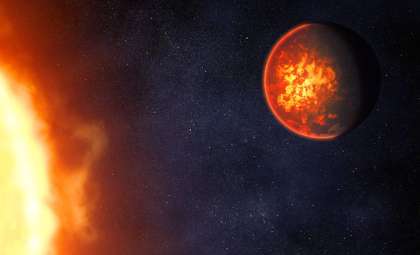
The results not only confirm L 98-59 f’s existence but shed light on its planetary siblings. For example, L 98-59 b, the system’s innermost planet, measures about 84% of Earth's size and has roughly half its mass, ranking it among the smallest known exoplanets. Gravitational tidal forces may induce active volcanism on the two closest planets, and one planet exhibits a surprisingly low density, suggesting it could be an ocean-rich world unlike any in our own solar system.
“This study delivers the most comprehensive insight we have yet into the captivating L 98-59 planetary ensemble,” Cadieux said. “It exemplifies the power of combining data from space telescopes and state-of-the-art Earth-based instruments, providing critical targets for future atmospheric exploration using JWST.”
Given its closeness and the small size of its host star, L 98-59 presents a rare chance for ongoing investigation. Should L 98-59 f possess an atmosphere, the JWST is potentially capable of identifying water vapor, carbon dioxide, or even signs of biological activity, illuminating the planet’s potential for life.
- Categories:
- News









0 comments
Sign in to Comment