
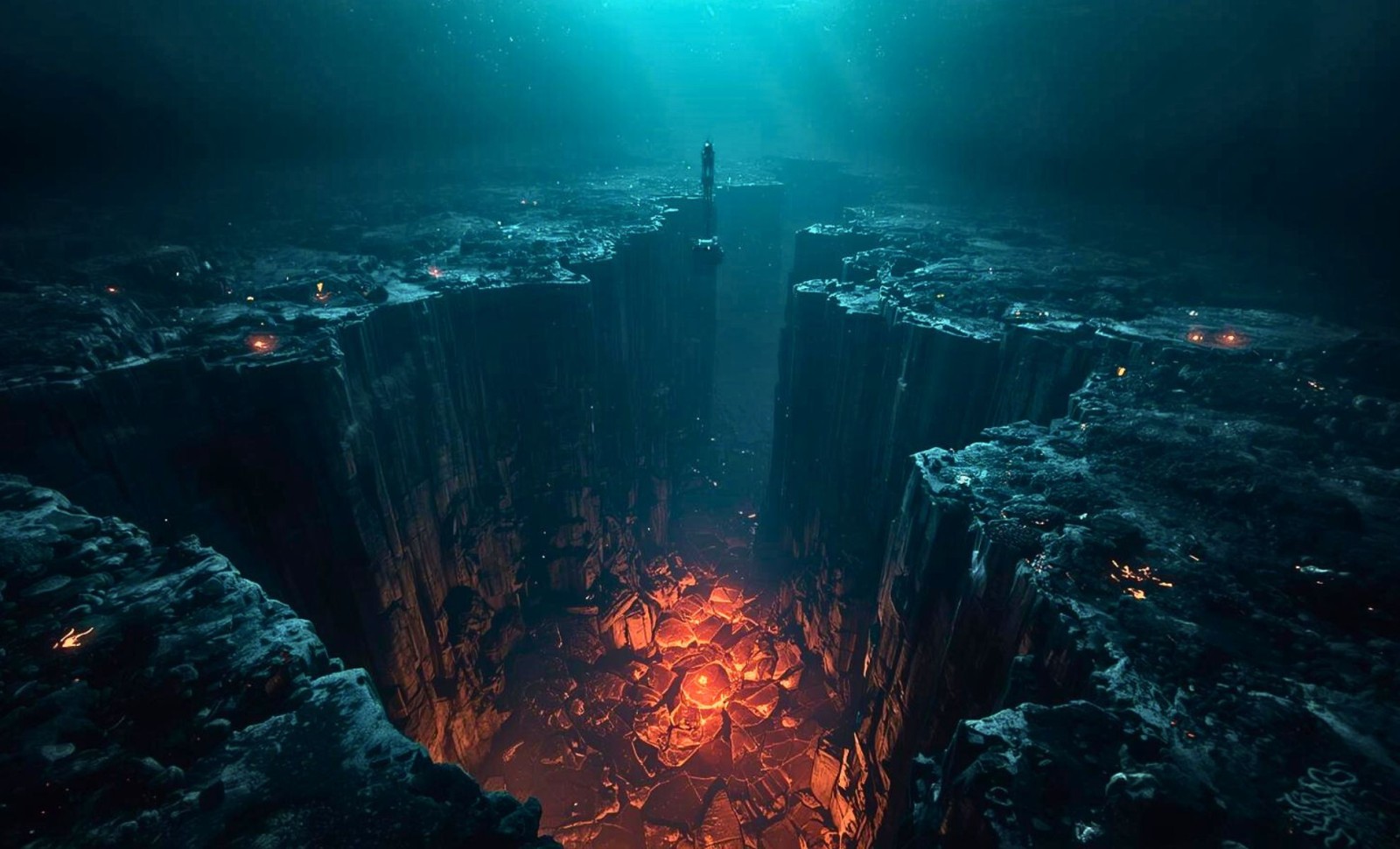
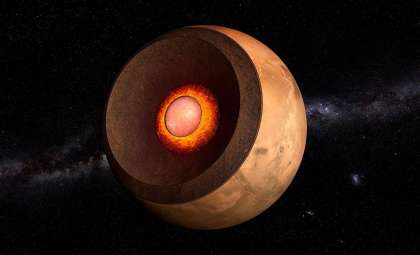
Nearly 1,800 miles beneath Earth's surface lie two colossal formations, comparable in size to continents, which have long puzzled scientists studying our planet's early development. Known as large low shear velocity provinces or LLSVPs, these regions rest just above the Earth's core, underneath Africa and the Pacific Ocean. Characterized by higher temperatures, greater density, and distinct chemistry relative to surrounding mantle rocks, their origin has remained uncertain—until recent research presented a compelling explanation.
A recent article in Nature Geoscience introduces a theory that these deep anomalies are remnants from Earth’s earliest geologic period when our planet was engulfed by a vast global magma ocean. Led by Yoshinori Miyazaki from Rutgers University and Jie Deng at Princeton, the study offers a new perspective linking the lower mantle’s structure to interactions with core materials during Earth's infancy. This research not only fills a critical knowledge gap but also may transform our understanding of Earth’s habitability conditions.
The proposed model suggests that elements from the core have gradually seeped into the overlying magma ocean, modifying the mantle's structure and potentially clarifying both the seismic irregularities and distinct chemical signatures found in volcanic materials.

Gigantic Features Beneath the Crust: A Geological Enigma
LLSVPs were originally detected through seismic tomography, a technique that visualizes Earth's interior using waves generated by earthquakes. These formations disrupt wave speeds, drastically reducing them compared to neighboring mantle rock. Spanning several thousand kilometers in width and hundreds in thickness, they exhibit complex borders and interiors. Surrounding these structures are ultra-low velocity zones (ULVZs), thin layers where seismic wave velocities decrease by as much as 90%, indicating extraordinary material characteristics.
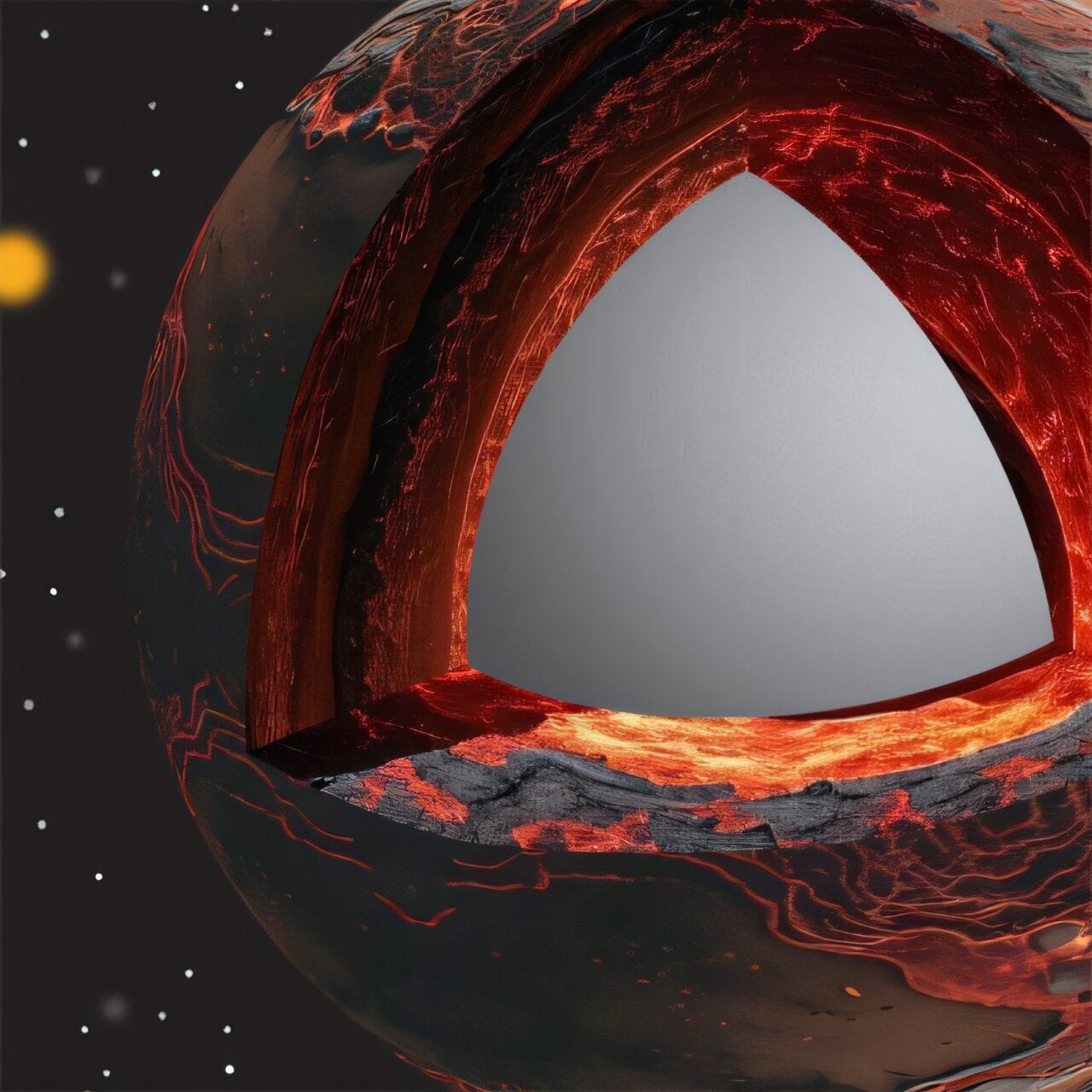
As covered by The Brighter Side of News, these areas stand out due to their unique chemical makeup and higher temperatures, defying explanations based solely on plate tectonics or mantle flow. They also contradict models envisioning a neatly layered mantle cooling steadily over time.
Attempts to attribute LLSVPs to recycled oceanic crust or mantle plumes failed to account for their immense scale, unique isotopic markers, or remarkable persistence. Traces of unusual helium-3, tungsten, and silicon isotope anomalies detected within some oceanic hotspot lavas — such as those from Hawaii and Iceland — hinted at an ancient, undisturbed deep mantle reservoir, yet how it was preserved remained unclear.
Introducing a Novel Theory: Core Leakage and a Contaminated Magma Ocean
The core concept in the new research regards Earth’s earliest period when a global magma ocean stretched hundreds of kilometers deep. As the core cooled, it wasn’t chemically passive. Instead, light elements like magnesium, oxygen, and silicon gradually separated—an exsolution process—from the molten metal, rising into the base of the magma ocean.
This continual bottom-up input altered the magma ocean's chemical composition, eventually creating a basal exsolution contaminated magma ocean (BECMO). Within this framework, the core acts as a slow but steady supplier of silica and magnesium oxides, influencing how the magma ocean crystallized as temperatures dropped.
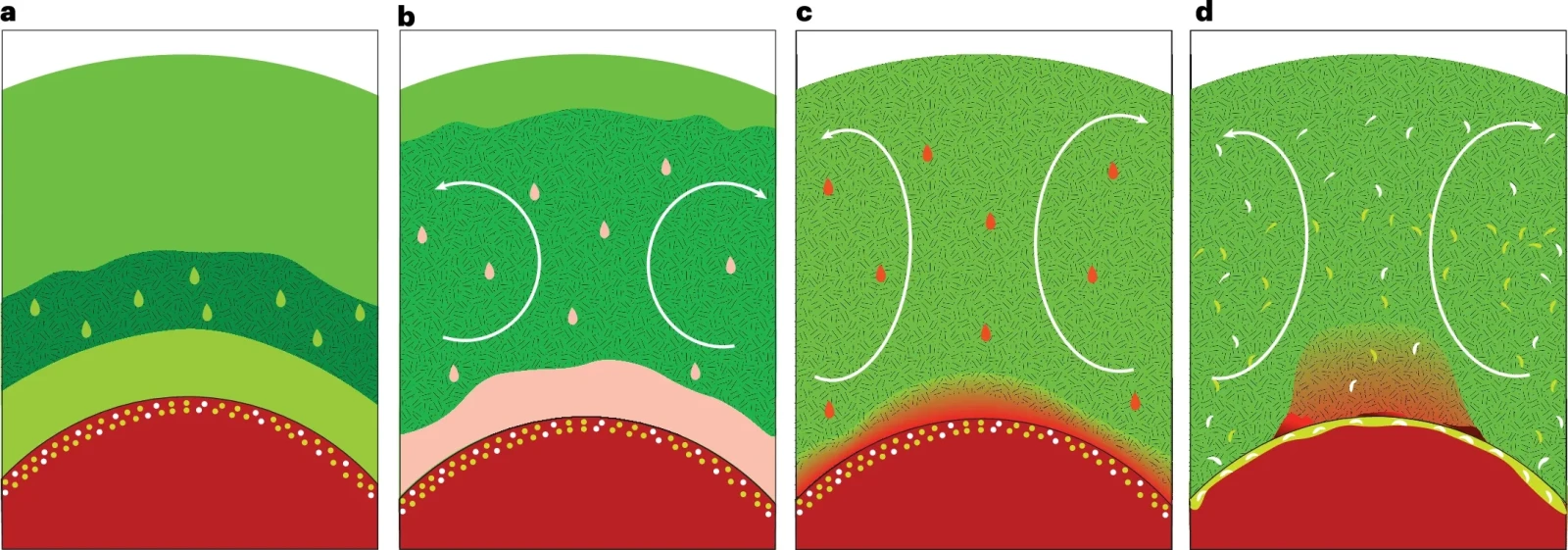
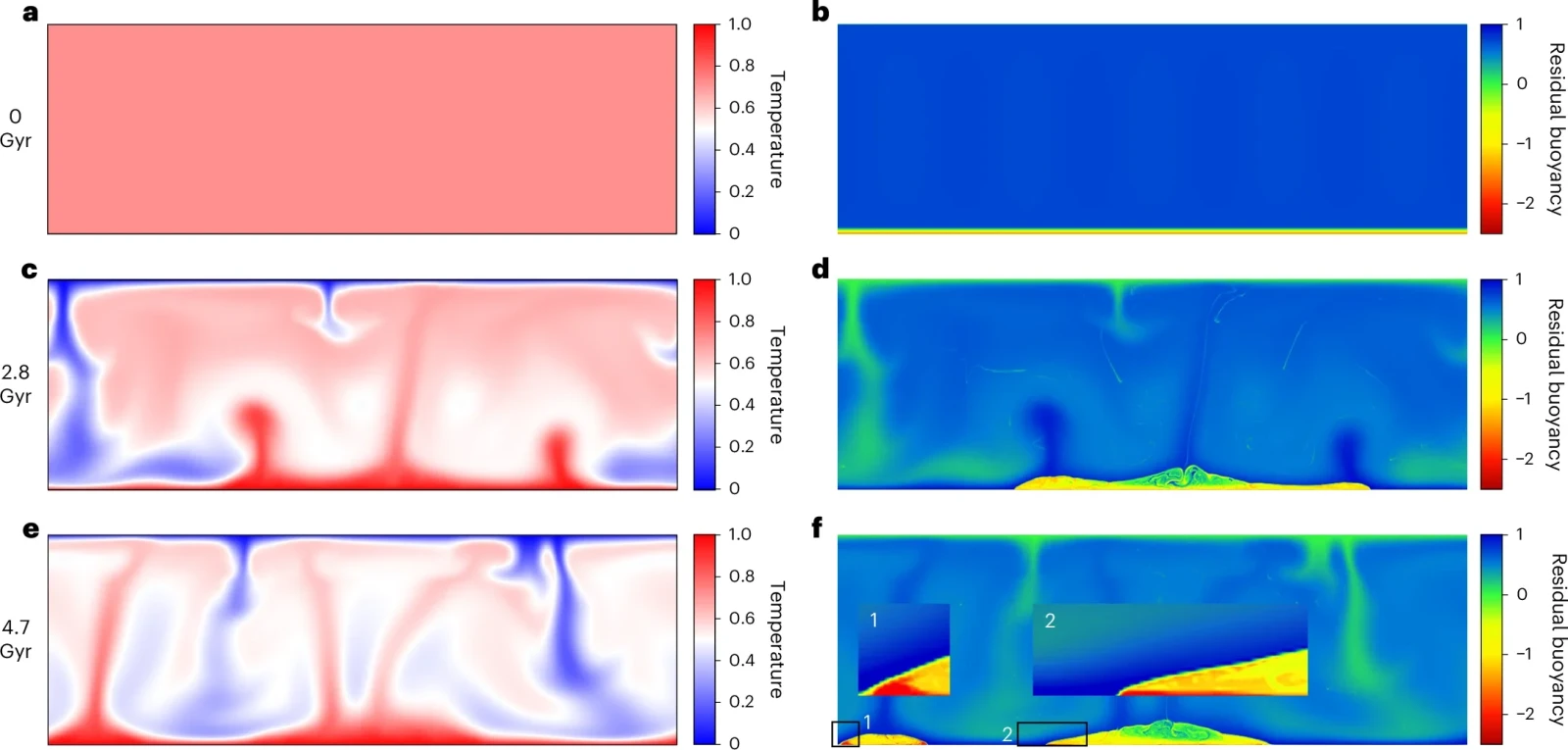
Without this exsolution, a simple magma ocean would produce a dense, iron-rich layer at the mantle’s base. However, the BECMO model results in a heterogeneous zone enriched with silicate minerals such as bridgmanite and patches of stable, dense material that eventually merged into the LLSVPs.
These dense deposits maintain stability over billions of years but remain dynamic, shaped by mantle convection and accessible to rising mantle plumes. Simulations carried out in the study replicate not only the dimensions and morphology of the LLSVPs but also reproduce isotopic signatures found in volcanic rocks sourced from deep mantle sections.
Surface Evidence of Deep Earth Processes
Volcanic rocks have long carried hints of a deep, ancient reservoir. Basalts from oceanic islands occasionally display elevated 3He/4He ratios, unusually light silicon isotope compositions, and rare 182W anomalies—phenomena that standard shallow mantle dynamics cannot easily justify.
The BECMO concept clarifies how these chemical signals migrate from deep mantle regions to surface volcanoes. As magnesium and silicon oxides rose from the core into the magma ocean, they likely transported trace helium and tungsten, but avoided significant iron or other highly siderophile elements. These isotopic fingerprints remained embedded in the lowermost mantle, later mobilized by mantle plumes and emitted during volcanic eruptions.
While not all isotope anomalies are fully explained—extreme silicon isotope values might still involve crustal recycling—this model provides the most comprehensive framework to date, linking ancient chemical traits and recent geological activity found in deep mantle-derived lavas.
Miyazaki emphasizes in the Nature Geoscience publication that this approach integrates seismic observations, dynamic modeling, and geochemical evidence, delivering a unified explanation for the evolution of Earth's deep interior.
- Categories:
- Science






0 comments
Sign in to Comment