
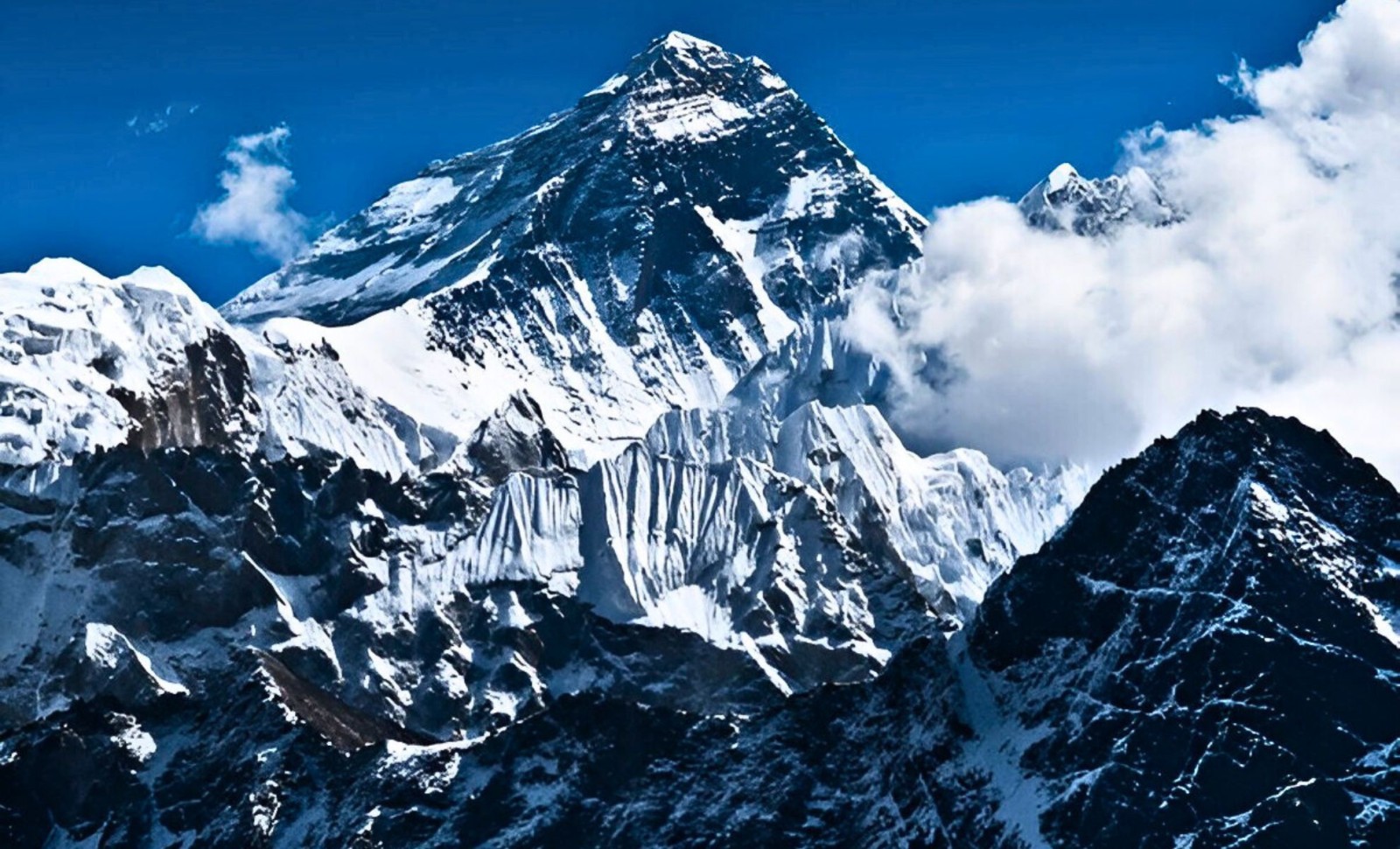
Beneath our feet lies a staggering secret—enormous structures so vast that they challenge our traditional ideas of Earth’s tallest mountains.
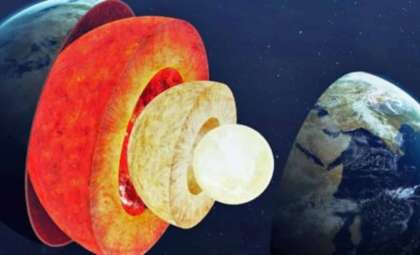
A recent article in Nature unveils the presence of two immense underground formations extending from the boundary between Earth’s core and mantle. Rising up to 1,000 kilometers (about 620 miles), these formations are nearly 100 times taller than Mount Everest and are located beneath the African continent and central Pacific Ocean. Unlike typical rocky mountains, these colossal regions represent the largest distinct features discovered inside Earth.
This groundbreaking finding shifts our understanding of Earth’s inner structure and offers a novel means to study planetary development. These dense masses might be billions of years old, preserving primordial chemical traits and potentially impacting geological processes such as volcano activity, plate tectonics, and mantle circulation.

Earth’s Largest Elevations Found Deep Within
The breakthrough comes from a seismic research project led by Arwen Deuss of Utrecht University. Employing normal-mode oscillation analysis, the team examined how Earth vibrates after major quakes. This technique mapped attenuation, the weakening of seismic energy, throughout the mantle’s three-dimensional structure.
Their investigation revealed zones featuring both reduced shear wave speeds and low attenuation beneath Africa and the Pacific Ocean. The overlap of these unusual characteristics revealed vast, enigmatic zones called Large Low Shear Velocity Provinces (LLSVPs).
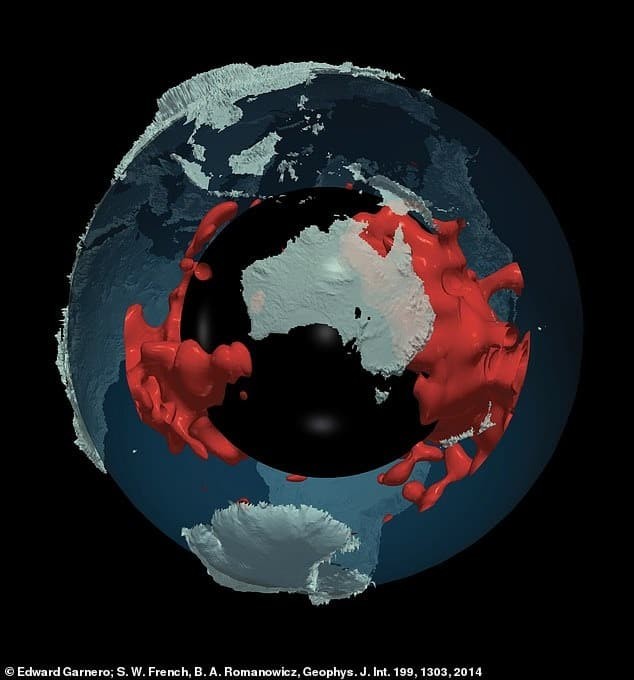
“These are not mountains in the conventional sense,” the study states in Nature, “but thermochemical features originating from the core-mantle interface that influence mantle dynamics.”
The spans of these giants reach up to 5,000 kilometers across, with heights so immense that placing them at Earth’s surface would redefine the limits of vertical scale. The cutting-edge model—QS4L3—is the first to capture Earth’s deep mantle attenuation in full global detail.
Remnants of Ancient Tectonic Plates in Earth’s Depths
A fascinating aspect of LLSVPs is their probable roots. The dominant explanation, endorsed by this research, is that they are relics of subducted tectonic plates—old crustal fragments that sank into the mantle billions of years ago, accumulating at the core-mantle boundary to form large “slab graveyards.”
Due to their unique chemical composition and differing density, these regions resist homogenization by mantle convection, making them some of the Earth's longest-lasting and most chemically distinct zones.
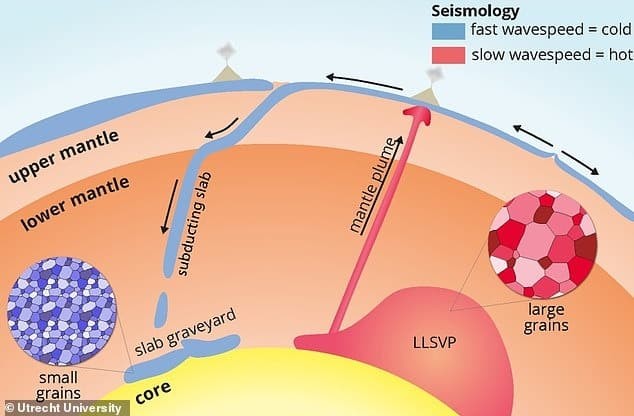
“These domains appear chemically distinct and have persisted since Earth’s earliest epochs,” the paper remarks in Nature. This is supported by the alignment between low attenuation and low shear wave velocity, indicating traits such as increased density, elevated temperatures, and unique mineralogy.
Situated directly above the core, these formations are believed to fuel mantle plumes—upwelling heat currents responsible for volcanic hotspots like Hawaii, Réunion, and Iceland. Their presence and scale may also influence fundamental mantle convection driving plate movements and continental fragmentation.
Stabilizing Earth’s Interior and Shaping Its Exterior?
The seismic imaging technique developed by Deuss’s team not only visualizes these deep structures but separates thermal and compositional effects on a planetary level for the first time. This advancement has major implications for decoding the geodynamic processes affecting Earth’s surface.
LLSVPs could serve as stable anchors in the mantle, maintaining fixed positions over hundreds of millions of years and redirecting convection flows. Their longevity suggests a role in the cyclical assembly and breakup of supercontinents, offering fresh perspectives to plate tectonics.
While earlier models focused solely on seismic velocity, this new approach incorporates attenuation, revealing how seismic waves attenuate in various mantle regions. The observation that zones of minimal attenuation correlate with LLSVPs confirms they are compositionally distinct rather than just hotter regions.
Additionally, the data imply that although much of the mantle undergoes continual mixing, LLSVPs remain isolated, acting as repositories of archaic material and possible sources of volatiles that influence Earth’s climate and biosphere.
- Categories:
- Science



0 comments
Sign in to Comment